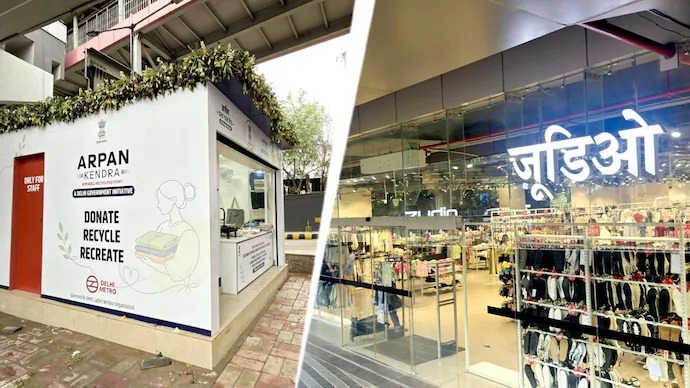
A Zudio store placed next to an Arpan Kendra at a Delhi metro station highlights India's fashion paradox. While fast retail drives consumption, metro-station recycling kiosks offer a systematic approach to processing textile waste, bridging the gap between modern consumerism and responsible circular disposal.
NEW DELHI — In the heart of the national capital, a unique spatial layout at the Punjabi Bagh West metro station encapsulates the shifting realities of urban consumption in India. Situated merely meters apart, a sprawling, air-conditioned Zudio fast-fashion outlet stands adjacent to a modest, cabin-like Arpan Kendra clothes collection kiosk. According to reports highlighting urban retail dynamics published by India Today, this juxtaposition serves as a physical manifestation of Delhi's contemporary fashion landscape—illustrating the simultaneous boom in accessible retail and the rising urgency of post-consumer textile waste management.
The Rise of Fast Fashion and Urban Consumption
The retail footprint of affordable fashion chains like Zudio has expanded exponentially across metropolitan transit hubs, offering budget-friendly apparel for men, women, and children. Industry data and market analyst reviews compiled by The Economic Times indicate that low-cost manufacturing and rapid inventory turnover have democratized trendy clothing, making frequent wardrobe updates accessible to a broader demographic of middle-class consumers.
However, market specialists note that this commercial accessibility fuels a culture of high-volume purchasing. Synthetic fabric blends and low price points encourage rapid discarding of garments, placing unprecedented strain on municipal disposal systems and contributing significantly to urban landfill volumes.
Addressing Textile Waste Through Metro Initiative Centers
Positioned directly in the shadow of this retail expansion, Arpan Kendras operate as a systemic counterweight managed via municipal and community partnerships. Established across strategic Delhi Metro stations—including Punjabi Bagh West, Mayur Vihar Phase 1, Shalimar Bagh, Shahdara, and Rohini West—these kiosks provide a formalized drop-off channel for used clothing and household textiles.
According to program organizers cited by The Times of India, citizens can deposit clean, dry garments ranging from daily wear to bedsheets. Run largely by women from Self-Help Groups (SHGs), the kiosks weigh incoming contributions and issue digital acknowledgments via QR codes. Usable items are channeled to registered non-governmental organizations to support vulnerable populations, while damaged or unwearable textiles are redirected to industrial recycling facilities to be spun into new yarn.
Impact on Citizens, Consumers, and Sustainability
For urban consumers, the proximity of structured recycling kiosks alongside major retail hubs alters how discarded items are handled. Environmental researchers emphasize that transitioning from informal disposal methods—such as leaving items near public bins or flyovers—to traceable circular networks is critical for mitigating urban ecological strain. For businesses and policymakers, balancing consumer desires for affordable retail with mandatory producer and consumer accountability remains a defining urban planning challenge.
Official Sources Section
Retail expansion trends and consumer spending analyses were referenced from market reports via The Economic Times.
Field observations, municipal waste initiatives, and operational details regarding Arpan Kendras were documented by India Today and The Times of India.
Quote Section
"The Punjabi Bagh interchange station is a peculiar paradox if you look at it from the lens of India's fashion situation... a striking reminder of the scale of our consumption and the size of the systems we have built to deal with what it leaves behind," stated cultural commentators in reports published by India Today.
Why It Matters
The visible contrast between commercial fast-fashion storefronts and public recycling facilities highlights the hidden lifecycle of modern clothing. Understanding this dual reality encourages responsible consumer habits, prompting citizens to balance retail purchases with active participation in municipal textile recycling frameworks.
Key Facts at a Glance
The Retail Footprint: Fast-fashion outlets like Zudio provide widespread access to low-cost, trendy apparel across Delhi's transit network.
The Waste Challenge: Rapid consumption cycles and synthetic fabrics have accelerated household textile accumulation and informal dumping.
The Recycling Solution: Arpan Kendras at metro stations collect clean unwanted garments, routing wearable items to charities and damaged textiles to industrial recycling.
Community Operation: Kiosks are staffed primarily by Self-Help Group (SHG) workers who process donations and issue digital e-certificates.
FAQ Section
What do the Zudio and Arpan Kendra juxtaposition represent in Delhi?
They symbolize the modern paradox of fast-fashion consumption existing side-by-side with localized municipal infrastructure attempting to manage resulting textile waste.
Where are Arpan Kendra clothes collection centers located?
They operate across several Delhi Metro stations, including Punjabi Bagh West, Mayur Vihar Phase 1, Shalimar Bagh, Shahdara, and Rohini West.
What types of items are accepted at these metro collection kiosks?
Citizens can drop off clean and dry garments, undergarments, bedsheets, and old pillow covers, regardless of whether they are fit for direct reuse.
What happens to clothes that are too damaged to wear?
Unwearable or damaged textiles collected at the kiosks are processed and recycled into industrial yarn or secondary fiber products.
Source: India Today, The Economic Times, The Times of India