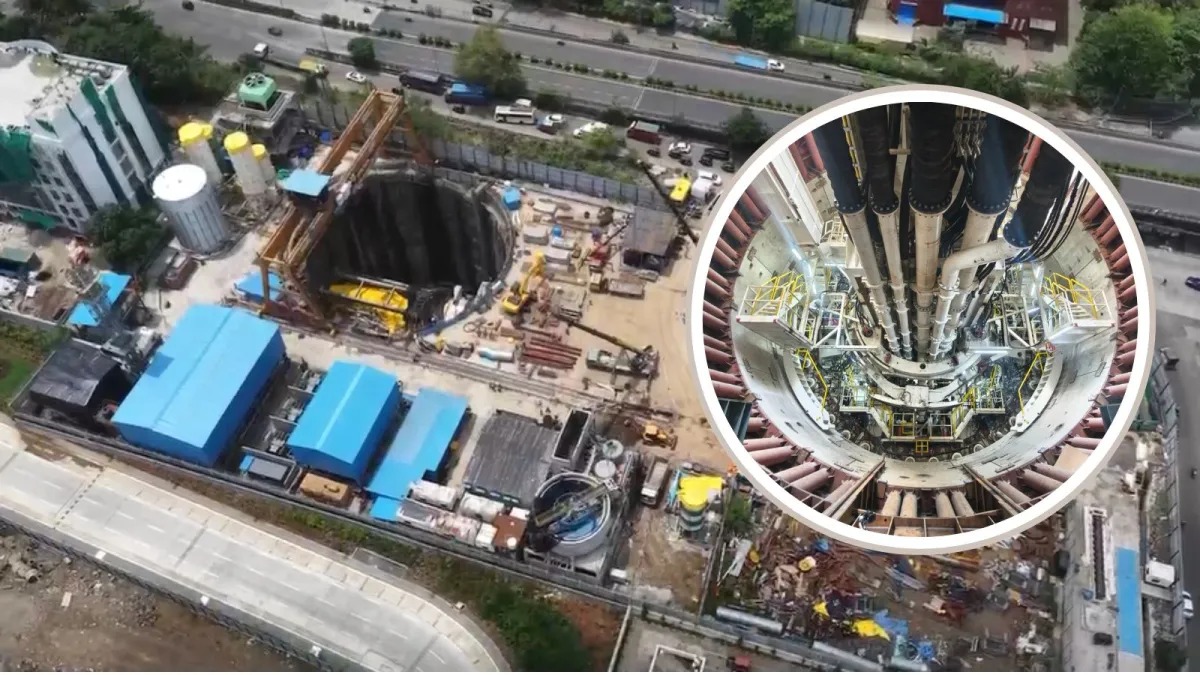
The Mumbai–Ahmedabad bullet train project reached a critical milestone as the second giant Tunnel Boring Machine began excavating the 7-km undersea tunnel beneath Thane Creek. This engineering feat, part of a 21-km underground network, utilizes advanced slurry-based technology to ensure safety and stability beneath the urban Mumbai region.
The launch of a second tunnel boring machine marks a major milestone in the construction of India’s first undersea rail corridor beneath Thane Creek.
THANE, Maharashtra – The National High Speed Rail Corporation Limited (NHSRCL) has officially commenced excavation for the undersea portion of the Mumbai–Ahmedabad bullet train project. On Saturday, July 18, 2026, a second giant Tunnel Boring Machine (TBM) began its journey from the Sawli (Ghansoli) shaft, signaling the start of work on a critical 7-kilometre stretch beneath Thane Creek.
This development is a pivotal step in the 508-kilometre Mumbai–Ahmedabad High-Speed Rail (MAHSR) corridor, which is being constructed at an estimated cost of ₹1.08 lakh crore. Once completed, the project will represent a landmark shift in India’s transportation infrastructure, providing high-speed connectivity between the states of Maharashtra and Gujarat.
Engineering Under the Seabed
The project’s underground section spans 21 kilometres between the Bandra Kurla Complex (BKC) in Mumbai and Shilphata. Of this, 16 kilometres are being excavated using TBMs, while the remaining 5 kilometres have already been completed using the New Austrian Tunnelling Method (NATM).
The second TBM deployed from Sawli is among the largest of its kind ever used for rail construction in India. The machine features a 13.6-metre diameter cutterhead—roughly the height of a four-storey building—and weighs 3,200 tonnes, a mass comparable to roughly 500 Asian elephants. Measuring 96 metres in length, the machine is designed to operate in challenging geological conditions, utilizing a pressurized liquid bentonite slurry circuit to stabilize the tunnel face.
Advanced Safety and Monitoring
To ensure stability and protect the urban landscape above, the NHSRCL has implemented rigorous safety and monitoring protocols. The TBM is equipped with real-time multi-gas monitoring systems to track methane, oxygen, carbon monoxide, and carbon dioxide levels. Additionally, the tunnel design incorporates permanent waterproofing using double-layer Ethylene Propylene Diene Monomer (EPDM) gaskets and hydrophilic seals to prevent water ingress.
According to officials, a comprehensive support ecosystem has been established at the surface, including water and slurry treatment plants, dedicated power substations, and seismographs to monitor structural integrity and vibration levels in the densely populated Mumbai suburban sector.
Why It Matters
For travelers, investors, and urban planners, the progress on this undersea tunnel represents the technical viability of one of India's most ambitious infrastructure feats. The use of advanced Mixshield technology minimizes surface disruption in Mumbai, allowing for safe progress beneath the seabed and urban foundations. This project is expected to significantly reduce travel time between India’s financial hub and Ahmedabad upon completion.
Key Facts at a Glance
Undersea Milestone: The 7-km stretch beneath Thane Creek is India’s first-ever undersea rail tunnel.
Massive Machinery: The TBM weighs 3,200 tonnes and has a cutterhead diameter of 13.6 metres.
Project Scope: The Mumbai–Ahmedabad bullet train corridor spans 508 km, with a 21-km underground section.
Construction Progress: Excavation is now underway from both ends of the TBM-driven section, with the first TBM having started its drive on July 5, 2026.
FAQ
What is the significance of the Thane Creek tunnel? It will be India’s first undersea tunnel for a railway corridor, connecting the suburban areas of Mumbai.
How long is the underground section of the bullet train? The underground network covers 21 km, of which 16 km is being built by TBMs and 5 km by NATM.
Is the tunnel safe for the seabed? Yes, the project uses pressurized slurry technology and extensive real-time monitoring to prevent ground settlement and ensure structural integrity.
Source:
National High Speed Rail Corporation Limited (NHSRCL), Press Information Bureau (PIB), The Economic Times, The Hindu