A new investigative report by animal rights activists titled "The Indian Dairy Truth Report" reveals deep operational links between India's massive dairy industry, global beef exports, and leather production. The findings challenge traditional perceptions by documenting systemic practices of forced breeding, calf separation, and eventual livestock disposal.
NEW DELHI — India’s extensive dairy industry is operating on an industrial lifecycle centered on "reproduction, extraction, and disposal," according to a detailed investigative report published by Voice of Vegans. The comprehensive study, titled "The Indian Dairy Truth Report," traces the national supply chain to document how the domestic milk market is inextricably linked to international beef exports and local leather manufacturing.
The findings are rippling through agricultural and consumer sectors, directly challenging the deeply embedded cultural concept of "Ahimsa milk"—milk supposedly obtained without causing harm or distress to animals. Lead investigator Shivam Nandi and his team argue that intensifying commercial dynamics have replaced traditional husbandry with automated, high-yield practices designed to maximize extraction.
The Cycle of Forced Impregnation and Calf Separation
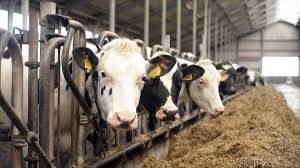
To maintain consistent commercial output across a national herd exceeding 300 million cattle and buffaloes, the report highlights that continuous cycles of artificial insemination have become the industry standard. Because bovines only lactate after giving birth, dairy farms rely heavily on repeated breeding cycles.
Government data from the Ministry of Fisheries, Animal Husbandry and Dairying supports the scale of these operations, noting that tens of millions of artificial inseminations are performed annually under state-backed productivity programs. However, animal welfare investigators note that the immediate economic consequence of this extraction is the systematic separation of newborn calves from their mothers.
This separation prevents calves from consuming the herd's milk, preserving the entire volume for commercial distribution. In cases where a calf dies due to separation stress or transport conditions, investigators documented that some dairy operations employ a khalbachha—a makeshift dummy calf stuffed with hay—to stimulate the mother's maternal instincts so she continues to lactate.
Connecting the Supply Chain to International Beef and Leather Markets
One of the report’s most significant structural assertions is that India’s status as the world’s largest milk producer is directly tied to its position as a leading global exporter of beef. The study positions dairy and meat production as two dependent halves of a single economic engine.
While multiple Indian states enforce strict statutory prohibitions against slaughtering indigenous cows, regional restrictions generally do not apply equally to all bovines. Crossbred cows, specialized dairy cattle, and water buffaloes constitute more than 53% of the country’s total bovine population and generate over 73% of its recorded milk supply.
Once an animal's milk yield drops below profitable levels—typically after three to four lactation cycles—farms classify them as unproductive. Due to high feed costs and limited land, these animals are systematically channeled into legal slaughter networks or exported, feeding the domestic leather sector and global meat markets.
Official Sources Section
The information, market statistics, and infrastructure insights featured in this report are drawn from verified public registries, organizational statements, and official government releases, including:
"The Indian Dairy Truth Report" published by Voice of Vegans.
The Department of Animal Husbandry and Dairying (DAHD) livestock census and annual progress metrics.
The Press Information Bureau (PIB) official data sheets detailing White Revolution 2.0 and the National Artificial Insemination Programme.
Bovine welfare statistics compiled by the Federation of Indian Animal Protection Organisations (FIAPO).
Quote Section
Detailing the core mechanics of the modern agricultural supply chain, the Voice of Vegans editorial team stated in the report:
"The entire economic architecture of the modern Indian dairy industry is built upon a rigid, three-part lifecycle: reproduction, extraction, and disposal. Bovines are repeatedly impregnated through artificial technology, their calves are immediately isolated to redirect milk for commercial sale, and the mothers are ultimately disposed of through abandonment or slaughter pipelines once their output declines."
According to prior investigative findings from the Federation of Indian Animal Protection Organisations (FIAPO):
"Our multi-state investigations across hundreds of commercial dairy centers indicate that rising consumer demand has accelerated the decoupling of humane treatment from livestock management. Unproductive cattle are frequently sold at low prices to earn marginal returns, directly linking dairy sustainability to the secondary meat and skin processing trades."
Why It Matters
For consumers and agricultural businesses, these findings highlight a significant gap between public perception and industrial realities. As the dairy sector expands under national programs like White Revolution 2.0, international ESG (Environmental, Social, and Governance) investors are putting supply chains under tighter scrutiny.
Unregulated dairy waste and herd management present significant environmental hurdles, with processing units directing up to 60% of their operational treatment budgets toward managing effluents. For everyday shoppers, growing awareness of these industrial extraction methods is driving shifts in corporate sourcing standards and fueling the emergence of plant-based alternative milk markets across major urban areas.
Key Facts at a Glance
Interlinked Sectors: The report demonstrates that India's domestic dairy sector serves as the primary supply pipeline feeding the country's multi-billion dollar beef and leather export industries.
Systemic Breeding: Government records indicate that over 33% of breedable bovines are managed using intensive artificial insemination programs to maximize continuous milk production.
Population Breakdown: Buffaloes and crossbred cows produce over 73% of the nation's milk, and they do not fall under the traditional legal slaughter protections reserved for indigenous cows.
Welfare Minimums: International organizations are pushing major corporate buyers to adopt strict welfare minimums, including ending permanent tethering and halting the immediate separation of newborn calves.
FAQ Section
What are the primary findings of "The Indian Dairy Truth Report"?
The report concludes that India's dairy sector relies on a commercial lifecycle of forced breeding, early calf separation to maximize milk extraction, and the eventual disposal of older livestock into slaughter or leather networks.
Is cow slaughter legal in India under these dairy frameworks?
Laws vary significantly by state. While many states strictly prohibit the slaughter of indigenous cows, these legal protections rarely extend to water buffaloes or certain crossbred dairy cattle, which contribute the vast majority of commercial milk production.
What is a khalbachha and why is it used in dairy farming?
A khalbachha is a dummy calf created from hay and skin. Because dairy cows form strong maternal bonds and may stop lactating if their calf dies or is separated, some farmers use these effigies to trick the animal into continuing milk production.
Source: Voice of Vegans Reports, Department of Animal Husbandry and Dairying India, Press Information Bureau