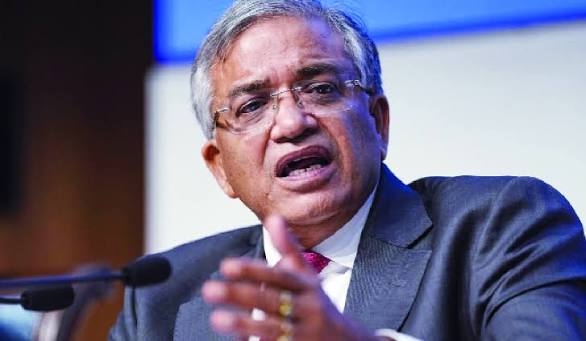
Chief Election Commissioner Gyanesh Kumar has stated that India possesses one of the world's most transparent electoral systems, citing a multi-stage audit process involving political parties and candidates. This transparency is further supported by the ECI's focus on technological integration and institutional coordination across national and state election bodies.
SRINAGAR — India’s electoral process currently stands as one of the most transparent in the world, according to Chief Election Commissioner (CEC) Gyanesh Kumar. Speaking during a three-day visit to Kashmir on June 29, 2026, the CEC emphasized that the country’s democratic framework is characterized by rigorous scrutiny, with every stage—from the preparation of voter lists to polling and counting—subject to concurrent audits by political parties and candidates [1.1.1, 1.1.5].
The CEC’s remarks come at a time when India is leading the International Institute for Democracy and Electoral Assistance (International IDEA), an intergovernmental organization dedicated to supporting sustainable democratic processes worldwide [1.1.1, 1.1.5]. By highlighting these mechanisms, the Election Commission of India (ECI) aims to reinforce public trust in the integrity of the nation's democratic exercises [1.1.8].
A Multi-Layered Auditing Framework
The ECI maintains that the transparency of India's elections is rooted in the active participation of stakeholders at every level. According to CEC Kumar, the process is not merely a government function but a collaborative effort involving political parties and candidates who serve as concurrent auditors [1.1.1, 1.1.5].
"We discussed the components of the world's most transparent electoral process—preparation of the voter list, polling, and counting. These are concurrently audited by all political parties and candidates," CEC Kumar told reporters in Srinagar [1.1.1, 1.1.5].
The commission further describes the electoral rolls, which encompass nearly 950 million voters, as a "living document." This system relies on the intensive involvement of over 1.2 million booth-level officers (BLOs) and 1.5 million booth-level agents (BLAs), who ensure the accuracy and integrity of voter data [1.1.8].
Strengthening Institutional Coordination
Beyond internal audit mechanisms, the ECI has taken steps to harmonize electoral governance across the country. In February 2026, the ECI and State Election Commissioners (SECs) adopted the "National Declaration 2026," a resolution aimed at deepening institutional cooperation [1.1.6].
This framework seeks to synchronize electoral roll management, promote the sharing of best practices, and integrate technological solutions such as ECINET across both national and state institutions. CEC Kumar, along with Election Commissioners Sukhbir Singh Sandhu and Vivek Joshi, emphasized that such collaboration is essential to maintaining the "bedrock of democracy"—pure and accurate electoral rolls [1.1.6].
Official Sources
Election Commission of India (ECI): Official statements and press releases regarding the conduct of elections and the National Declaration 2026.
Chief Election Commissioner Gyanesh Kumar: Public remarks made during interactions in Srinagar and Budgam, Jammu & Kashmir.
International Institute for Democracy and Electoral Assistance (International IDEA): Documentation regarding India's chairship and strategic collaboration on democratic standards.
Why It Matters
The ECI’s focus on transparency addresses ongoing public and academic discourse regarding the integrity of the electoral process. By maintaining an open, audit-heavy system, the commission intends to uphold the legitimacy of election outcomes. For citizens, this underscores the availability of participatory mechanisms that allow for the verification of electoral data, while for stakeholders, it reinforces the necessity of active engagement to ensure fairness in every electoral cycle.
Key Facts at a Glance
Global Standing: India currently chairs the International IDEA, highlighting its role in global democratic governance [1.1.1, 1.1.5].
Stakeholder Scrutiny: Every stage of the election, including voter list preparation and vote counting, is subject to concurrent audit by political parties and candidates [1.1.1, 1.1.5].
Voter Base: The ECI manages a "living" electoral roll covering approximately 950 million voters [1.1.8].
Institutional Alignment: The National Declaration 2026 promotes harmonized electoral processes between the ECI and State Election Commissions [1.1.6].
FAQ
How does the ECI ensure electoral transparency?
Transparency is maintained through a concurrent audit system where political parties and candidates verify processes such as voter list preparation, polling, and vote counting [1.1.1, 1.1.5].
What is the role of booth-level officers (BLOs)?
BLOs are described as the "pillars of democracy" by the CEC; they are responsible for the ground-level management and continuous updating of electoral rolls [1.1.1, 1.1.5, 1.1.8].
What was the focus of the National Declaration 2026?
The declaration focuses on improving coordination between the ECI and State Election Commissions to harmonize electoral rolls, share technological infrastructure, and deepen institutional cooperation [1.1.6].
Source: Election Commission of India, The Hindu, Economic Times, DD News