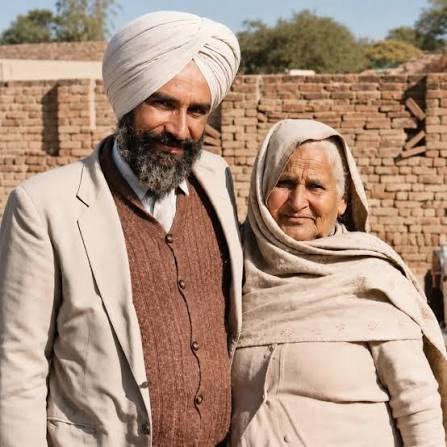
Jaswant Singh Khalra, a human rights activist who exposed 25,000 illegal cremations in Punjab, remains a symbol of justice. His multi-generational legacy of resistance against state impunity continues to inspire activism, despite modern attempts to censor historical narratives of the 1990s insurgency.
The enduring impact of human rights activist Jaswant Singh Khalra continues to resonate across generations, shaping contemporary discourse on justice and historical accountability in Punjab.
AMRITSAR – The life and work of Jaswant Singh Khalra, a pivotal human rights defender who exposed mass extrajudicial killings in Punjab during the 1990s, remains a cornerstone of civil rights advocacy in India. Three decades after his disappearance and subsequent custodial death, Khalra’s legacy has evolved from a local investigation into a multi-generational movement for truth, transparency, and accountability.
Uncovering the Darkest Chapter
Jaswant Singh Khalra, a bank employee in Amritsar, began his path into activism not through formal training, but as a response to the disappearance of his friends and colleagues during the peak of the insurgency in Punjab. His meticulous research into municipal cremation records uncovered a systematic pattern: security forces were allegedly abducting, executing, and secretly cremating thousands of individuals without informing their families or filing legal paperwork.
According to documentation cited by international organizations and human rights reports, Khalra identified evidence of approximately 25,000 illegal cremations across the state. His findings directly challenged the official narrative of the time, sparking global concern and drawing the attention of groups such as Amnesty International.
A Family Bound by Resistance
The story of the Khalra family is often described as one of three generations of resistance. His grandfather, Harnam Singh, was a prominent activist in the Ghadar movement, an early 20th-century effort to secure Indian independence, and a passenger on the historic Komagata Maru. This tradition of service and defiance against perceived injustice was inherited by Jaswant Singh Khalra, who eventually laid down his life for his cause.
Following his abduction on September 6, 1995, and his eventual custodial killing, his wife, Paramjit Kaur Khalra, assumed the mantle of his mission. For decades, she has campaigned for legal justice, successfully pushing for a Central Bureau of Investigation (CBI) inquiry that led to the 2005 conviction of six Punjab Police officials. Today, his children and a new generation of activists continue to maintain these efforts, transforming the memory of his disappearance into a catalyst for modern human rights advocacy.
Official Sources and Legal Recognition
The legal standing of Khalra’s findings was solidified through investigations conducted by the Central Bureau of Investigation (CBI). Records from these investigations, which were subsequently cited by the Supreme Court of India in Prithpal Singh v. State of Punjab, confirmed that Khalra had been working to document the "abduction, elimination, and cremation of unclaimed human bodies".
The Shiromani Gurdwara Parbandhak Committee (SGPC) and various Sikh institutions have officially commemorated him as "Shaheed Bhai Jaswant Singh Khalra," holding annual ceremonies to honor his contribution to the cause of justice.
Why It Matters
The case of Jaswant Singh Khalra serves as a critical reference point for the protection of human rights and the freedom of expression in India. Recent tensions surrounding the portrayal of his life in media—such as the state-level blocking of the film Satluj—highlight the ongoing sensitivity of this chapter of history. For citizens and historians alike, his story underscores the vital role of investigative documentation in preserving the truth against institutional impunity.
Key Facts at a Glance
Documentation: Khalra’s research uncovered evidence of approximately 25,000 secret cremations conducted by police in Punjab.
Legal Outcome: Despite initial delays, six Punjab Police officials were convicted for their roles in his abduction and murder in 2005.
Generational Legacy: His activism is viewed as a continuation of his grandfather’s involvement in the independence movement, now carried forward by his spouse and younger activists.
Symbolism: He is widely regarded as a symbol of resistance against the systemic use of extrajudicial force during the Punjab insurgency.
FAQ
Who was Jaswant Singh Khalra? He was a bank employee and human rights activist from Amritsar who exposed thousands of extrajudicial killings in Punjab.
What was the "3 generations of resistance" referring to? It highlights the lineage of activism from his grandfather (Ghadar movement), to Jaswant himself, and finally his family and the youth who continue his work today.
Why is his legacy still relevant today? His work remains central to discussions on state accountability, human rights, and the freedom to document uncomfortable historical truths.
Source: