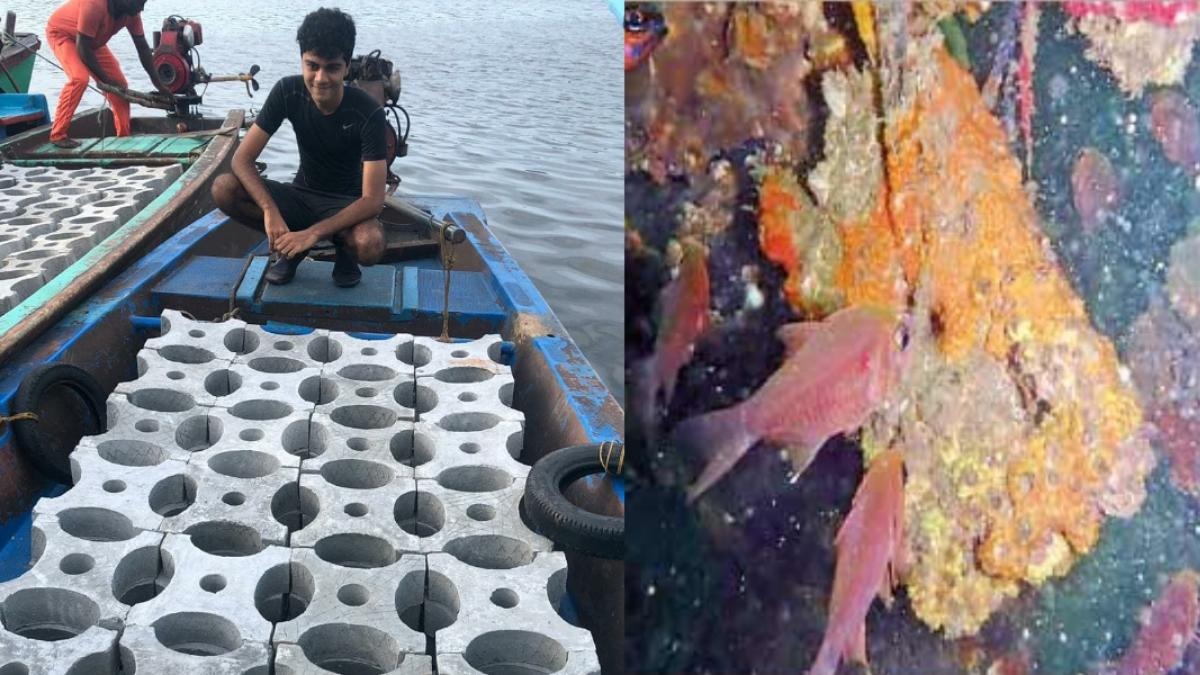
Ramanathapuram is set to host India’s first 3D-printed artificial reefs, a high-tech conservation effort aimed at restoring the Gulf of Mannar’s fragile marine ecosystem. By mimicking natural coral structures, these modules provide a durable, sustainable habitat that supports biodiversity and assists local fishing communities in their transition toward sustainable livelihoods.
In a significant advancement for marine conservation in India, researchers and local authorities are preparing to deploy 3D-printed artificial reefs off the coast of Ramanathapuram, Tamil Nadu. This project marks a pivotal shift toward utilizing high-precision, eco-friendly technology to combat the rapid degradation of natural coral reefs and support the recovery of marine life in the Gulf of Mannar region.
A New Era for Marine Habitat Restoration
The project aims to address the critical decline of coral reefs, which have been severely impacted by illegal fishing practices, plastic pollution, and climate-induced sea-level rise. By integrating advanced 3D-printing technology, experts can create modular, porous, and highly customizable reef structures that mimic the complexity of natural coral ecosystems.
Unlike traditional concrete blocks, these 3D-printed modules are engineered to provide optimal surface area for coral larvae to settle and flourish. According to experts, the intricate design of these reefs also offers vital shelter for various marine species, including seahorses, dolphins, and endangered sea turtles, effectively creating "underwater buildings" that serve as sustainable breeding and spawning grounds.
Enhancing Ecological Resilience
The initiative follows extensive research into topographical optimization, where computer modeling is used to ensure the structures can withstand strong oceanic currents while promoting biodiversity. Researchers note that this technology not only accelerates the growth of coral coverage but also reduces settlement predation, helping to stabilize the surrounding marine environment.
For the local fishing communities in Ramanathapuram, the deployment of these artificial reefs is expected to have immediate economic and ecological benefits. "Artificial reefs act as a catalyst for reviving marine biodiversity," noted a marine scientist involved in the regional conservation efforts. By concentrating fish populations in specific zones, the reefs are designed to shorten fishing trips, reduce fuel consumption, and allow natural, over-exploited reef areas to regenerate without human interference.
Official Efforts and Strategic Implementation
This project is part of a broader government strategy to strengthen the "Blue Economy" in India. Recent efforts, including collaboration between the National Institute of Ocean Technology (NIOT) and regional fisheries departments, have seen a surge in investment toward marine sustainability. While pilot programs have successfully tested modular artificial reefs across various coastal states, the Ramanathapuram initiative is being highlighted as a landmark case for the scale and precision of the 3D-printed components.
Why It Matters
The practical implications of this project extend far beyond immediate conservation. As natural ecosystems face existential threats from climate change, these 3D-printed structures provide a scalable, adaptable solution to preserve coastal integrity. For the state of Tamil Nadu, which has been a leader in deploying artificial reefs to protect sinking islands, this technological shift represents a sophisticated step forward in ensuring the long-term survival of its rich marine biosphere.
Key Facts at a Glance
Technological Precision: 3D-printed reefs offer complex, porous designs that significantly improve coral colonization compared to traditional concrete modules.
Biodiversity Support: The structures serve as essential spawning and breeding grounds for over 500 marine species in the Gulf of Mannar.
Economic Impact: Shorter fishing trips and increased fish populations are projected to boost incomes for local fishing villages.
Climate Adaptation: These reefs help mitigate the impact of ocean currents, assisting in the protection and restoration of ecologically sensitive coastal areas.
FAQ
How do 3D-printed reefs differ from traditional artificial reefs?
3D-printed reefs are customized to mimic natural coral complexity, offering superior surface area and internal spaces for marine organisms to hide and grow, whereas traditional blocks are often simple, solid structures.
Why is Ramanathapuram a priority for this project?
The region, part of the Gulf of Mannar Biosphere Reserve, is one of the most biodiverse areas in India but faces high risks from illegal harvesting and environmental degradation.
How long does it take for marine life to inhabit these reefs?
Biological processes typically begin within six months of installation, with algae, sponges, and eventually hard corals settling on the structures.
Source: New Indian Express, Deccan Chronicle, PIB India, UNDP India