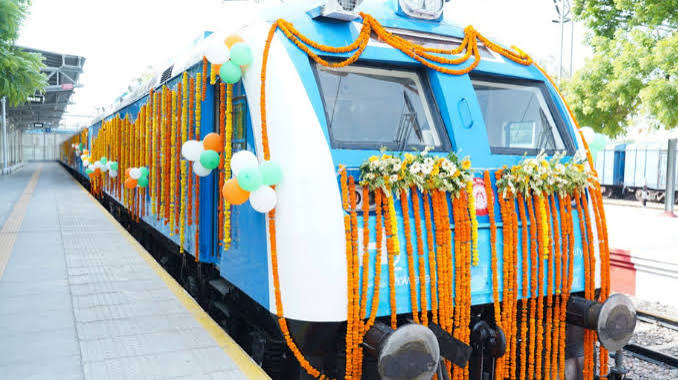
India’s first indigenous hydrogen-powered passenger train, flagged off by PM Narendra Modi on July 17, 2026, marks a major step in green mobility. Operating on the Jind-Sonipat route, the 10-coach train uses hydrogen fuel cell technology to eliminate carbon emissions, signaling the future of sustainable rail travel in India.
JIND, HARYANA — India has officially entered the select league of nations operating hydrogen-powered rail technology following the launch of its first indigenous hydrogen train on July 17, 2026. Prime Minister Narendra Modi flagged off the 10-coach trainset from Jind railway station, marking a significant milestone in the country's push toward green energy and the decarbonization of its transport sector.
The train, which operates on the 89-km Jind–Sonipat corridor under the Northern Railway zone, represents a major technological leap for Indian Railways. By utilizing hydrogen fuel cell technology instead of conventional diesel engines, the train generates its own electricity onboard, emitting nothing but water vapor and heat.
Engineering the Future of Rail
Developed entirely through indigenous research and engineering, the trainset is a repurposed Diesel Electric Multiple Unit (DEMU) rake retrofitted with hydrogen propulsion systems. The project was spearheaded by the Indian Railways in collaboration with various technical partners to ensure the infrastructure could support such a novel power source.
Infrastructure and Safety
Supporting the train's operations is India’s largest integrated railway hydrogen refuelling facility in Jind. Developed by GreenH Electrolysis, the facility uses a 1 MW proton exchange membrane (PEM) electrolyser to produce green hydrogen on-site. The infrastructure includes storage capacity for nearly 3,000 kg of hydrogen, compression systems, and dual dispensers that allow for rapid refuelling.
Safety remains a primary focus, with the entire ecosystem undergoing independent assessments by international safety standards firms such as TUV SUD. The train is equipped with real-time monitoring, leak detection systems, and automatic safety shut-off protocols that isolate hydrogen supply in the event of any detected irregularity.
Impact on Passengers and Operations
The hydrogen train is designed to carry approximately 2,600 passengers, making it the longest passenger hydrogen trainset globally. During its initial five days of commercial operations, the train successfully covered over 900 kilometers, demonstrating consistent reliability.
Speed and Efficiency: The train has a design speed of 110 kmph, though it currently operates at a capped speed of 75 kmph on the pilot route.
Affordability: Reflecting the railways' commitment to accessibility, ticket prices have been kept on par with conventional passenger services, ranging between ₹10 and ₹25.
Operational Scope: While the Indian railway network is already over 99% electrified, hydrogen-powered trains are seen as a vital solution for remote, heritage, and non-electrified routes where overhead electrification is economically or technically unfeasible.
Official Sources Section
Details regarding the project's technical specifications and inaugural milestones were confirmed via:
Quote Section
According to officials from Indian Railways:
"The launch of this hydrogen-powered train is a defining moment in India's clean energy journey. By moving away from diesel combustion to hydrogen fuel cells, we are establishing the infrastructure and technical capability to support sustainable mobility at scale."
Why It Matters
This pilot project serves as a proving ground for hydrogen-powered rail in India. By establishing a working hydrogen ecosystem—from production and storage to propulsion—the initiative validates the technology's feasibility for the national rail network. Its success provides a roadmap for the future adoption of clean energy on routes that currently rely on fossil fuels.
Key Facts at a Glance
Launch Date: July 17, 2026.
Capacity: 10-coach rake capable of carrying 2,600 passengers.
Propulsion: Two 1,200 kW hydrogen fuel cell power systems.
Environmental Impact: Zero carbon emissions, with water vapor as the only byproduct.
Pilot Route: The 89-km Jind–Sonipat section in Haryana.
FAQ Section
How is the hydrogen produced for the train?
The refuelling station at Jind produces green hydrogen through electrolysis, splitting water into hydrogen and oxygen using electricity.
Why was the Jind-Sonipat route chosen?
This route was selected as a pilot corridor to test operational viability, safety, and reliability in a real-world passenger service environment.
How does the hydrogen fuel cell work?
Hydrogen stored in onboard cylinders reacts with oxygen from the air inside a fuel cell, generating electricity that powers the traction motors to turn the wheels.
Is this train faster than current electric trains?
The train is designed for a speed of 110 kmph, but for this pilot phase, it is currently operated at a maximum of 75 kmph to ensure safety and operational stability.
Source: Press Information Bureau, Ministry of Railways, Northern Railway, Times of India