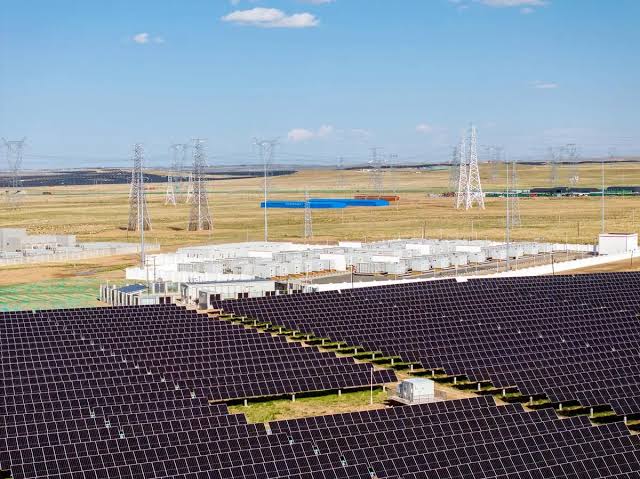
Meeting grid challenges amid high renewable energy integration presents a major business opportunity for investors and tech innovators. As India scales toward its 500 GW non-fossil target, demand for battery storage, pumped hydro, and smart grid solutions is unlocking massive commercial growth across the energy sector.
NEW DELHI — As India accelerates its transition toward 500 gigawatts of non-fossil energy capacity by 2030, energy industry leaders and power transmission authorities highlighted that meeting grid stability challenges amidst high renewable energy (RE) penetration represents one of the largest emerging business opportunities for investors and technology innovators.
Speaking at a national energy infrastructure symposium, policymakers noted that the intermittent nature of solar and wind power creates severe grid balancing demands. Rather than viewing network volatility as an operational hurdle, domestic and international energy firms are capitalizing on massive commercial avenues in battery energy storage systems (BESS), pumped-storage hydroelectricity, smart grid automation, and green hydrogen integration.
The Economics of Grid Balancing and BESS Adoption
Integrating massive volumes of solar and wind generation into legacy national grids requires sophisticated balancing mechanisms to prevent frequency fluctuations and curtailment losses. As renewable generation peaks during midday while demand surges in evening hours, energy storage acts as the critical bridge for stabilizing power transmission.
According to official power sector reports and regulatory disclosures from the Central Electricity Authority (CEA):
Storage Capacity Projections: India requires tens of gigawatt-hours of advanced energy storage over the coming decade to absorb excess solar generation and dispatch power during peak evening hours.
Commercial Inflows: Private sector investments in battery manufacturing, pumped-storage hydro plants, and ancillary grid services are scaling rapidly, driven by favorable government policies and viability gap funding (VGF) schemes.
Smart Grid Infrastructure: Power distribution companies (discoms) are heavily upgrading infrastructure with automated metering, AI-driven load forecasting, and real-time frequency regulation tools.
Official Sources Section
Quote Section
According to statements released by power sector executives and renewable energy infrastructure analysts:
"Solving the intermittency challenges of high renewable energy penetration is not merely an engineering necessity; it is a multi-billion-dollar commercial opportunity that will define the future of sustainable industrial growth."
Why It Matters
For private investors, clean technology startups, and heavy industrial consumers, the evolution of grid management offers substantial commercial growth. Developing localized storage solutions, advanced inverter technologies, and flexible power contracts ensures uninterrupted industrial operations while helping corporations meet ambitious decarbonization and net-zero carbon targets.
Key Facts at a Glance
Primary Challenge: Managing supply-demand imbalances caused by the intermittent nature of solar and wind energy.
Core Business Opportunities: Battery Energy Storage Systems (BESS), pumped-storage hydro, and smart grid automation.
Strategic Target: Supporting India's broader roadmap toward 500 GW of non-fossil fuel capacity.
Key Regulatory Focus: Ancillary market reforms and viability gap funding for storage infrastructure.
FAQ Section
Why does high renewable energy penetration create grid challenges?
Because solar and wind generation fluctuate based on weather and daylight conditions, creating sharp mismatches between peak generation times and peak consumer demand.
What are the primary business opportunities in high RE grids?
Commercial opportunities center heavily on battery energy storage systems (BESS), pumped-storage hydro projects, smart grid software, and transmission balancing services.
How is the government supporting grid storage investments?
The Ministry of Power and regulatory bodies are implementing viability gap funding schemes, market-based economic dispatch rules, and dedicated ancillary service frameworks.
What role do smart grids play in renewable integration?
Smart grids utilize real-time data analytics, automated metering, and AI forecasting to balance power flows instantly across regional transmission networks.
Source: Central Electricity Authority, Ministry of Power, Economic Times Energy World