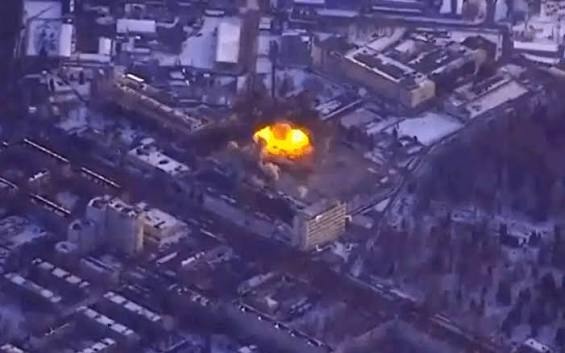
Ukraine launched a massive drone offensive targeting Russian logistics hubs near Moscow and Rostov, destroying a major Wildberries warehouse. In swift retaliation, Russia unleashed a devastating barrage of missiles and drones across Ukrainian cities, causing widespread infrastructure damage and casualties on both sides.
MOSCOW / KYIV — In one of the largest aerial escalations of the conflict, Ukraine launched a massive, coordinated swarm of long-range drones targeting the Russian capital and southern regions, resulting in significant structural fires and casualties. Moscow swiftly retaliated with heavy missile and drone bombardments across multiple Ukrainian urban centers, pushing civilian casualties to some of the highest daily tolls recorded in recent months.
According to local emergency services and defense disclosures, the wave of nighttime strikes breached deep into Russian territory, hitting crucial logistics infrastructure near Moscow and sparking massive blazes at major commercial distribution facilities. In response, Russian forces launched intense counter-attacks targeting Ukraine's industrial heartlands, utility grids, and cultural landmarks.
Deep-Target Drone Assaults and Logistics Hub Fires
The unprecedented Ukrainian offensive utilized hundreds of long-range fixed-wing drones including indigenous platforms to target key logistical nodes deep inside Russian territory. Moscow Mayor Sergei Sobyanin confirmed that roughly 600 drones were detected heading toward the capital region alone, prompting widespread air defense activations.
According to official regional updates and military briefings:
Wildberries Warehouse Blazes: A colossal fire engulfed a massive 250,000-square-meter logistics hub operated by Russian retail giant Wildberries in Podolsk, south of Moscow, disabling critical supply chains.
Casualties in Rostov: Regional governor Yury Slyusar reported that a separate swarm of over 150 drones struck the southwestern Rostov region, killing five people and severely damaging residential neighborhoods and a local railway station.
Moscow Region Impact: Moscow Regional Governor Andrey Vorobyov described the offensive as one of the most massive aerial assaults in recent memory, resulting in multiple casualties and localized infrastructural grid damage.
Retaliatory Strikes and Ukrainian Infrastructure Damage
Simultaneously, Russian forces unleashed heavy retaliatory strikes utilizing ballistic missiles and attack drones across 13 distinct locations in Ukraine, striking industrial plants, steel mills, and cultural hubs.
According to Ukrainian state reports and presidential updates:
Industrial and Urban Blasts: A missile strike on Kryvyi Rih targeted major production facilities, including the ArcelorMittal steel plant, forcing a partial halt to operations and killing two workers.
Cultural Losses in Kyiv: A historic outdoor book market in Kyiv's Obolonskyi district was hit, completely razing rare book stalls and stocks.
Nationwide Toll: Ukrainian President Volodymyr Zelenskyy noted that over the past week, Russian forces had pummeled the country with more than 1,550 attack drones and dozens of missiles, renewing urgent appeals to Western allies for enhanced air defense systems.
Official Sources Section
Russian Ministry of Defence Official Briefings: Air defense interception reports, nationwide drone interception tallies, and regional damage assessments.
Office of the President of Ukraine: National security updates, casualty data, and civil infrastructure impact statements.
State Emergency Service of Ukraine: On-ground rescue reports, fire containment updates, and civilian casualty figures from Kyiv and Kryvyi Rih.
Quote Section
According to statements released by Ukrainian President Volodymyr Zelenskyy regarding the ongoing civilian impact of the aerial escalation:
"Wherever the Russians can reach with their ballistic missiles, they strike civilian infrastructure. When destructive munitions target our cities daily, European and international defense interceptors must not sit idle."
Why It Matters
For citizens, businesses, and international observers, the dramatic escalation in deep-strike capabilities on both sides signals a dangerous new phase in the war. By targeting core supply chains, major e-commerce logistics, and industrial hubs far from the front lines, the conflict is inflicting severe economic friction and compounding civilian hardships, further freezing prospects for diplomatic resolution.
Key Facts at a Glance
Date of Escalation: August 16–17, 2026.
Primary Ukrainian Target: Wildberries logistics complex in Podolsk, south of Moscow.
Reported Interceptions: Russian defense ministry claimed hundreds of drones downed across western and central regions.
Retaliatory Impact: Widespread civilian casualties and structural damage reported across Moscow, Rostov, Kyiv, and Kryvyi Rih.
FAQ Section
What triggered the massive wave of drone attacks on Russia?
Ukraine launched one of its largest long-range drone campaigns of the war to strike major economic distribution hubs and logistics facilities deep inside Russian territory.
Which major Russian facilities were damaged in the strikes?
A massive logistics and distribution warehouse belonging to online retailer Wildberries in Podolsk, south of Moscow, was severely damaged and caught fire.
How did Moscow respond to the drone blitz?
Russia launched extensive retaliatory missile and drone strikes targeting Ukrainian industrial centers, steel plants, and urban infrastructure in Kyiv, Kryvyi Rih, and Zaporizhzhia.
What are the humanitarian consequences of these strikes?
Combined casualties across both nations rose sharply following the weekend bombardments, destroying civilian homes, commercial markets, and public infrastructure.
Source: Russian Ministry of Defence, Office of the President of Ukraine, The Guardian