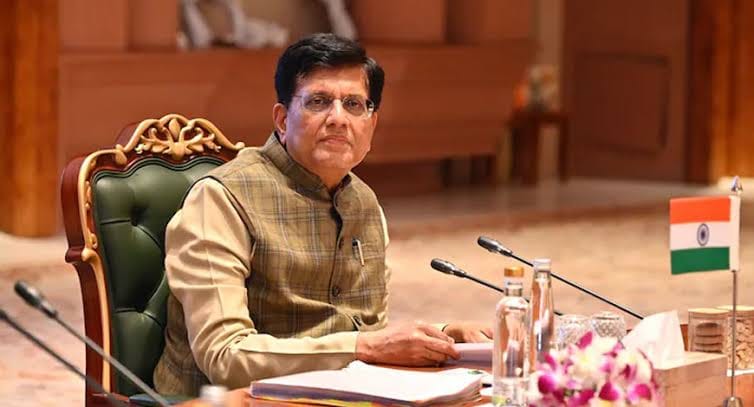
India will revise manufacturing regulations within two months to resolve semiconductor and auto component supplier concerns, Commerce Minister Piyush Goyal announced in Tokyo. The amendments will streamline Bureau of Indian Standards approvals and equipment imports, supporting the country's ₹1,27,500 crore Semicon 2.0 initiative to expand domestic high-tech manufacturing.
TOKYO — Union Minister of Commerce and Industry Piyush Goyal announced on Monday, August 24, 2026, that India will amend its regulatory framework within two months to resolve key operational friction points for semiconductor equipment and automotive component manufacturers looking to set up domestic production. Speaking during an interactive session organized by Nikkei Asia in Tokyo, Goyal confirmed that the Indian government has finalized the broad parameters of the policy updates to streamline bureaucratic processes, simplify Bureau of Indian Standards (BIS) compliances, and ease equipment importation protocols.
The announcement comes as India actively courts global technology and industrial firms to expand advanced manufacturing hubs under the Make in India initiative, reducing supply chain vulnerabilities across critical electronic and automotive sectors.
| Feature / Metric | Details & Key Policy Specifications |
| Announcement Date | August 24, 2026 (Tokyo Business Summit) |
| Target Sectors | Semiconductor Equipment & Automotive Components |
| Implementation Timeline | Within 60 Days (October 2026 Target) |
| Primary Regulatory Focus | BIS Compliance, Import Approvals & Equipment Sourcing |
| Semicon 2.0 Outlay | ₹1,27,500 Crore ($15+ Billion USD) |
| Target Ecosystem Capital | $50 Billion USD Seeded with Private Sector over 18 Months |
Streamlining Approvals for High-Tech Equipment Imports
Addressing business leaders in Japan, Goyal explained that discussions with global manufacturing representatives highlighted regulatory bottlenecks in importing specialized capital equipment, high-precision tools, and proprietary components. The upcoming rule revisions aim to simplify certification pathways administered by the Bureau of Indian Standards, ensuring fast-track approval channels for specialized inputs that may not yet fall under existing domestic standard categories.
"I have assured them that within the next two months, India will amend its regulations, bring in new rules to accommodate their request, and ensure that they will have absolutely no problem as they bring manufacturing into India," Goyal told business executives in Tokyo.
The policy adjustments are designed to alleviate friction for global suppliers that rely on deeply integrated, cross-border supply chains. While easing regulatory pathways for legitimate equipment and raw material procurement, Goyal emphasized that India remains resolute against predatory pricing and unfair trade practices that could harm domestic producers.
Alignment with India's Broader Industrial Roadmap
The planned regulatory easing coincides with the Indian government's rollout of the Semicon 2.0 initiative, backed by a central budget outlay of ₹1,27,500 crore. The expanded fiscal scheme focuses on advancing India's domestic chip design capabilities, commercial fabrication plants, advanced packaging facilities, and raw material ecosystems.
According to government projections, India aims to partner with private sector enterprises to catalyze up to $50 billion in total investment across the semiconductor value chain over the next 18 months, setting the stage for an eventual Semicon 3.0 policy release. Rebuffing the assertion that global firms view India merely as a secondary "China Plus One" destination, Goyal reiterated that India stands independently on its strategic strengths, offering a vast domestic consumer market, skilled engineering workforce, and strong intellectual property protection frameworks.
Official Sources Section
Official policy announcements and regulatory context for this news coverage were sourced directly from public releases and official institutional statements:
Quote Section
According to officials and lead representatives within the Ministry of Commerce and Industry, the upcoming policy modifications will focus primarily on removing technical barriers to trade, speeding up regulatory clearances, and enabling seamless integration of foreign capital machinery into Indian production sites.
Why It Matters
The regulatory overhaul directly benefits international chipmakers, equipment original equipment manufacturers (OEMs), and automotive component suppliers planning capital investments in India. For domestic automotive and technology industries, streamlined component sourcing reduces lead times for electric vehicle (EV) production and advanced electronic assembly, ultimately lowering supply chain costs for end-consumers.
Key Facts at a Glance
Timeline: India will issue updated regulatory rules within 60 days to solve semiconductor and auto sector concerns.
Core Reforms: Simplifies Bureau of Indian Standards (BIS) protocols and speeds up specialized equipment import approvals.
Fiscal Backing: Complements the ₹1,27,500 crore Semicon 2.0 program designed to expand domestic fabrication and packaging.
Investment Goal: Government aims to catalyze $50 billion in total semiconductor investment over the next 1.5 years.
Frequently Asked Questions
What specific sectors will benefit from the upcoming rule changes in India?
The revised regulatory framework primarily targets the semiconductor manufacturing equipment ecosystem and high-tech automotive component suppliers.
Why are changes being made to the Bureau of Indian Standards (BIS) framework?
The government is simplifying BIS procedures to ensure foreign component suppliers and specialized equipment vendors can gain regulatory approvals quickly without stalling facility setup schedules.
What is the budget outlay for India's Semicon 2.0 policy?
The Union Cabinet has approved an outlay of ₹1,27,500 crore for Semicon 2.0 to expand domestic chip design, fabrication, and manufacturing facilities.
Source: Ministry of Commerce and Industry, Ministry of Electronics and Information Technology, Bureau of Indian Standards