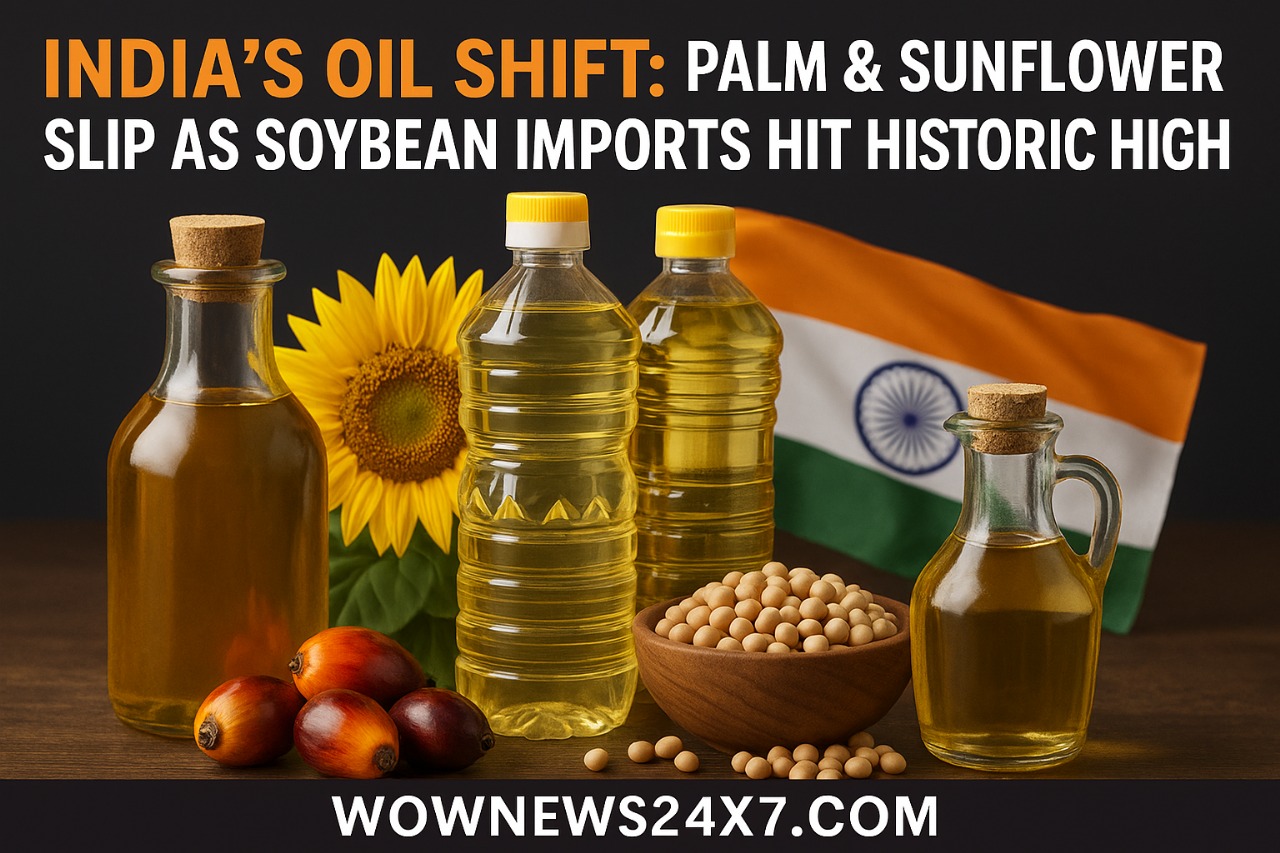
Total edible oil imports for India in the 2024/25 season are expected to rise slightly by 1% year-over-year (Y/Y) to 16.1 million metric tons.
Sunflower oil imports are forecast to decline significantly to 2.8 million metric tons, marking the lowest level in three years.
...
Total edible oil imports for India in the 2024/25 season are expected to rise slightly by 1% year-over-year (Y/Y) to 16.1 million metric tons.
Sunflower oil imports are forecast to decline significantly to 2.8 million metric tons, marking the lowest level in three years.
Palm oil imports are projected to fall sharply by 13.5% Y/Y to 7.8 million metric tons, the lowest in five years for India.
Soybean oil imports, by contrast, are poised for a record surge to 5.5 million metric tons, driven by competitive pricing and growing demand.
Overview of India’s Edible Oil Import Scenario for 2024/25:
India, the world’s largest importer of edible oils, continues to adjust its import volumes and sources in response to international market prices, domestic policies, and changing demand patterns. The projected slight increase of 1% in overall edible oil imports to 16.1 million metric tons reflects a balancing act amid fluctuating global supplies and price volatility.
Decline in Sunflower and Palm Oil Imports:
Importers report a noticeable reduction in the volumes of sunflower and palm oil imports. Sunflower oil imports are expected to drop to 2.8 million metric tons, the lowest in three years, reflecting less inflow from traditional suppliers like Russia, Ukraine, and Argentina. This decline is partly due to higher import duties applied recently and shifts in consumer preference.
Palm oil imports are forecast to shrink by 13.5% to 7.8 million metric tons, the smallest intake since 2019/20. Factors contributing to this decline include rising palm oil prices internationally and increased tariffs earlier imposed by the Indian government to protect domestic producers. Additionally, a recent trend shows palm oil becoming temporarily more expensive than alternatives like soybean oil, influencing refiners and buyers to diversify sourcing.
Record Surge in Soybean Oil Imports:
In contrast, soybean oil has emerged as the fastest-growing edible oil import category for India in 2024/25. Imports are set to jump sharply to a record 5.5 million metric tons. This surge is largely attributed to more competitive pricing compared to palm oil and sunflower oil, with soybean oil prices benefiting from tax-free imports under regional trade agreements such as the South Asian Free Trade Area (SAFTA) and favorable global production conditions in major suppliers like Argentina and Brazil.
This record-level import of soybean oil is also driving a notable increase in global soybean oil prices, impacting the market worldwide as India’s demand grows.
Market and Policy Context:
India’s edible oil consumption is heavily reliant on imports, meeting around 60% of its domestic demand through foreign purchases. The country mainly sources palm oil from Indonesia and Malaysia, while soybean and sunflower oils come from Argentina, Brazil, Russia, and Ukraine.
Recent government measures to regulate imports have included raising import duties on crude oils of palm, soybean, and sunflower to balance prices domestically and support local producers. In May 2025, duties on crude palm, soybean, and sunflower oils were lowered from 20% to 10% to ease inflationary pressures and encourage imports, but import trends vary depending on market dynamics and seasonality.
Domestic edible oil production, including mustard, groundnut, and cottonseed oils, remains largely stagnant and unable to meet growing demand, keeping import dependency high. Seasonal demand spikes, such as during the upcoming festive period, typically influence buying patterns, with expectations of increased consumption especially for palm oil during festivals.
Outlook:
The expected pattern of lower palm and sunflower oil imports, alongside a record rise in soybean oil imports, signals a shift driven by price competitiveness and trade policies. While total edible oil imports are only modestly higher compared to the previous year, these changes in composition highlight the evolving strategies of dealers and refiners in response to global market trends and domestic policy environment.
For consumers, this mix could impact retail cooking oil prices and availability in the near term. For the Indian edible oil industry, the trends underscore the continuing need to bolster domestic oilseed production to reduce reliance on volatile global imports.
Source: Reuters, Solvent Extractors' Association of India, Government of India Ministry of Commerce and Industry