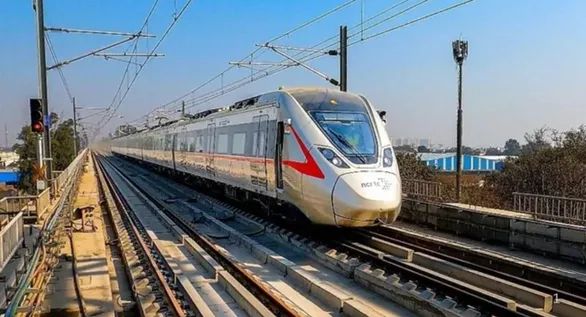
The Uttarakhand government is reviewing a proposal to approve a ₹7.02 crore Detailed Project Report (DPR) survey to extend the Namo Bharat transit network from Meerut to Haridwar and Rishikesh. Following NH-58, the line aims to reduce travel times from Delhi to under three hours, boosting local tourism.
DEHRADUN, Uttarakhand — The high-speed Namo Bharat network is positioned to expand its footprint from the National Capital Region (NCR) into the Himalayan foothills. The state government of Uttarakhand is preparing to issue a formal approval for the Detailed Project Report (DPR) survey to evaluate extending the rapid transit corridor from its current northern tracking bounds in Meerut toward the cities of Haridwar and Rishikesh.
Following formal requests coordinated by the National Capital Region Transport Corporation (NCRTC), state transport and administrative boards in Uttarakhand have initiated planning reviews to finalize the initial project frameworks. This cross-border infrastructure proposal carries significant weight for regional mobility and tourism today, as it introduces high-speed connectivity to major religious and cultural hubs. By bridging the regional distance between the national capital and Uttarakhand via an automated rail line, the proposed line seeks to dramatically lower travel times between Delhi and Rishikesh down to approximately 2.5 to 3 hours, offering a safer alternative to heavily congested expressways.
Technical Routing and Survey Allocations
The proposed extension plans to expand directly from the Delhi-Ghaziabad-Meerut Regional Rapid Transit System (RRTS) corridor, pushing northward to cross the state border into Uttarakhand.
To advance the initial planning phases, the National Capital Region Transport Corporation (NCRTC) has formally requested an allocation of ₹7.02 crore from the Uttarakhand administration to clear the costs of physical route surveys, alternative analysis mapping, and the creation of a draft Detailed Project Report.
The route configuration is planned to broadly trace the existing National Highway 58 (NH-58) line. Early project blueprints indicate that several intermediate commercial and residential towns along the path, including Daurala, Khatauli, Purkazi, and Roorkee, are under active consideration for designated passenger stations.
Financial Clearances and Administrative Steps
The multi-state infrastructure project requires close administrative coordination between central bodies, transit planners, and individual state cabinets.
Budget Management, Cabinet Approvals, and Grid Upgrades
According to early planning parameters under review by the state, the development track involves:
Financial Consultation Steps: The Uttarakhand Transport Department has initiated formal budgetary talks with the state Finance Department to allocate the required ₹7.02 crore for the survey fund.
Cabinet Review Timelines: Following final financial vetting, the formal survey proposal will be placed before the state cabinet for executive authorization.
The Power Infrastructure Push: Alongside the rapid transit link, the state has separately requested a ₹750 crore funding pool to upgrade regional power infrastructure before the Kumbh Mela.
Two-Phase Power Security: The requested utility budget allocates ₹325 crore for Phase 1 and ₹425 crore for Phase 2 to deploy underground electricity lines and automated backup networks in peak crowd zones.
Real Estate Adjustments and Market Impact
The planned extension of a high-speed rapid rail system directly to the lower Himalayas is shaking up investment profiles and long-term development strategies across the regional corridor.
According to market monitoring reports from regional real estate groups, introducing a reliable 2.5 to 3-hour travel window between the National Capital Region and Uttarakhand is changing local market dynamics. Historically regarded primarily as quiet retirement zones or occasional pilgrimage sites, areas near the proposed transit lines in Haridwar and Rishikesh are seeing early increases in land interest, driven by growing demand for weekend holiday homes, local homestays, and regional rental properties.
Institutional Stances and Infrastructure Upgrades
The ongoing discussions coincide with a broader state-level push to modernize local transportation corridors and enhance transit safety along major seasonal travel paths.
"According to transit planning records, the proposal to link the existing Meerut rapid transit infrastructure directly to Haridwar and Rishikesh remains an active priority for regional development. While the definitive system type and station footprints remain subject to final survey metrics, the state's positive intent underlines a long-term goal to modernize connectivity ahead of upcoming mega-cultural gatherings."
Beyond the transit link, the state is simultaneously moving forward with localized safety measures on connecting routes, including a ₹233 crore allocation to secure 17 landslide-prone spots on NH-134 in Uttarkashi and a ₹228 crore plan for vulnerable areas on NH-9 in Pithoragarh, ensuring smoother travel across the broader network.
Why It Matters
For millions of spiritual pilgrims, daily commuters, and international tourists, the completed Namo Bharat extension will establish a fast, high-speed connection that bypasses highway bottlenecks. The line will significantly lower travel times and help protect travelers from unpredictable gridlock during peak festival periods. For local boutique owners, hotel operators, and tourism businesses in the region, a steady influx of weekend visitors from the capital will provide a stable economic foundation, supporting business growth and job creation throughout the year.
Key Facts at a Glance
The Core Proposal: A planned extension of the high-speed Namo Bharat RRTS or metro infrastructure from Meerut (UP) to Haridwar and Rishikesh (Uttarakhand).
The Funding Requirement: The NCRTC has requested an initial investment of ₹7.02 crore from Uttarakhand to conduct the physical route survey and compile the draft DPR.
The Target Timeline: If fully realized as an RRTS line, total travel time from Delhi to the Rishikesh terminal could drop to between 2.5 and 3 hours.
The Grid Blueprint: The project overlaps with an additional state request for ₹750 crore to upgrade local power grids and place electric cables underground ahead of the Kumbh Mela.
Frequently Asked Questions (FAQ)
Has the final route for the Haridwar-Rishikesh extension been confirmed?
No, the exact route, final station locations, and specific choice of system (high-speed RRTS vs. standard regional metro) are still under discussion and will be finalized after the proposed DPR survey is approved and completed.
What is the purpose of the requested ₹7.02 crore fund?
The requested capital will be used by the NCRTC to carry out comprehensive field studies, develop an alternative analysis report, and construct the initial Detailed Project Report draft.
How does this project link to the upcoming Kumbh Mela preparations?
To handle the heavy influx of visitors, the state is pairing the transit proposal with a ₹750 crore request to install underground power lines and automated electrical grids to prevent blackouts during peak periods.
Official Sources Section: Daily Jagran