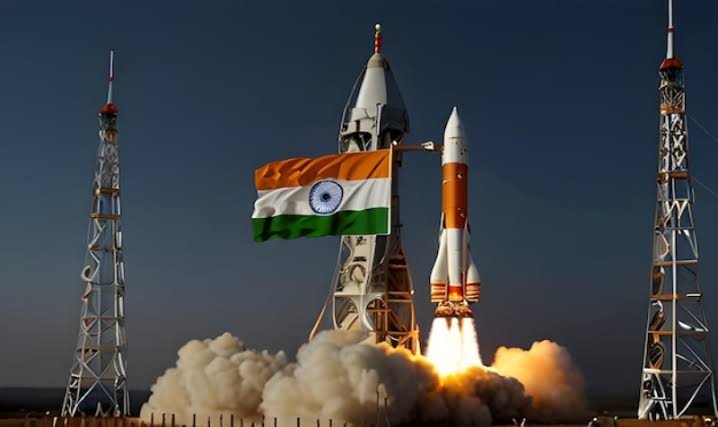
A peer-reviewed study in Economics Letters shows India’s low Earth orbit rocket launch costs averaged $13,302 per kilogram in 2025, over four times the U.S. rate of $3,225. Despite frugal mission engineering, India's lower launch cadence and smaller rockets keep per-unit costs elevated compared to global competitors.
NEW DELHI, India — India’s per-unit rocket launch costs to low Earth orbit are more than four times higher than those in the United States, according to a peer-reviewed study published in Economics Letters. The economic analysis indicates that while the Indian Space Research Organisation (ISRO) maintains a global reputation for frugal mission engineering, a reliance on smaller-capacity vehicles and a lower annual launch cadence have left India's average launch cost per kilogram significantly higher than that of major spacefaring competitors. The findings highlight the urgent commercial need for reusable rocketry and domestic heavy-lift infrastructure as New Delhi seeks to expand its footprint in the global commercial space economy.
Academic Findings Detail Wide Per-Kilogram Cost Asymmetries
The study, titled "Geopolitics and space access: cost asymmetries and strategic dependence," was authored by economists Alessio Terzi of the University of Cambridge and Francesco Nicoli of Politecnico di Torino. By evaluating a comprehensive historical dataset of more than 6,740 rocket launches conducted between 1960 and 2025, the researchers estimated the actual country-level economic costs required to deliver a single kilogram of payload into low Earth orbit (LEO).
According to the study's 2025 cost estimates, the United States maintained the lowest average cost among major spacefaring nations at $3,225 per kilogram. In contrast, India’s estimated launch expense stood at $13,302 per kilogram—more than four times the U.S. benchmark and substantially higher than the global weighted average of $3,868 per kilogram.
| Spacefaring Country / Region | Estimated Cost Per Kilogram (LEO, 2025) |
| United States | $3,225 |
| Japan | $5,287 |
| China | $5,809 |
| Russia | $6,682 |
| Europe | $9,897 |
| India | $13,302 |
Data Source: Terzi & Nicoli, Economics Letters
Frugal Mission Design Versus High Unit Rocket Launch Costs
The findings clarify an economic paradox within the international aerospace sector. India has long earned global acclaim for low-budget interplanetary feats, including the Mars Orbiter Mission (Mangalyaan) executed for $74 million and the Chandrayaan-3 lunar south pole landing achieved for approximately $75 million.
However, the economists emphasize a fundamental distinction between overall spacecraft design frugality and per-unit launch efficiency. Launch vehicle economics are governed by payload mass fractions and fixed operational expenditures. Because ISRO has historically relied on light-to-medium lift launch systems—such as the Polar Satellite Launch Vehicle (PSLV) and the Small Satellite Launch Vehicle (SSLV)—the substantial fixed overheads of launch facilities, range tracking, propellant handling, and technical personnel are distributed over relatively modest payload capacities.
In contrast, commercial aerospace operators in the United States, led by SpaceX’s partially reusable Falcon 9 and heavy-lift configurations, achieve economies of scale by delivering massive cumulative tonnage across hundreds of annual missions. In 2025 alone, the United States accounted for more than 80% of all global payload mass placed into orbit.
The Experience Curve and Heavy-Lift Infrastructure Deficits
The study determined that since 2010, only the United States and Europe have exhibited statistically significant "experience curves"—an economic principle where unit operational costs decline predictably as cumulative production and operational flight volumes increase.
Because India recorded only five orbital launches in 2025, its institutional launch cadence has remained too constrained to benefit from steep learning-curve economies. Furthermore, India's most powerful operational heavy-lift rocket, the LVM3 (Launch Vehicle Mark-3), offers a low Earth orbit capacity of approximately 8,000 to 10,000 kilograms, requiring heavier domestic commercial communications satellites—such as the 4,700 kg GSAT-N2—to seek launch services on commercial American boosters abroad.
Strategic Implications for India's Private Space Ecosystem
Widening launch cost asymmetries carry strategic and commercial implications for domestic satellite operators, telecommunications conglomerates, and space tech startups. If domestic rocket launch costs remain higher than foreign alternatives, international satellite operators may bypass Indian launch pads, and domestic startups may increasingly book rideshares on overseas launch systems.
To overcome these barriers, the Government of India has enacted structural reforms under the Indian Space Policy, establishing the Indian National Space Promotion and Authorization Centre (IN-SPACe) to facilitate private commercial launch activities and transferring commercial operations to NewSpace India Limited (NSIL). The number of registered Indian space tech startups has surged from one in 2014 to more than 400 in 2026, with private entities such as Skyroot Aerospace and Agnikul Cosmos actively developing modular, commercial launch vehicles to drive down launch costs.
Official Sources Section
Data and institutional perspectives cited in this report originate from:
Quote Section
According to the study's lead researchers:
"The analysis demonstrates that cost improvement is strongly driven by cumulative launch experience and vehicle scale. When launch cadence is limited, fixed infrastructure costs keep per-kilogram pricing high, reinforcing strategic reliance on lower-cost foreign launch providers."
Why It Matters
Commercial Competitiveness: High unit launch costs challenge India’s objective of expanding its share of the global space economy from approximately 2% to over 8% over the next decade.
Launch Cadence and Capacity: Scaling up launch frequency, developing indigenous reusable launch vehicles (RLVs), and commissioning the Next Generation Launch Vehicle (NGLV) are vital to achieving competitive pricing.
Strategic Autonomy: Lowering orbital deployment expenses ensures India maintains sovereign, cost-effective access to space for earth observation, telecommunications, and defense assets without relying on overseas providers.
Key Facts at a Glance
Cost Comparison (2025): India’s low Earth orbit launch cost averaged $13,302 per kg versus $3,225 per kg in the United States.
Global Benchmark: The worldwide average launch cost stood at $3,868 per kilogram.
Core Drivers: Lower annual launch frequency, reliance on small-to-medium rockets, and high fixed infrastructure costs spread over limited payload mass.
Industry Shift: Over 400 Indian space startups registered with IN-SPACe in 2026 to develop private launch vehicles and satellite platforms.
Frequently Asked Questions
Why are India's per-kilogram rocket launch costs higher than the United States?
While ISRO excels at low-budget mission design, India's lower annual launch volume and smaller rockets distribute fixed range and operational costs over less payload mass, whereas U.S. commercial operators utilize frequent, heavy-lift reusable rockets that achieve steep economies of scale.
Does this study mean Indian space missions are expensive?
No. Overall spacecraft and mission budgets for projects like Chandrayaan and Mangalyaan remain among the lowest in the world. The study evaluates the specific per-kilogram cost of placing payload mass into low Earth orbit.
How is India working to reduce rocket launch costs?
India is expanding private launch participation through IN-SPACe, supporting domestic reusable rocket development, and designing heavy-capacity launch platforms like the Next Generation Launch Vehicle (NGLV) to increase launch cadence and payload capacity.
Source: Economics Letters, Indian Space Research Organisation, and IN-SPACe India.