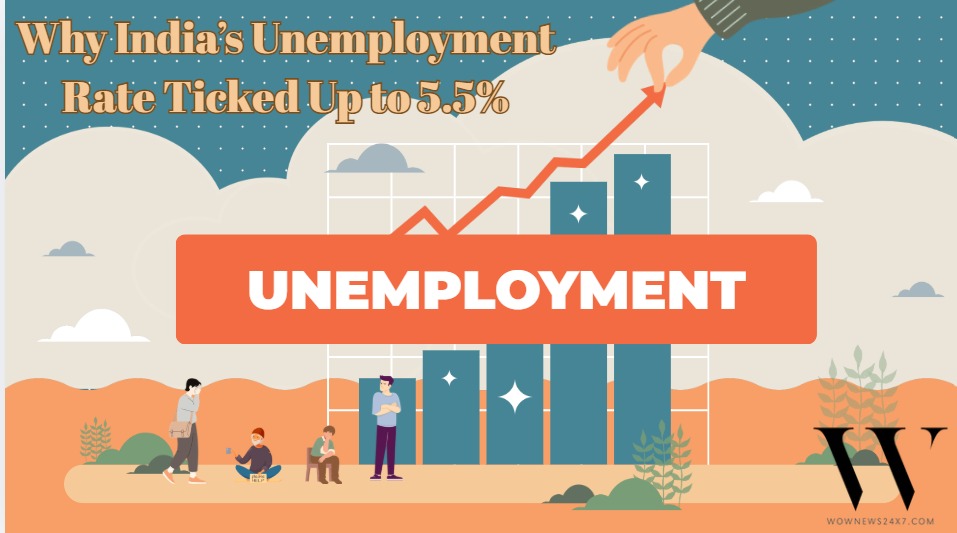
India's unemployment rate climbed to 5.5% in May 2026, surpassing analyst expectations of 5.3%. The data, released by the government, reflects a softening labor market characterized by cautious hiring in urban services and challenges within rural non-farm employment sectors as the economy navigates persistent macroeconomic headwinds.
India’s unemployment rate reached 5.5% in May 2026, according to the latest figures released by the Ministry of Statistics and Programme Implementation. This marks a continued upward trend in joblessness, rising from the 5.2% recorded in April 2026. The figure notably outperformed the consensus estimate of 5.3% derived from a recent Reuters poll, signaling that the labor market is facing more significant headwinds than previously anticipated by institutional investors and economists.
The increase in the unemployment rate reflects a broader softening in economic activity as India navigates complex domestic and global challenges. With manufacturing sectors witnessing a cautious slowdown and services hiring stabilizing, the labor market is currently experiencing its most testing period of the 2026 fiscal year.
Economic Headwinds and Labor Market Trends
Analysts point to several structural and cyclical factors driving the current rise in unemployment. The Periodic Labour Force Survey (PLFS) data, which serves as the backbone for these monthly indicators, highlights that both rural and urban job markets are under pressure.
Rural Dynamics: Rural employment has been impacted by seasonal shifts and slower recovery in non-farm activities. As labor force participation rates (LFPR) fluctuate, the rural job market has struggled to absorb new entrants, leading to a rise in the headline rate.
Urban Challenges: Urban centers, which typically host formal jobs in services and technology, are seeing cautious hiring practices. As companies adopt a "wait-and-watch" approach due to global macroeconomic uncertainty, the entry-level job market has become increasingly competitive.
Youth Unemployment: Younger demographics, particularly those aged 15–29, remain disproportionately affected by the current labor market squeeze. A persistent skills mismatch continues to hamper the transition of graduates into high-growth sectors such as advanced manufacturing and renewable energy.
Official Perspective on Employment Data
According to officials at the Ministry of Statistics, the data collection methodology implemented in 2025 ensures higher granularity and consistency in reporting monthly labor trends. The government remains focused on implementing skilling initiatives and supporting entrepreneurship to mitigate the impact of these cyclical downturns.
"Organizers stated that the government is closely monitoring the shift in labor force participation and is working with industry stakeholders to address sectoral bottlenecks that are currently restraining hiring momentum," according to a recent policy briefing.
Why It Matters
The rise in the unemployment rate to 5.5% is a significant indicator for both domestic policy and international investment sentiment. For policymakers, the trend underscores the urgent need for targeted interventions in urban skilling and affordable housing to support workforce mobility. For investors, the cooling labor market could influence future monetary policy decisions, as a weaker job market often aligns with shifts in consumer spending and household purchasing power. Understanding the trajectory of the Indian labor market is essential for businesses planning their expansion strategies for the remainder of the year.
Key Facts at a Glance
May 2026 Unemployment Rate: 5.5%, marking an increase from 5.2% in April.
Market Expectations: The figure exceeded the 5.3% consensus projected by Reuters polls.
Primary Source: Data is based on the latest Periodic Labour Force Survey (PLFS) bulletin.
Market Context: The rise reflects ongoing economic headwinds, including cautious hiring in the service and manufacturing sectors.
FAQ
Why did the unemployment rate rise to 5.5% in May 2026?
The rise is driven by a combination of cautious hiring in the formal service sector and slower labor absorption in rural areas, reflecting broader macroeconomic headwinds.
How does this compare to previous months?
The unemployment rate has shown a consistent upward trajectory through early 2026, rising from 4.9% in February to 5.1% in March, 5.2% in April, and reaching 5.5% in May.
What is the significance of the 5.5% figure?
The 5.5% rate is above both the previous month's data and market analyst expectations of 5.3%, suggesting that the labor market is cooling faster than many experts had predicted.
Where can I monitor official labor market data?
Detailed reports are published regularly by the Ministry of Statistics and Programme Implementation (MoSPI) through the Periodic Labour Force Survey.
Source: Ministry of Statistics and Programme Implementation (MoSPI), Reserve Bank of India (RBI), NITI Aayog