NEW DELHI — The U.S.-India Business Council (USIBC) has officially launched the India-US Critical Minerals Task Force to strengthen global supply chains. The private sector coalition brings together top commercial mining companies, technology manufacturing firms, and financial institutions from both...
NEW DELHI — The U.S.-India Business Council (USIBC) has officially launched the India-US Critical Minerals Task Force to strengthen global supply chains. The private sector coalition brings together top commercial mining companies, technology manufacturing firms, and financial institutions from both nations.
The development follows the intergovernmental "Securing of Supply in the Mining and Processing of Critical Minerals and Rare Earths" framework agreement signed by both countries. By building a specialized task force, USIBC aims to translate high-level diplomatic protocols into commercial partnerships, joint research, and long-term industrial investments. This private sector push arrives as global manufacturing hubs actively seek to diversify processing pipelines and reduce dependence on single-source geographic monopolies.
Driving Bilateral Commercial Integration
The newly created USIBC critical minerals task force focuses on advancing industrial collaborations across the entire critical minerals value chain. Rather than limiting operations to raw mining, the working group will drive private-sector resources into downstream processing, manufacturing infrastructure, advanced recycling tech, and the efficient management of scrap metal.
The action plan aligns with India’s recently introduced national tailings exploration policy, which sets guidelines for recovering valuable materials from legacy mine waste. By utilizing commercial R&D pipelines, the task force plans to commercialize specialized extraction methods. This will allow technology companies to extract strategic elements like lithium, cobalt, and rare earth elements directly from operational and waste streams.
Geopolitical Alignment and Economic Context
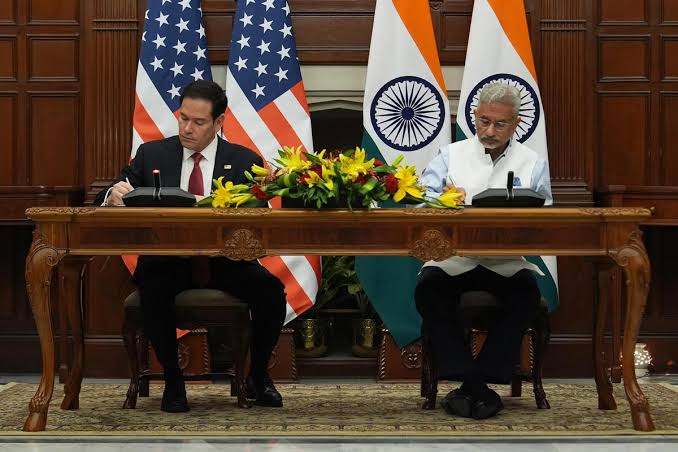
The corporate mobilization builds upon several major bilateral agreements executed over the past year. In February 2026, India became a formal signatory to the United States-led Pax Silica initiative. This was followed by a formal intergovernmental framework agreement signed during the Quad Foreign Ministers' meeting in New Delhi.
At that summit, United States Secretary of State Marco Rubio and Indian External Affairs Minister S. Jaishankar finalized a comprehensive state pact to protect sensitive technology supply lines from market distortions and coercive export controls. The U.S. government has backed these diplomatic initiatives by mobilizing more than $30 billion in letters of interest, loans, and investment guarantees through private sector partnerships.
Official Sources Section
The formal launch of the industry task force was announced in operational updates by the U.S.-India Business Council, a division of the U.S. Chamber of Commerce. Background strategic frameworks and official bilateral policies were corroborated by diplomatic records published by the Ministry of External Affairs - Government of India and joint press releases from the [suspicious link removed].
Quote Section
According to official administrative briefs released by the business council during the inauguration of the task force:
"The task force will seek to establish reliable and resilient mineral supply chains, reinforcing the key strategic and commercial objectives established between the two democracies. Moving forward, the private sector must step up to turn diplomatic intent into tangible industrial processing infrastructure."
Why It Matters
For mainstream consumers, the successful securing of critical mineral supply chains plays an essential role in lowering the long-term retail costs of electric vehicles (EVs), consumer smartphones, and smart home technologies. For defense contractors and high-tech manufacturers, the joint task force provides a vital layer of insulation against surprise resource embargoes or international trade disputes. By establishing a parallel, verified processing network outside of single-source monopolies, participating businesses can protect their supply chains and preserve production timelines despite global geopolitical volatility.
Key Facts at a Glance
Private Sector Catalyst: The USIBC task force is designed to turn intergovernmental agreements into commercial mining and refining joint ventures.
Capital Mobilization: The group operates alongside a broader $30 billion U.S. government strategic finance pipeline to secure clean energy raw materials.
Technical Scope: The task force covers extraction, downstream processing, and the reclamation of critical elements from electronic waste.
Industrial Synergy: The partnership pairs deep technical research capacity from the U.S. with India's large industrial infrastructure and untapped mineral feedstocks.
FAQ Section
What exactly are "critical minerals," and why are they important?
Critical minerals include rare earth elements, lithium, cobalt, and nickel. They serve as foundational components required to manufacture advanced electronics, semiconductor chips, electric vehicle batteries, solar panels, and defense defense hardware.
How does this task force relate to the government agreements signed in New Delhi?
While the framework signed by the U.S. and Indian governments sets the overarching legal and diplomatic policies, the USIBC task force coordinates the private corporations, mining companies, and banks needed to build and fund actual processing facilities.
Will this initiative help lower the costs of electric vehicles?
Yes. By scaling up alternative refining and processing facilities across partner nations, the task force aims to resolve the raw material bottlenecks that frequently drive up battery and electronic manufacturing costs.
Source: Official program launches and policy declarations from the U.S.-India Business Council, alongside statutory bilateral framework updates from the Ministry of External Affairs - Government of India.