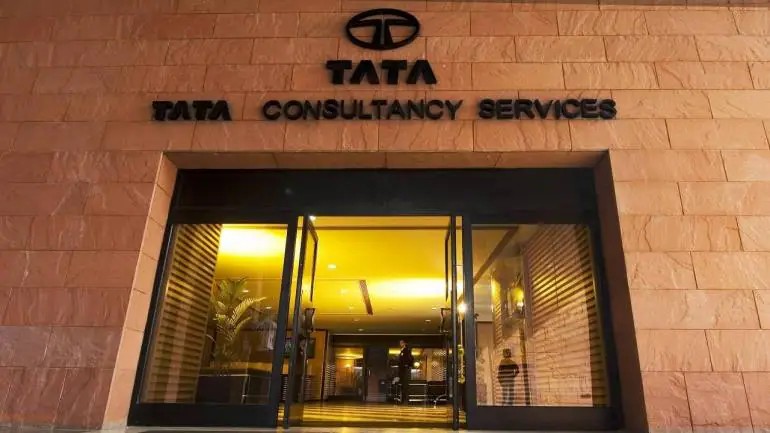
WASHINGTON — The Supreme Court of the United States on June 15, 2026, declined to hear an appeal by Tata Consultancy Services Ltd. (TCS), rejecting the Indian software giant's petition to reconsider a $168 million judgment leveled against it. The underlying civil dispute involves the systemic misapp...
WASHINGTON — The Supreme Court of the United States on June 15, 2026, declined to hear an appeal by Tata Consultancy Services Ltd. (TCS), rejecting the Indian software giant's petition to reconsider a $168 million judgment leveled against it. The underlying civil dispute involves the systemic misappropriation of proprietary insurance software trade secrets owned by Computer Sciences Corp. (CSC), a subsidiary of Virginia-headquartered DXC Technology Co. (NYSE: DXC).
The high court’s decision to deny certiorari exhausts the IT exporter’s final legal avenue within the United States judicial system. By refusing to review the case, the Supreme Court leaves in place an appellate ruling establishing that Tata employees willfully and maliciously exploited proprietary source code and technical manuals to build a competing software platform, setting a firm precedent for intellectual property protection within the global tech outsourcing ecosystem.
The Origins of a Multi-Year Silicon Conflict
The protracted legal dispute trace back to commercial service agreements where Tata Consultancy Services was brought in as a third-party technology consultant to maintain software platforms licensed by CSC to financial firms. According to lower court filings, TCS employees utilized their administrative access credentials to analyze internal components of CSC’s proprietary Vantage-One and CyberLife software packages.
Evidence presented at trial revealed internal corporate email chains indicating that technical teams systematically parsed through the protected host source code. The data was subsequently leveraged to accelerate the development of Tata’s own proprietary life insurance and banking software suite, known as BaNCS, directly bypassing years of costly research and developmental cycles.
Legal Mechanics and the Circuit Split Defense
Following an initial jury trial in Texas, Tata was found liable under the federal Defend Trade Secrets Act (DTSA). The district court entered a final judgment calculating $56 million in compensatory damages—based on saved development expenses—alongside $112 million in statutory exemplary damages for malicious corporate conduct.
Tata contested the assessment method, petitioning higher courts on two core arguments:
Absence of Quantifiable Loss: TCS argued that because the software owner suffered no direct market share contraction or immediate financial losses from the internal code review, the award of "avoided development costs" as unjust enrichment was invalid.
The Second Circuit Discrepancy: The defense highlighted a notable legal split, pointing to alternative federal circuits that require distinct proof of a visible market impact on the plaintiff before awarding development-cost damages.
However, the U.S. Court of Appeals for the Fifth Circuit rejected those arguments, affirming that the plain text of the DTSA allows victims to recover the exact capital value a bad actor saves by stealing intellectual property.
Wider Consequences for Global IT Vendors and Investors
The finalized $168 million financial hit is expected to prompt compliance reviews across the international software sector. For global commercial entities, institutional investors, and enterprise tech buyers, the ruling highlights structural vulnerabilities:
Rigid Clean-Room Mandates: Global consulting organizations face pressure to isolate development engineers via verified "clean-room" isolation policies when staff have operational visibility into rival software systems.
Corporate Earnings Adjustment: As India's dominant IT exporter, the finality of the multi-million dollar cash outflow will directly impact near-term operational cash reserves, though the firm has historically set aside financial provisions for active litigation.
Stricter Vendor Screening: Global enterprise banking and insurance clients are likely to implement tighter vendor audit clauses to protect proprietary enterprise software from consultant overreach.
Official Sources Section
The determination was finalized via official orders published on the public docket of the Supreme Court of the United States. Corporate confirmations, operational responses, and prior legal filings were verified via regulatory updates issued through investor portals at DXC Technology Investor Relations and corresponding equity statements filed on the National Stock Exchange of India.
Quote Section
Following earlier appellate ratifications that led directly to the Supreme Court petition, DXC leadership underscored the ethical significance of the prolonged litigation.
"Our customers rely on us to safeguard the integrity of the mission-critical systems we manage for them, and that responsibility demands the highest standards of accountability," stated Raul Fernandez, Chief Executive Officer of DXC Technology. "This ruling reinforces the principles we stand for and reflects our unwavering commitment to protecting intellectual property."
Why It Matters
The absolute denial of the petition signals to global tech majors that U.S. federal courts will aggressively enforce substantial financial penalties for corporate espionage, even if the stolen trade secrets are not utilized to completely erase a competitor's market share. By solidifying "avoided R&D costs" as a valid metric for calculating damages, the judiciary has elevated the baseline financial risks associated with inadequate intellectual property firewalls inside cross-border consulting teams.
Key Facts at a Glance
Final Judgement: The Supreme Court declined to review Tata's petition, making the $168 million penalty legally absolute.
The Penalty Breakdown: Total damages include $56 million in compensatory enrichment and $112 million in punitive penalties.
Core Violation: The litigation focused on the unauthorized duplication of source code from DXC's Vantage-One software ecosystem.
Legal Precedent: Reinforces that saving research expenditures via trade-secret theft constitutes actionable unjust enrichment.
Frequently Asked Questions
What specific software was involved in the trade-secret lawsuit?
The litigation involved highly specialized proprietary life insurance and annuity administration platforms, specifically the Vantage-One and CyberLife systems originally engineered by Computer Sciences Corp. (CSC).
What is meant by "avoided development costs" in a legal context?
Avoided development costs represent the estimated capital, engineering hours, and operational expenses an entity saves by illicitly copying an established competitor’s software code instead of developing similar platform architectures from scratch.
Does Tata Consultancy Services face other similar legal rulings?
Yes. The DXC Technology litigation draws parallels to a separate, high-profile intellectual property case brought by medical software provider Epic Systems Corp., which resulted in a separate multi-million dollar final judgment against Tata following extensive appeals.
Sources: Supreme Court of the United States Orders List, DXC Technology Corporate Investor Relations, U.S. Court of Appeals for the Fifth Circuit Case Records