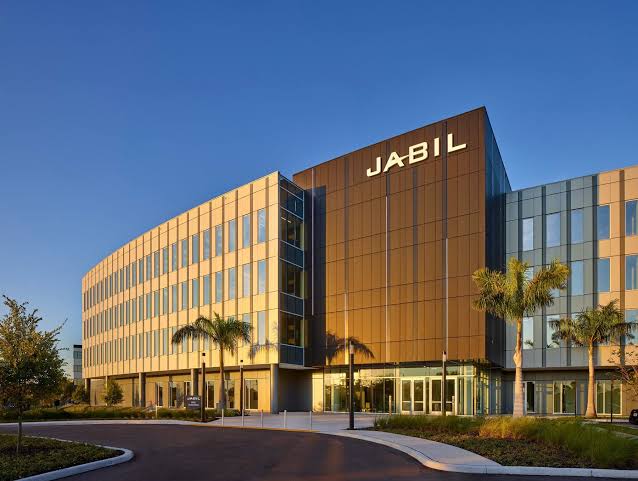
Jabil Inc. has accelerated its advanced manufacturing capabilities to produce gigawatt-scale AI rack installations and specialized infrastructure components. Optimized for massive data centers, the initiative delivers fully integrated, liquid-cooled server architectures designed to meet the extreme thermal and power delivery challenges of modern enterprise generative artificial intelligence deployments globally.
SAN JOSE, California — Jabil Inc. (NYSE: JBL), a global leader in design, advanced manufacturing, and supply chain solutions, has announced an aggressive expansion of its production capabilities to target gigawatt-scale (GW-scale) artificial intelligence (AI) rack systems and advanced infrastructure components. The development, unveiled on June 15, 2026, aims to directly address critical supply chain bottlenecks preventing hyperscale cloud providers and enterprise clients from building out the massive, next-generation data centers required to process complex generative AI workloads.
As the compute density of AI clusters jumps exponentially, traditional hardware architectures are hitting physical and thermal limits. By scaling its manufacturing lines to support GW-scale deployments, Jabil is aligning its electronics manufacturing services (EMS) engineering with the massive structural shifts rewriting the specifications of high-performance computing centers worldwide.
Scaling Factory Floor Capabilities to Gigawatt Levels
The global build-out of infrastructure dedicated to artificial intelligence requires an unprecedented volume of integrated hardware modules. Jabil’s new operational initiative scales up production lines to handle highly complex, liquid-cooled server racks integrated with advanced power management systems. This massive hardware consolidation represents a shift from building individual server nodes to manufacturing fully populated, multi-ton rack clusters that can plug directly into utility-scale data center ecosystems.
Under this target, manufacturing facilities will focus on heavy-duty structural chassis, complex power busbars, liquid-to-liquid cooling distribution units (CDUs), and highly dense circuit board integration. Industry analysts indicate that manufacturing at a "gigawatt-scale" implies an end-to-end production volume capability that can collectively support hundreds of thousands of high-power hardware units, provisioning full server footprints for multi-facility digital infrastructure projects simultaneously.
Engineering to Solve the Great AI Thermal Crisis
The sudden shift toward generative AI has fundamentally altered the physical makeup of data center equipment. While standard cloud server racks typically operate at power densities of 10 to 15 kilowatts (kW), the latest graphics processing unit (GPU) clustered architectures frequently demand upwards of 100 kW per rack.
To prevent catastrophic thermal throttling or hardware damage, advanced infrastructure must abandon air cooling in favor of direct-to-chip liquid cooling systems. Jabil's engineering roadmap incorporates precision assembly methods for non-drip quick-disconnect valves, robust cooling manifolds, and localized power delivery setups capable of converting high-voltage inputs right at the rack level. This manufacturing transition provides hyperscalers with a pre-tested, plug-and-play solution that significantly mitigates the deployment risks traditionally managed on-site at data centers.
Market Impacts Across Tech, Investment, and Supply Chains
Jabil's localized footprint and scaled capacity are projected to alter timelines for several core market groups:
Hyperscale Cloud Providers: Shorter lead times for deploying custom-configured GPU architectures, accelerating the rollout of regional enterprise AI services.
Data Center Operators: Seamless integration of hybrid air-and-liquid configurations, maximizing rack efficiency without needing custom mechanical overhauls.
Institutional Investors: Increased clarity on physical supply chain reliability, a metric that has heavily dictated stock evaluations for primary AI chip developers and digital infrastructure REITs.
Official Statements
From Company Executives
"The transition to gigawatt-scale artificial intelligence deployments is no longer a future roadmap milestone; it is the immediate reality our customers face today," said a Jabil operations executive. "By dedicating our advanced infrastructure manufacturing lines to integrated racks, high-efficiency cooling, and high-power delivery architectures, we are eliminating deployment bottlenecks and enabling hyperscalers to scale up their compute capacity with unmatched speed and reliability."
Industry Analyst Commentary
"The bottleneck in AI adoption has officially moved from chip design to physical factory floor output," commented a leading electronics supply chain analyst. "Building individual circuit boards is no longer the metric of success. The winners in the EMS space will be those capable of shipping massive, liquid-cooled, fully integrated industrial rack configurations that match the immense power draws demanded by modern foundation models."
Why It Matters
As tech giants compete to achieve artificial general intelligence (AGI), the constraint on progress is shifting from software limitations to concrete hardware limits. Data centers are consuming larger fractions of regional power grids, driving an intense need for hyper-efficient power conversions and advanced thermal management at the manufacturing level. Jabil’s strategic positioning highlights the growing reliance on tier-one contract manufacturers to solve the macro-level mechanical and power challenges of the AI boom, translating raw silicon chips into operational utility-scale infrastructure.
Key Facts at a Glance
Target Scope: Manufacturing capabilities optimized for gigawatt-scale data center infrastructure deployment.
Core Architectures: Specialized production lines for dense multi-GPU server chassis, advanced direct-to-chip liquid cooling loops, and custom localized power buses.
Operational Pivot: Moving past standalone component assembly to build out massive, fully integrated, plug-and-play server rack systems.
Market Demand: Directly addresses the acute structural shortage of high-power, liquid-cooled space across major regional cloud hubs.
Frequently Asked Questions
What does "GW-Scale" mean in data center manufacturing?
Gigawatt-scale refers to the aggregate capacity of data center infrastructure supported by manufacturing output. Rather than assessing volume by individual component counts, it measures the collective power delivery and cooling capacity of the integrated rack systems produced, matching the immense scales at which modern hyperscale cloud hubs are built.
Why is liquid cooling required for new AI racks?
Modern high-performance chips used to train large-scale neural networks generate heat profiles that exceed the physical limits of traditional air-blown cooling. Liquid cooling systems utilize direct-to-chip cold plates and fluid circulation loops to dissipate heat far more efficiently, allowing components to run safely at max performance levels.
How does contract manufacturing impact the overall speed of AI deployment?
By relying on advanced contract manufacturers like Jabil, cloud providers can offload the highly complex mechanical engineering, liquid loop testing, and structural assembly steps to automated factory lines. This ensures server clusters arrive at the data center fully assembled, calibrated, and ready to link directly to utility lines.
Sources: Jabil Inc. Investor Relations & Corporate Announcements, U.S. Securities and Exchange Commission (SEC) Regulatory Filings