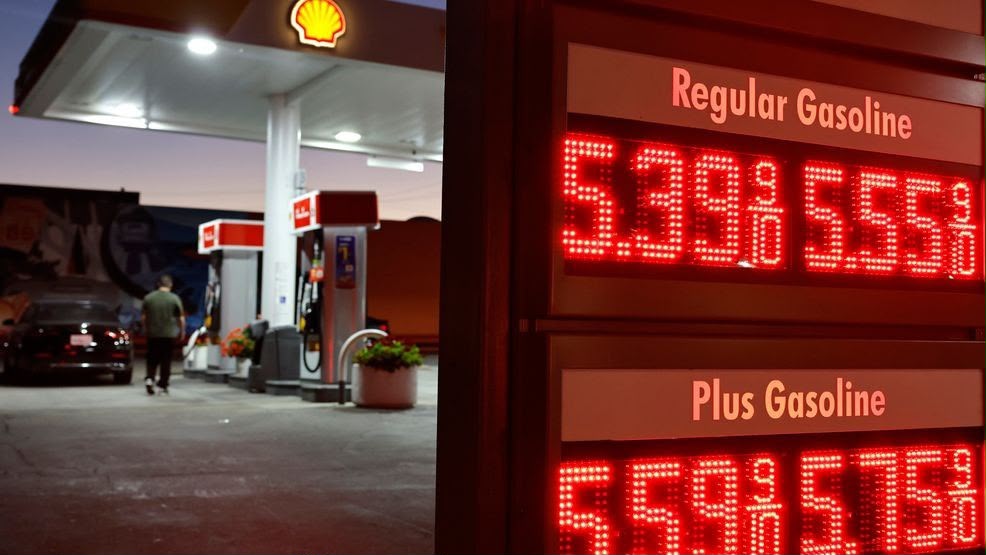
U.S. inflation cooled unexpectedly in June, with consumer prices dropping 0.4%—the largest monthly decline in four years—bringing the annual rate to 3.5%. While this easing reduces pressure on the Federal Reserve to hike interest rates, rising oil prices caused by renewed U.S.-Iran conflict keep inflationary risks elevated.
While falling consumer prices provide a rare window of relief, escalating geopolitical tensions in the Middle East are keeping the Federal Reserve’s inflation-fighting strategy on edge.
WASHINGTON — U.S. inflation cooled significantly in June, offering a long-awaited respite for American consumers as the cost of gas, clothing, and used cars saw a sharp decline. However, the economic outlook remains precarious as renewed military conflict between the United States and Iran threatens to destabilize energy markets and reverse recent progress.
The Bureau of Labor Statistics reported a 0.4% drop in consumer prices for June—the largest monthly decline in four years—bringing the year-over-year inflation rate down to 3.5% from 4.2% in May. Despite this downward trajectory, the Federal Reserve’s mandate to reach a 2% inflation target remains a complex challenge as global oil prices climb once more.
The Fed’s Delicate Balancing Act
For the Federal Open Market Committee (FOMC), the cooling inflation data—including a flat core inflation reading—offers a potential justification for maintaining current interest rates rather than accelerating hikes. Yet, the Federal Reserve Chair, Kevin Warsh, has urged caution, emphasizing that the central bank remains "resolute" in its commitment to price stability.
During his recent testimony before Congress, Warsh cautioned against declaring "mission accomplished" based on a single positive report. While market participants have scaled back expectations for an immediate rate increase, the Fed is closely monitoring whether the latest energy price spikes will manifest as persistent, underlying inflation.
Energy Markets and the Hormuz Factor
The primary threat to the current cooling trend is the renewed volatility in the Strait of Hormuz. Following fresh U.S. strikes and a new maritime blockade, Brent crude prices surged to approximately $85 per barrel this week. With roughly one-fifth of the world’s oil passing through this critical shipping route, analysts warn that further disruptions could lead to sustained upward pressure on gasoline and airfares, potentially undoing the gains made in the June CPI report.
Why It Matters
For citizens, the economic landscape remains a double-edged sword. While the recent dip in consumer prices provides temporary relief for household budgets, the broader geopolitical climate suggests that inflationary risks are far from over. Businesses are similarly navigating this uncertainty, balancing the benefit of lower input costs in some sectors against the looming threat of supply-chain disruptions and higher energy premiums.
Key Facts at a Glance
Inflation Drop: Consumer prices fell 0.4% in June, with the annual rate declining to 3.5%.
Energy Volatility: Brent crude has climbed toward $85 per barrel amid renewed conflict in the Strait of Hormuz.
Policy Stance: Fed Chair Kevin Warsh has reiterated that the central bank will not accept inflation above its 2% objective, maintaining a hawkish outlook.
Market Sentiment: Traders have recently scaled back bets for a near-term interest rate hike, though uncertainty persists regarding the impact of continued energy price spikes.
FAQ
Does the June inflation report signal the end of Fed rate hikes?
Not necessarily. While the soft report has lowered pressure for an immediate hike, Chair Warsh has emphasized that the Fed will remain data-dependent and will not pass up necessary measures to curb persistent inflation.
Why are oil prices rising despite the June inflation cooling?
Oil prices are being driven by geopolitical factors, specifically renewed military activity and the blockade of the Strait of Hormuz, which have created a "geopolitical risk premium" in energy markets.
How does the Fed define its "2% goal" in this climate?
Fed officials have stated that the 2% target remains non-negotiable. They are wary of interpreting temporary energy price swings as a shift in long-term inflation trends.
Source: Bureau of Labor Statistics, Federal Reserve Board, Associated Press (KIRO 7), Financial Times, World Bank Commodities Outlook