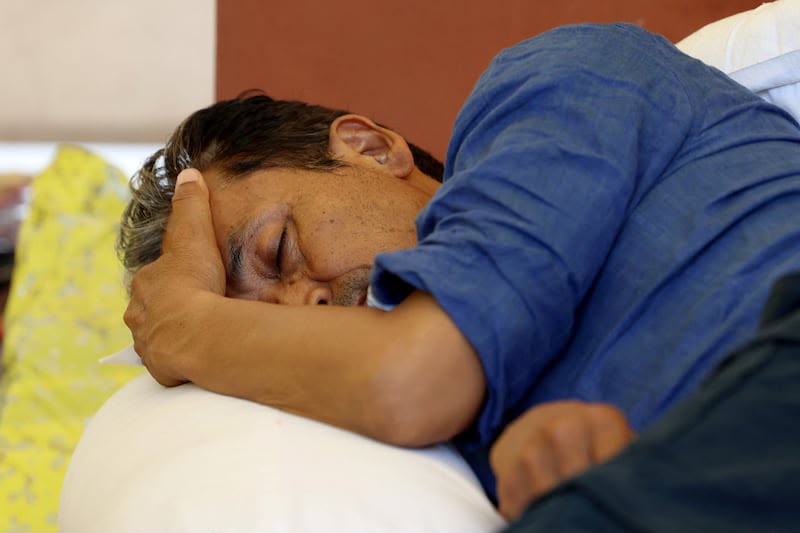
Activist Sonam Wangchuk has entered the 17th day of an indefinite hunger strike in New Delhi, protesting against recurring national exam leaks. Demanding the Education Minister's resignation and compensation for affected students, Wangchuk remains resolute despite severe physical deterioration, supported by the youth-led Cockroach Janta Party and various civil society groups.
As the hunger strike enters its 17th day, pressure mounts on authorities to address the systemic failures behind recent nationwide exam leaks.
NEW DELHI — Prominent Indian social activist Sonam Wangchuk reached the 17th day of an indefinite hunger strike on Tuesday, intensifying the ongoing national debate regarding the integrity of government recruitment and entrance examinations. Wangchuk, 59, began his fast in New Delhi’s Jantar Mantar to demand the resignation of Union Education Minister Dharmendra Pradhan following a series of high-profile question paper leaks in May 2026 that impacted millions of students.
The protest, which has become a rare and visible challenge to the government, is being held in solidarity with the "Cockroach Janta Party" (CJP), a youth-led movement founded by 30-year-old Abhijeet Dipke. Wangchuk’s deteriorating health—marked by an 8.5 kg weight loss and significant muscle mass reduction—has drawn widespread concern from opposition leaders, prominent civil society members, and Bollywood celebrities who have urged him to end his fast.
A Stand Against Systemic Failure
The movement is rooted in deep dissatisfaction over alleged irregularities in major exams, including the NEET-UG 2026. The CJP and supporting student organizations, such as the All India Students Association (AISA), are demanding a high-level inquiry, the resignation of the Education Minister, and ₹1 crore in compensation for the families of students who died by suicide due to the stress caused by these examination failures.
Despite physical weakness that has left him unable to speak, Wangchuk has refused to withdraw from the protest. He insists that the government must initiate a formal dialogue to address the core issues of educational integrity.
Growing Support and Future Protests
The agitation has gained significant momentum, with the CJP’s online presence—boasting 22 million followers on Instagram—amplifying the cause. In response to the worsening health of the protesters, influential figures, including former Uttar Pradesh Chief Minister Akhilesh Yadav and AAP chief Arvind Kejriwal, have reached out to express solidarity and concern.
As the Monsoon Session of Parliament approaches, the movement is intensifying its preparations for a "Chalo Sansad" (March to Parliament) on July 20. Organizers have urged supporters to remain committed to the cause, framing the struggle as a long-term battle for the future of India’s youth rather than a temporary protest.
Key Facts at a Glance
Duration: Sonam Wangchuk’s hunger strike reached its 17th day on July 14, 2026.
Primary Demands: The resignation of Education Minister Dharmendra Pradhan and compensation for affected student families.
Health Status: Medical reports indicate the activist has lost 8.5 kg and is suffering from muscle mass loss, though he remains resolute.
Upcoming Action: Protesters are organizing a "Chalo Sansad" march to Parliament on July 20, 2026.
FAQ
Why is Sonam Wangchuk on a hunger strike?
He is protesting against alleged paper leaks and systemic irregularities in national examinations, demanding government accountability and the resignation of the Education Minister.
What is the Cockroach Janta Party (CJP)?
The CJP is a satirical youth-led political movement founded by Abhijeet Dipke in May 2026 to reclaim the "cockroach" slur used against unemployed, politically active Indian youth.
Is Wangchuk the only one fasting?
No, he is fasting in solidarity with student activists from the CJP and AISA who are running a parallel hunger strike at the same protest site.
Source: The Times of India, Independent, Hindustan Times, iDiva