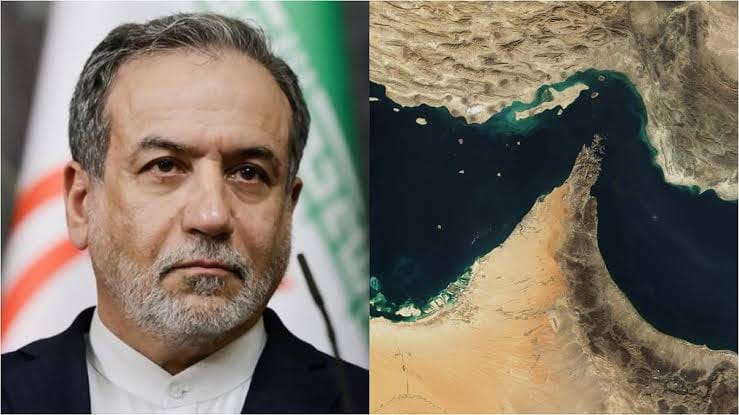
Iranian Foreign Minister Abbas Araghchi stated that Iran emerged stronger from the recent 12-day conflict, calling control over the Strait of Hormuz Tehran's primary strategic deterrent. Araghchi affirmed that Iran’s political structure remains intact and rejected international demands to suspend domestic uranium enrichment programs.
TEHRAN, Iran — Iranian Foreign Minister Abbas Araghchi stated during a televised broadcast released on July 19, 2026, that Iran emerged stronger from the recent 12-day military conflict involving Israel and the United States. Araghchi declared that international observers now view Tehran’s strategic leverage over the Strait of Hormuz as the country's effective "atomic bomb," emphasizing that Iran's sovereign rights and nuclear enrichment capabilities remain non-negotiable despite extensive regional air strikes.
This development comes as maritime security concerns in the Persian Gulf continue to impact global energy supply chains, international shipping insurance rates, and diplomatic negotiations between Middle Eastern nations and Western powers.
Strategic Shift in the Persian Gulf and Maritime Security
Speaking in an extended broadcast interview with Iranian filmmaker Javad Mogouyi, Foreign Minister Abbas Araghchi detailed the Islamic Republic's diplomatic and security posture following the 12-day military campaign. Araghchi stated that despite significant infrastructure damage and targeted strikes on defense facilities, the fundamental political and strategic framework of the Iranian state remained fully intact.
A central focus of Araghchi’s remarks was the strategic significance of the Strait of Hormuz, through which roughly one-fifth of the world’s petroleum passes daily. He claimed that foreign diplomats and international officials have increasingly recognized Iran's ability to influence maritime transit through the waterway as its primary geopolitical leverage.
Data sourced from official statements published by the Ministry of Foreign Affairs of the Islamic Republic of Iran.
Nuclear Enrichment and Diplomatic Position
Addressing international pressure regarding Iran's nuclear program, Araghchi reiterated that Tehran will not halt its nuclear research or accept external demands to permanently suspend uranium enrichment. He noted that while physical facilities sustained operational damage during the conflict, accepting a formal, forced suspension would have represented a greater strategic concession than the war itself.
Araghchi recounted pre-war negotiations with foreign envoys, stating that Tehran firmly rejected economic incentives and military threats aimed at curtailing its domestic energy programs. He affirmed that the decision-making framework, overseen by the Supreme National Security Council, remains focused on preserving state sovereignty and territorial integrity.
Official Sources Section
According to official briefings released by the Ministry of Foreign Affairs of the Islamic Republic of Iran and interviews broadcast via Iranian state media networks, the diplomatic core maintains that all military responses and maritime regulations were executed under lawful defense doctrines.
The diplomatic positions articulated by Foreign Minister Araghchi have also been presented during bilateral meetings with regional counterparts, including discussions hosted by the Ministry of Foreign Affairs of Iraq in Baghdad regarding regional maritime stability and energy transit security.
Quote Section
"All the people and ministers we meet, friend and enemy, they say Iran emerged stronger from this war. We just realized that your atomic bomb is the Strait of Hormuz. The world has realized that Iran is strong. This might actually have been our greatest victory."
— Abbas Araghchi, Foreign Minister of Iran
"I told them there that our enrichment is not for sale... Accept no bribes and no threats—you have to threaten someone who is afraid."
— Abbas Araghchi, Foreign Minister of Iran
Why It Matters
The diplomatic stance taken by Iran regarding the Strait of Hormuz carries major practical implications across global finance, trade, and defense sectors:
For Global Energy Markets: Continued rhetoric and regulatory scrutiny over the Strait of Hormuz maintain upward pressure on global crude oil prices and maritime freight benchmarks.
For Commercial Shipping Lines: Tankers and cargo vessels operating in the Persian Gulf face heightened insurance premiums and stricter maritime traffic coordination requirements enforced by Iranian coastal authorities.
For Regional Governments: Gulf nations and trading partners are accelerating diplomatic initiatives to prevent maritime bottlenecks and ensure the uninterrupted flow of commercial goods.
Key Facts at a Glance
Diplomatic Statement: Iranian Foreign Minister Abbas Araghchi declared that Iran emerged stronger following recent military engagements.
Deterrent Leverage: Araghchi described control over the Strait of Hormuz as Iran’s primary strategic deterrent and "atomic bomb".
Nuclear Policy: Tehran formally rejected calls to suspend uranium enrichment, maintaining that its nuclear activities are not up for negotiation.
Maritime Coordination: Commercial transit through the Strait of Hormuz remains subject to strict oversight by Iranian maritime authorities.
Frequently Asked Questions
Why did Iranian Foreign Minister Abbas Araghchi refer to the Strait of Hormuz as an "atomic bomb"?
Araghchi used the phrase metaphorically to describe Iran’s ability to influence global maritime trade and energy shipping routes through the Strait of Hormuz as its most effective conventional geopolitical deterrent.
What is Iran's official position on uranium enrichment following the conflict?
According to Foreign Minister Araghchi, Iran maintains that its right to peaceful nuclear enrichment is non-negotiable and will not be suspended under external military or economic pressure.
How does transit through the Strait of Hormuz impact the global economy?
Approximately 20% of the world's petroleum supply passes through the Strait of Hormuz. Any disruptions or heightened security restrictions along the route directly affect global oil prices, shipping insurance costs, and international trade routes.
Source: Official statements and broadcast transcripts released by the Ministry of Foreign Affairs of the Islamic Republic of Iran and diplomatic briefings hosted by the Ministry of Foreign Affairs of Iraq.