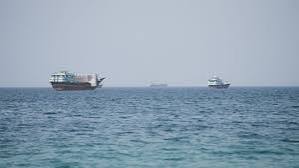
Iran has announced that an impending shipping agreement with Oman over the Strait of Hormuz will establish a limited traffic model rather than a complete reopening of the critical waterway. While bilateral talks progress, Tehran maintains that broader political demands must be satisfied before full commercial navigation resumes.
TEHRAN — While diplomatic talks between Iran and Oman have advanced toward a framework to manage maritime transit through the Strait of Hormuz, Iranian officials have cautioned that the emerging arrangement will not completely reopen the strategic waterway.
The development comes amid intense international pressure to restore normal commercial shipping flows through the strait, through which roughly one-fifth of the world’s petroleum transits. Although discussions hosted through Omani mediation are approaching final stages, Tehran maintains that broader geopolitical demands—including the lifting of U.S. blockades and sanctions—must be met before full operational clearance is restored.
The Proposed Framework and Traffic Model
According to statements from Iranian Deputy Foreign Minister Kazem Gharibabadi, the evolving understanding with Oman outlines a structured shipping model rather than unrestricted international access. Under the conceptual framework, incoming commercial vessels would navigate through Iranian territorial waters, while outgoing traffic would clear via Omani waters.
The bilateral discussions have also explored establishing a joint coordination center between Iran and Oman to oversee vessel tracking and direct maritime traffic. However, Iranian authorities emphasized that this setup constitutes a "new and different model" rather than a return to pre-conflict transit norms, leaving international stakeholders uncertain about cargo safety, transit permissions, and potential service fees.
Official Sources Section
Islamic Republic News Agency (IRNA): Official announcements regarding Deputy Foreign Minister Kazem Gharibabadi's statements on regional maritime talks.
Supreme National Security Council of Iran: Policy directives and official communications concerning U.S. sanctions and waterway conditions.
[suspicious link removed]: Statements regarding international navigation rights and performance-based diplomatic benchmarks.
Quote Section
According to official statements released by Iranian state media:
"This understanding does not mean the complete opening of the Strait of Hormuz, but rather a new and different model under which a significant part of ship traffic will be regulated."
Why It Matters
The restricted status of the Strait of Hormuz directly impacts global energy markets, shipping insurance rates, and international consumer inflation. For global supply chains, businesses, and energy investors, a partial or restricted reopening means lingering volatility in crude oil shipments, forcing tankers to contend with complex clearance procedures or seek costly alternative overland pipelines.
Key Facts at a Glance
Bilateral Channel: Ongoing discussions facilitated by Oman to manage strait traffic.
Proposed Traffic Route: Inbound ships through Iranian territorial waters; outbound via Omani lanes.
Core Restriction: Tehran states the arrangement is a limited model and does not constitute a full reopening of the corridor.
Global Significance: Approximately 20% of globally consumed petroleum relies on unhindered transit through the channel.
FAQ Section
What is the current status of the Strait of Hormuz negotiations?
Iran and Oman are nearing an administrative understanding to manage specific shipping lanes, but Tehran stresses this does not equate to a full reopening of the waterway.
How would the proposed traffic arrangement function?
Under the discussed framework, incoming vessels would pass through Iranian waters, while outgoing commercial traffic would exit through Omani waters, accompanied by joint monitoring.
Why has Iran refused a complete reopening of the strait?
Tehran insists that full normalization is contingent upon the United States lifting its port blockades, rolling back economic sanctions, and addressing broader regional conflicts.
How does the closed waterway affect global markets?
The disruption restricts major petroleum transport routes, driving up shipping expenses, straining global energy supplies, and exacerbating inflationary pressures.
Source: IRNA, Supreme National Security Council,