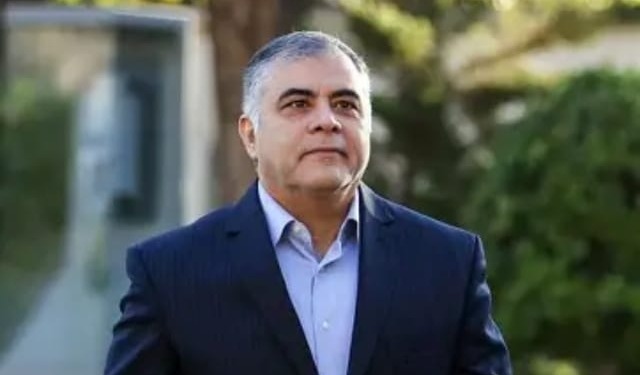
Iranian Petroleum Minister Mohsen Paknejad will attend the BRICS Energy Ministers' Meeting in Gurugram on June 25–26. Coming on the heels of a US-Iran sanctions waiver agreement, the visit signals a major push to resume direct Iranian crude exports to India and stabilize regional shipping lanes.
NEW DELHI, INDIA — Iranian Petroleum Minister Mohsen Paknejad is scheduled to travel to India to participate in the 11th BRICS Energy Ministers’ Meeting in Gurugram on June 25–26, 2026. The high-profile diplomatic visit comes immediately after a newly finalized bilateral understanding between the United States and Iran, which includes critical waivers on Iranian crude oil exports and associated maritime services. For India, which imports nearly 90 percent of its crude requirements, the sudden geopolitical shift offers a significant opportunity to diversify its energy supply chains and secure stable, affordable petroleum imports.
The Strategic Reset of Iran-India Energy Relations
The arrival of Mohsen Paknejad signals a potential revitalization of economic ties that have been dormant since 2019, when tightening international restrictions forced Indian refiners to halt all Iranian oil imports. Before the sanctions disrupted trade, India stood as one of Iran's largest oil customers, with annual bilateral trade exceeding $17 billion.
According to Indian refining industry sources, technical teams are already preparing to review spot purchases from distant suppliers in favor of near-source Iranian crude. Many Indian coastal refineries remain structurally configured to process heavy Iranian crude blends, making a resumption logistically seamless once direct banking channels reopen.
Inside the 11th BRICS Energy Ministers' Meeting
Hosted under India’s 2026 BRICS Chairship in Gurugram, Haryana, the international summit operates under the official theme of "Energy for All". The expanded 11-member intergovernmental bloc—comprising energy-heavy weights such as Russia, Saudi Arabia, the UAE, Egypt, and newly admitted Iran—now accounts for nearly 40 percent of global gross domestic product (GDP).
The multilateral discussions will prioritize stabilizing global energy access, expanding technology transfers for advanced oil recovery, and strengthening transnational grid resilience. Beyond the primary summit floor, Paknejad is expected to hold a vital bilateral meeting with his Indian counterpart, Minister of Petroleum and Natural Gas Hardeep Singh Puri, to iron out sovereign commercial mechanisms.
Official Sources Section
According to official readouts from the Ministry of Power, Government of India, the BRICS energy framework is designed to balance localized sustainability with international supply security. In parallel diplomatic disclosures, the Ministry of External Affairs (MEA) confirmed that India has welcomed the de-escalation understandings reached in West Asia. Prime Minister Narendra Modi previously stated that the US-Iran breakthrough is anticipated to restore regional peace while guaranteeing the freedom of navigation through critical maritime chokepoints like the Strait of Hormuz.
Quote Section
"According to officials from the Iranian Embassy in New Delhi, the removal of Western energy restrictions will allow both nations to surpass historical trade peaks. Iranian Ambassador Mohammad Fathali stated that Iran possesses extensive operational capabilities to meet India's vast demand for stable, reliable, and affordable energy."
Why It Matters
The resumption of regular Iranian oil shipments carries massive practical implications for Indian consumer inflation and corporate manufacturing margins. Access to competitively priced crude near the Persian Gulf significantly slashes transit times, insurance premiums, and freight costs that spiked during recent maritime conflicts. Furthermore, a stabilized energy trade route frees up strategic capital for India to accelerate delayed construction at the Chabahar Port in Iran—New Delhi’s vital commercial transit gateway to Afghanistan and Central Asia.
Key Facts at a Glance
Diplomatic Visit: Iranian Petroleum Minister Mohsen Paknejad arrives in India for the June 25–26 BRICS summit.
Sanctions Ease: The visit follows a fresh US-Iran memorandum of understanding granting crude export waivers.
Summit Scope: The Gurugram meeting brings together 11 nations managing 40% of global GDP to deliberate on energy security.
Infrastructure Recovery: Easing tensions paves the way for India to resume development at Iran’s strategic Chabahar Port.
FAQ Section
Q1: Why is the Iranian Oil Minister visiting India now?
Minister Mohsen Paknejad is leading a high-level delegation to attend the 11th BRICS Energy Ministers' Meeting in Gurugram and discuss bilateral energy trade expansion.
Q2: How does the US-Iran agreement affect India's oil economy?
The agreement issues waivers on Iranian oil exports. This allows Indian refiners to legally buy affordable Iranian crude, reducing dependency on costlier, distant spot-market suppliers.
Q3: What is the significance of the BRICS Energy Meeting?
Chaired by India, the summit focuses on securing equitable energy access, stabilizing supply routes, and deploying clean energy innovations across emerging market economies.
Source: Ministry of Power, Government of India, Ministry of External Affairs (MEA), India, Diplomatic Transcripts via Islamic Republic News Agency (IRNA).