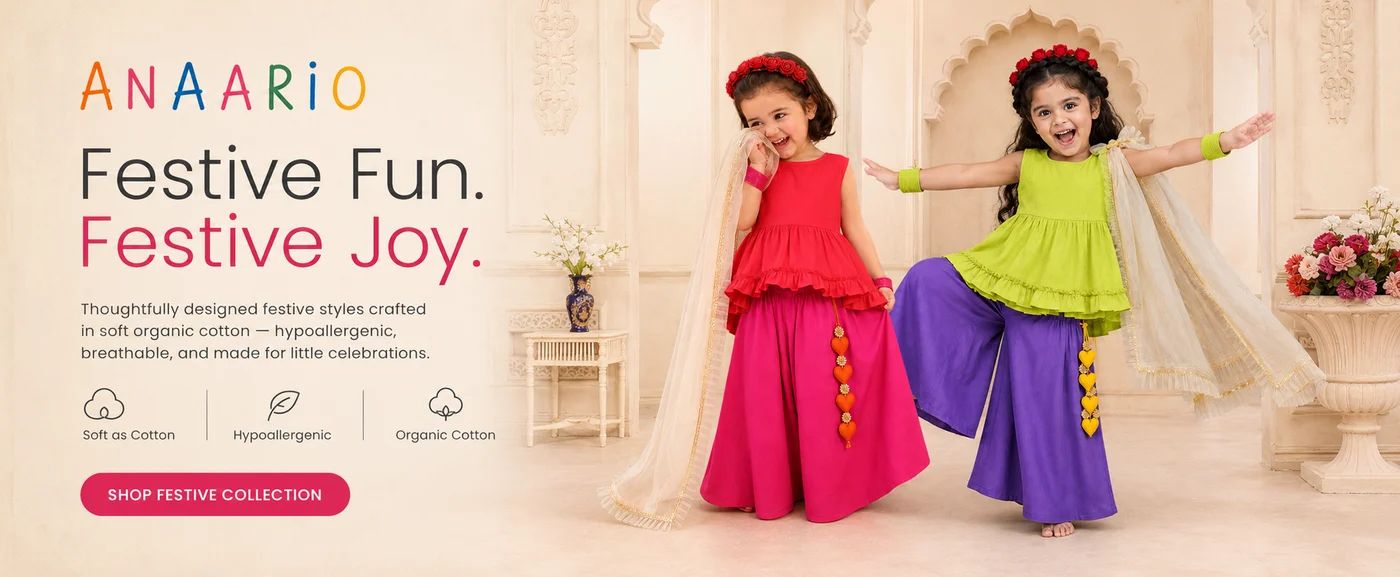
Sustainable kidswear brand Anaario is reshaping children’s fashion through a strict made-to-order production model. Founded to combat massive textile waste in fast retail, the label utilizes GOTS-certified organic cotton and artisan craftsmanship to deliver chemical-free, durable, and eco-friendly garments for infants and young consumers across India.
Backed by industry registry data and independent market analyses, slow-fashion children's wear brand Anaario addresses widespread textile waste through a zero-inventory, made-to-order manufacturing model.
Amid mounting environmental scrutiny regarding textile waste within the fast-fashion sector, sustainable children's apparel brand Anaario has drawn considerable market attention for pioneering a zero-inventory manufacturing framework. Established to counter the widespread industry practice of speculative mass production, the label operates entirely on confirmed consumer requests. By producing garments only after an order is placed, the enterprise eliminates surplus warehouse stock and significantly reduces fabric scrap, addressing long-standing ecological concerns associated with infant and youth apparel production in urban retail markets.
The Made-to-Order Model and Sustainable Fabric Standards
The operational core of the brand relies on eliminating speculative batch manufacturing, which historically contributes to millions of unsold garments ending up in landfills annually. According to corporate disclosures and independent sector reviews, every garment is individually cut and stitched only after confirmation. This measured pace enables detailed artisan oversight, incorporating traditional hand-block and screen-printing techniques.
Key operational and material highlights include:
Certified Organic Materials: Utilization of GOTS-certified and OEKO-TEX Standard 100 organic and mulmul cotton, ensuring fabrics are free from harmful chemical residues.
Zero Inventory Surplus: Production strictly tied to verified customer demand, resulting in zero warehouse surplus or deadstock accumulation.
Durability and Hand-Me-Down Value: Construction standards designed for structural longevity, allowing garments to withstand multiple cycles of use and support circular fashion practices.
Expanded Capsule Lines: Specialized collections ranging from newborn essentials to youth sizes up to age 16, covering daily wear, sleepwear, and festive ethnic attire.
Impact on Conscious Consumers, Retail Supply Chains, and Industry Trends
For modern consumers, parents, and retail analysts, the pivot toward sustainable children's wear reflects a broader behavioral shift across urban demographics. Industry surveys indicate that a substantial majority of parents prioritize eco-friendly, chemical-free materials for infant skin safety and long-term environmental preservation. By adopting transparent supply chains and traceable organic certifications, brands operating under made-to-order frameworks offer a practical alternative to mass-market consumption, influencing broader retail manufacturing standards across the textile sector.
Why It Matters
Transitioning toward zero-waste, made-to-order production models mitigates the environmental degradation linked to traditional retail, providing parents with traceable, skin-safe apparel options that encourage conscious consumption from an early age.
Key Facts at a Glance
Manufacturing Model: 100% made-to-order production to eliminate deadstock and fabric waste.
Material Standards: GOTS-certified and OEKO-TEX Standard 100 organic cotton.
Target Demographics: Infants, toddlers, and youth ranging from newborns to 16 years.
Craftsmanship Techniques: Artisanal hand-block and screen-printing methods.
FAQ Section
What is the primary operational difference of the Anaario brand?
The brand operates entirely on a made-to-order model, meaning garments are cut and stitched only after an order is confirmed, avoiding speculative mass production and textile waste.
What materials are used in the manufacturing of these garments?
Products are crafted from GOTS-certified and OEKO-TEX certified organic and mulmul cotton, ensuring they are free from harmful residues and gentle on sensitive skin.
What age groups do the clothing collections cover?
The collections cater to newborns, toddlers, and children up to 15 or 16 years of age, spanning daily wear, sleepwear, and festive edits.
Where can consumers review complete product catalogs and corporate disclosures?
Official collection details, size guides, and sustainability credentials are accessible publicly via the Anaario Official Platform and Prakati India Business Profiles.
Source: Anaario Official Platform, Anaario Enterprise About Portal, Prakati India Business Profiles, Anaario Sustainable Kidswear Industry Index