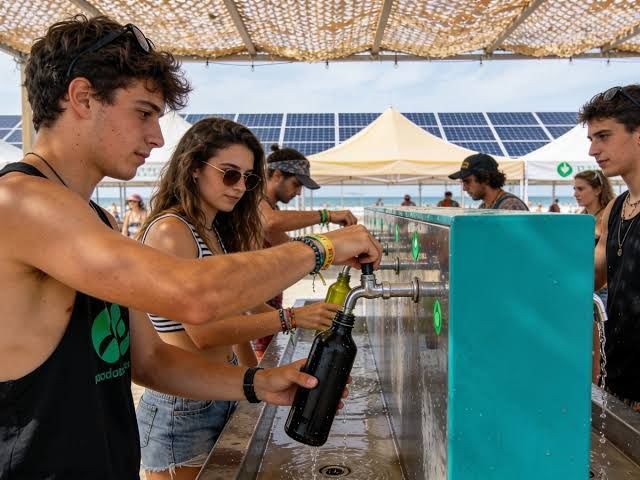
The Rototom Sunsplash reggae festival in Benicàssim, Spain, successfully eliminated hundreds of thousands of single-use plastic bottles. Through a partnership with Valencian company Tuawa and the deployment of microfiltered water fountains, the cultural event prevented massive waste generation and significantly lowered its validated carbon footprint for the planet.
Backed by official environmental audits and corporate announcements, the Rototom Sunsplash festival sets new benchmarks for cutting single-use plastics.
In a landmark environmental achievement highlighted by event organizers and corporate partners, the annual Rototom Sunsplash reggae festival held in Benicàssim, Spain, successfully eliminated hundreds of thousands of single-use plastic bottles. Working in strategic collaboration with the Valencian company Tuawa—a subsidiary of Global Omnium—the multi-day cultural gathering replaced traditional bottled water sales with an extensive network of cold, microfiltered water supply points across its concert and camping grounds. The initiative, documented in official sustainability reports, underscores how large-scale entertainment events can actively curb urban waste production and reduce corporate carbon footprints.
Implementing Water Refill Infrastructure and Carbon Reduction
The transition away from single-use polyethylene terephthalate (PET) bottles involved the installation of dozens of dedicated water access points distributed throughout backstage zones, campsites, and general public areas. According to official data released by Rototom Sunsplash Official Portal, these synchronized efforts prevented the consumption of more than 600,000 plastic bottles during peak festival editions, surpassing previous benchmarks.
Key environmental operational highlights include:
Microfiltration Technology: Water stations utilize advanced activated carbon microfiltration systems to purify municipal supplies while retaining beneficial natural minerals.
Emissions Validation: Through measurements conducted by Global Omnium, the initiative saved over 168 tons of carbon dioxide equivalents from entering the atmosphere, an ecological offset comparable to the annual carbon absorption of roughly 8,500 trees.
Standardized Certification: The festival secured official validation under international standards, including certification by the Spanish Association for Standardization and Certification (AENOR) in accordance with ISO 14064-1 parameters.
Educational Outreach: Partner organizations deployed environmental ambassadors to host family workshops, interactive games, and awareness campaigns regarding marine preservation and responsible resource consumption.
Impact on Festival-Goers, Local Businesses, and Sustainable Tourism
For attendees, local businesses, and event organizers across the global entertainment sector, these operational changes demonstrate the commercial viability of eco-conscious event production. By eliminating the heavy logistics, storage, and disposal costs associated with disposable packaging, the festival model offers a scalable blueprint for minimizing the ecological impact of large gatherings. Consumers benefit from affordable access to purified drinking water, while local municipalities experience reduced waste management strains along Mediterranean coastal zones.
Why It Matters
Adopting large-scale refill infrastructure at major cultural events establishes practical industry standards for reducing plastic pollution, validating corporate carbon neutrality, and encouraging sustainable consumer behaviors globally.
Key Facts at a Glance
Event Location: Benicàssim, Valencian Community, Spain.
Primary Environmental Milestone: Elimination of over 600,000 single-use plastic bottles in recent peak editions.
Carbon Offset: Equivalent to saving more than 168 tons of CO2 emissions annually.
Key Technology Partners: Tuawa, Global Omnium, and Ecozona Iberian.
Regulatory Standard: Verified carbon footprint certified by AENOR under ISO 14064-1 guidelines.
FAQ Section
What measures did Rototom Sunsplash take to reduce plastic waste?
The festival partnered with Tuawa and Ecozona Iberian to replace single-use plastic water bottles with a comprehensive network of cold, microfiltered water refill stations.
How many plastic bottles were prevented from entering landfills?
Official audits confirm that the collaborative initiative successfully avoided the consumption of more than 600,000 plastic bottles during peak festival weeks.
Who oversees the environmental and carbon footprint verification for the festival?
Carbon emissions and reduction metrics are audited and certified by Global Omnium and the Spanish Association for Standardization and Certification (AENOR).
Where can citizens review official sustainability reports for the event?
Complete environmental documentation and updates are accessible publicly via the Rototom Sunsplash Sustainability Portal and Global Omnium Reports via Tuawa.
Source: Rototom Sunsplash Sustainability Portal, Rototom Sunsplash Newsroom, Global Omnium Reports via Tuawa, Ecozona Iberian Industrial Filings