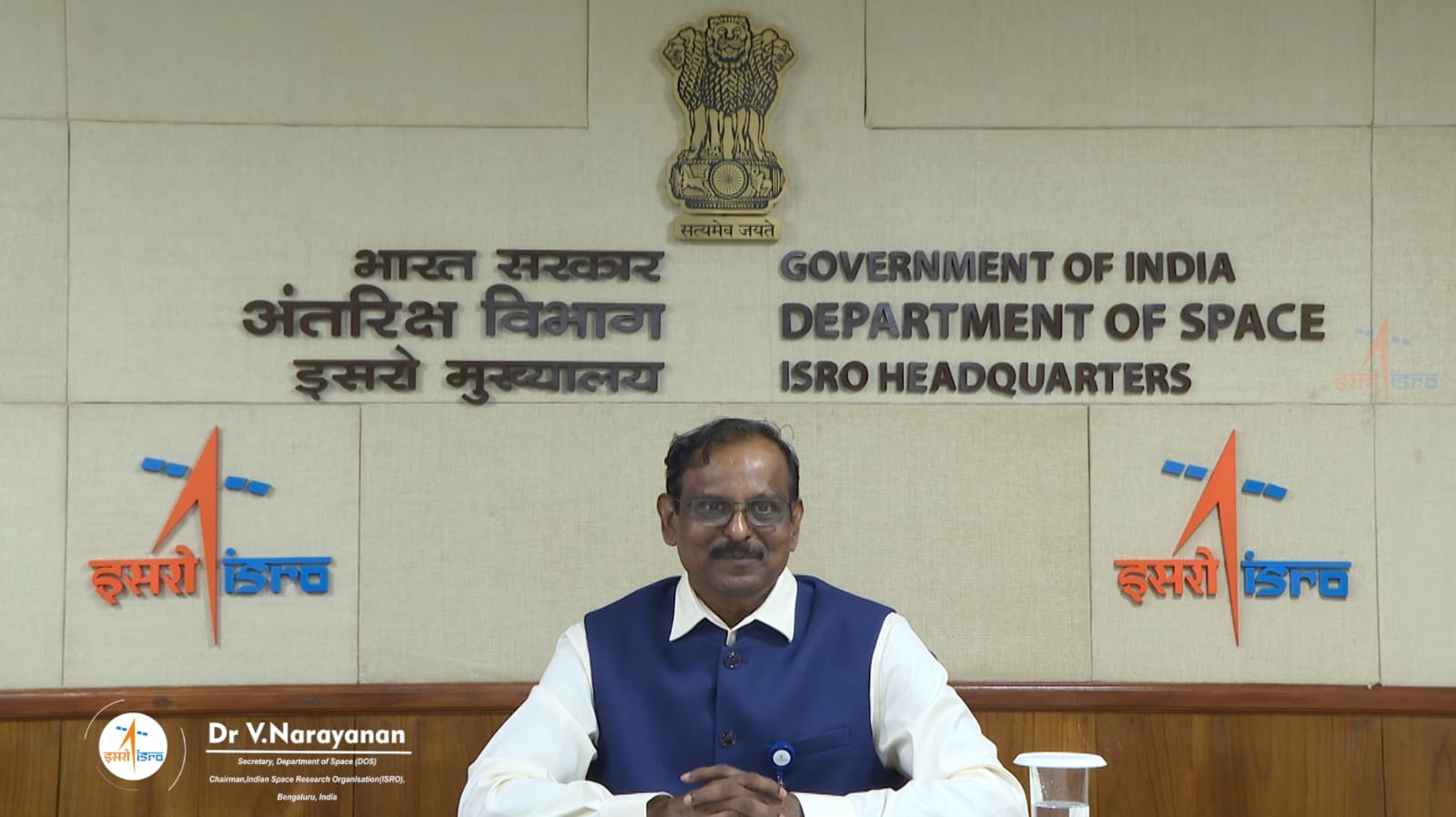
The Indian Space Research Organisation has firmly rejected reports of privatisation, reassuring stakeholders that it will remain the country's principal space research institution. While private firms scale up mature manufacturing under ongoing reforms, ISRO will redirect its focus toward deep-space missions, human spaceflight, and advanced technological innovation.
Background and Context of Space Reforms
The clarifications issued by the Indian Space Research Organisation (ISRO) follow intense public discourse and a formal joint inquiry launched by nine internal employee associations. Staff concerns intensified after recent high-level discussions regarding structural adjustments within India's growing space sector and statements concerning the transition of mature production lines to non-governmental entities.
Under the framework of the Indian Space Policy and operational guidelines overseen by the Indian National Space Promotion and Authorisation Centre (IN-SPACe), commercial and routine manufacturing responsibilities are progressively being opened up to private industry players and startups. These ongoing structural changes are designed to scale up national production capacities to meet booming global commercial demands.
Official Response and Institutional Commitments
Addressing apprehensions about a diminished mandate, management emphasized that the organization will maintain absolute control over critical national infrastructure, strategic capabilities, and advanced scientific research.
"We wish to categorically state that ISRO will neither be privatised nor will its importance be diminished. ISRO will continue to remain India's principal institution for advanced space research and technology development, national and strategic missions, space science and exploration, and critical and frontier space capabilities," the agency stated in an official release.
Corroborating these commitments, IN-SPACe Chairman Pawan K. Goenka addressed the narrative on public forums, asserting that the institution remains the absolute bedrock of the nation's technological progress. Officials stressed that shifting mature production duties—such as established launch vehicle assembly and satellite manufacturing—allows the agency to dedicate its core scientific personnel and technical resources toward next-generation pursuits.
Impact on Stakeholders and the National Space Economy
India's domestic space economy is currently valued at approximately $8.4 billion, with national projections aiming to capture a significantly larger fraction of the global market. Analysts note that achieving a targeted market expansion requires substantial private sector investment and industrial manufacturing scale that government-funded entities cannot sustain alone.
For Industry and Investors: Commercial entities and startups gain clearer pathways to handle mass production of mature systems, fostering a globally competitive NewSpace ecosystem.
For Scientific Personnel: Internal technical staff will experience a renewed focus on deep-space exploration, human spaceflight initiatives like the Bharatiya Antariksh Station, and advanced planetary missions.
For Citizens and Taxpayers: The expansion leverages private capital to boost national technological output without compromising governmental oversight of core strategic space assets.
Key Facts at a Glance
Core Status: ISRO remains India's principal agency for advanced space research, strategic payloads, and deep-space exploration.
Policy Framework: Ongoing structural updates operate under the broader guidelines of the Indian Space Policy.
Market Target: India aims to substantially scale its footprint within the global space economy over the coming decade.
Strategic Oversight: Critical national infrastructure and primary launch facilities remain under direct state governance.
Frequently Asked Questions
Is ISRO being privatised?
No. Agency leadership and regulatory authorities have categorically denied privatisation plans, emphasizing that ISRO's central role in national research will remain intact.
Why are private companies taking on manufacturing roles?
Private participation aims to scale up the production of mature technologies, allowing commercial entities to handle volume manufacturing while ISRO focuses on advanced research and development.
Will strategic space missions remain under government control?
Yes. Ownership and execution oversight of critical national infrastructure, strategic capabilities, and complex scientific missions stay strictly with the state.
What are the primary focus areas for ISRO moving forward?
The institution will direct its resources toward human spaceflight, next-generation launch systems, deep-space planetary exploration, and frontier technology development.
Source: Indian Space Research Organisation (ISRO), The Economic Times, Fortune India, NewsOnAIR