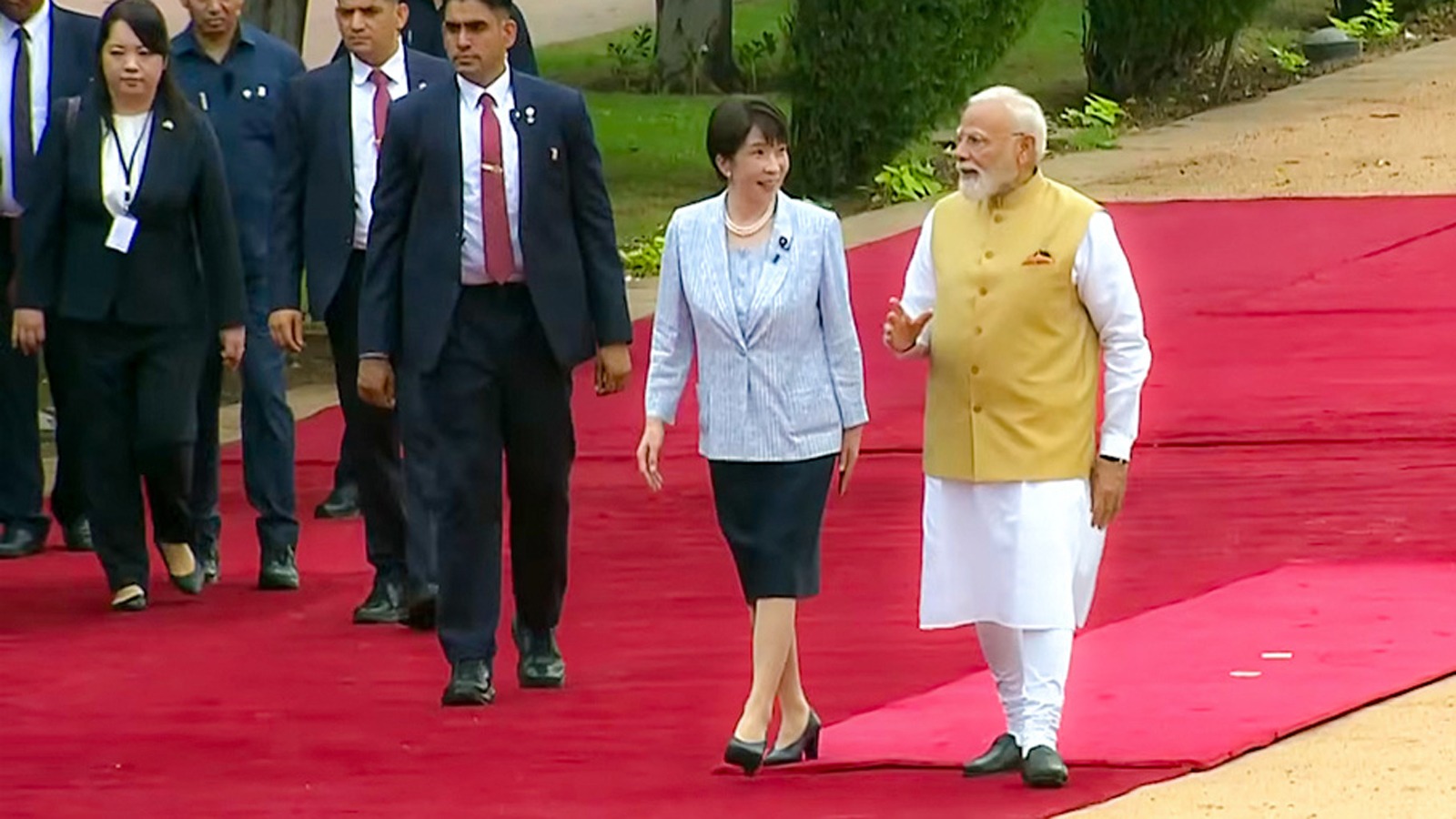
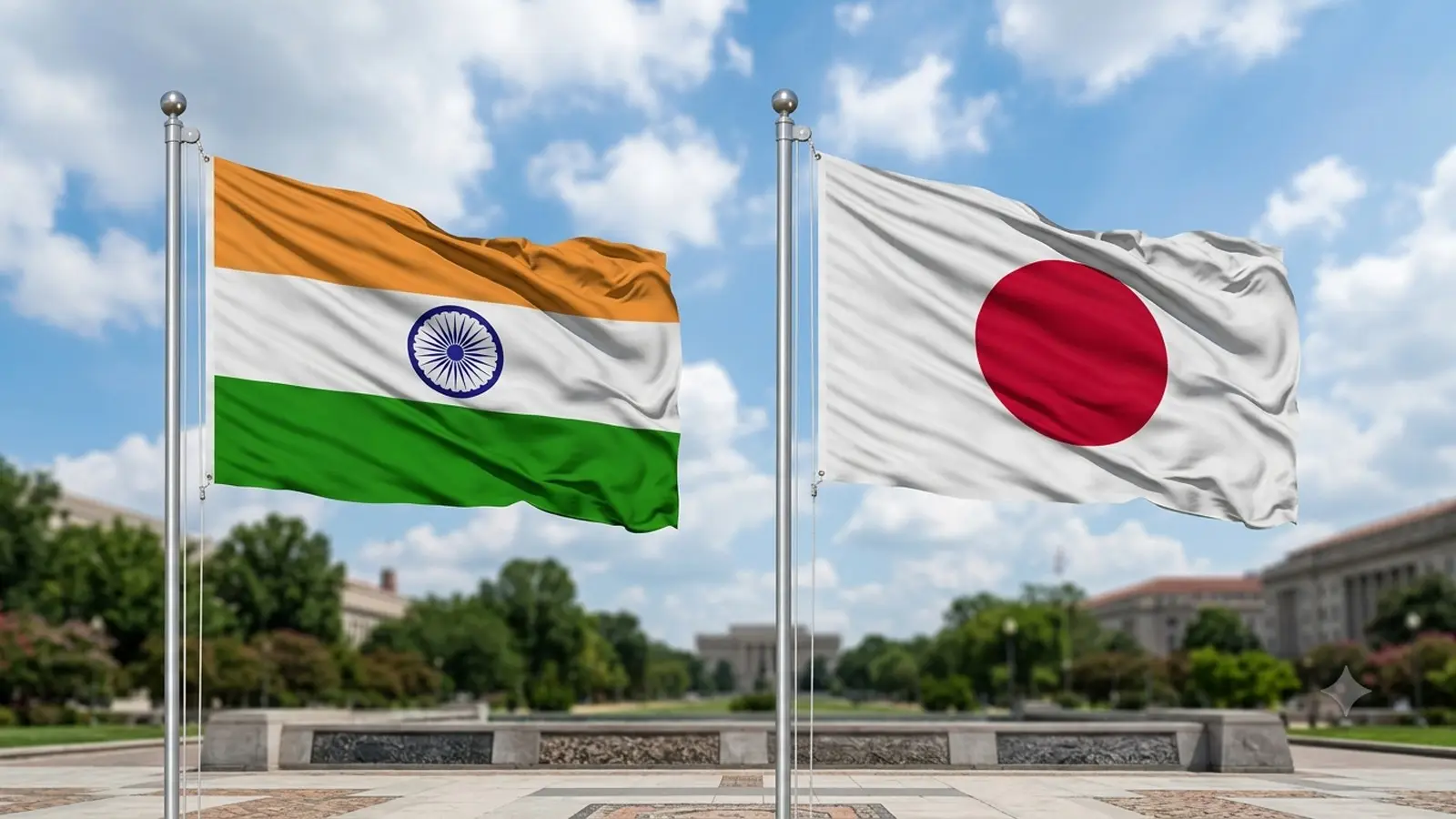
Japanese Prime Minister Sanae Takaichi received a formal Guard of Honour at Rashtrapati Bhavan on Thursday to open her official visit. Alongside Prime Minister Modi, she will launch Maruti Suzuki’s ₹35,000 crore mega plant in Kharkhoda, Haryana, and address a joint economic forum to deepen advanced manufacturing partnerships.
NEW DELHI — Japanese Prime Minister Sanae Takaichi was accorded a formal ceremonial welcome and a traditional Guard of Honour at the forecourt of Rashtrapati Bhavan on Thursday morning, July 2, 2026.
The high-profile state reception, attended by Prime Minister Narendra Modi and senior cabinet officials, officially launched the operational itinerary for the 16th India-Japan Annual Summit. Takaichi, who arrived in the national capital on an official bilateral visit, is leading a high-level diplomatic and corporate delegation. Following the ceremonial welcome, both leaders are scheduled to hold bilateral talks at Hyderabad House, jointly inaugurate Maruti Suzuki India’s mega manufacturing complex in Kharkhoda, Haryana, and address the joint Japan-India Economic Forum. This state visit marks a crucial step in reinforcing industrial resilience and advanced technological co-development within the Indo-Pacific region.
Landmark Inauguration of the ₹35,000 Crore Kharkhoda Plant
The centerpiece of the summit's economic agenda is the joint inauguration of Maruti Suzuki India’s sprawling greenfield automotive production facility at Kharkhoda, Haryana. According to corporate statements from Maruti Suzuki India Limited, the complex represents a planned capital investment of approximately ₹35,000 crore. The facility has been designed as an international production engine, aiming to enhance the automaker's long-term export and domestic capacities.
The megaproject showcases the deep footprint of Japan-India industrial cooperation. Once fully operational, the Kharkhoda plant will have the structural capacity to manufacture one million passenger vehicles annually, making it one of Suzuki Motor Corporation’s largest global manufacturing hubs. The facility will place a strong operational focus on clean automotive technologies, running entirely on renewable electricity and integrating artificial intelligence-enabled assembly networks. Official estimates indicate that the mega factory will generate more than 21,000 direct employment opportunities, alongside tens of thousands of indirect jobs through ancillary auto-component industries developing around the industrial park.
Strategic Shift Toward Resilient Electronics and Supply Chains
Bilateral briefing papers released by the Ministry of External Affairs (MEA) show that the leadership talks at Hyderabad House are heavily focused on securing cross-border technological frameworks. Amid shifts in global trade tariffs and logistics corridors, New Delhi and Tokyo are intentionally broadening their strategic partnership beyond standard financial portfolios.
Planners from both administrations are advancing technical partnerships to secure critical electronic components. The joint semiconductor supply chain initiative will coordinate raw material stockpiling and standardize safety protocols for shipping high-purity silicon wafers. Additionally, the discussions look to accelerate agreements on defense technology transfers, aligning Japan’s updated defense equipment export rules with India's domestic industrial base to co-produce marine components, tactical radar arrays, and surveillance drone propulsion units.
Joint Economic Forum Maps Advanced Capital Transfers
Following their diplomatic discussions, Prime Minister Modi and Prime Minister Takaichi will address a joint gathering of industrial captains at the Japan-India Economic Forum. Over 150 elite corporate executives from both countries are participating to finalize cross-border investment pacts.
Data provided by the Ministry of Commerce and Industry reveals that Japan remains one of the largest foreign direct investors in India, with cumulative capital transfers exceeding $41 billion over the last two decades. The ongoing forum focuses on shifting future capital pools into green energy transitions, automated manufacturing equipment, and nationwide logistics corridors. These investments complement the government's Production Linked Incentive (PLI) strategies, aimed at transforming India into a primary export base for international markets.
Official Sources Section
The official administrative itineraries, project limits, and strategic numbers used in this report are verified by formal government and corporate disclosures:
Ministry of External Affairs (MEA) Bulletins: Official state parameters and bilateral schedules published by the external affairs press desk in New Delhi.
Maruti Suzuki Corporate Press Releases: Official manufacturing disclosures detailing the structural phases, employment data, and renewable targets for the Kharkhoda complex.
Cabinet Public Relations Office of Japan: State delegation outlines detailing Prime Minister Takaichi's diplomatic trip priorities.
Quote Section
"According to officials from the Ministry of Commerce and Industry, the joint launch of the Kharkhoda complex highlights a major upgrade in bilateral industrial integration," stated a senior trade bureaucrat in New Delhi. "Representatives noted that the facility's pivot toward green electricity and AI-guided automated workflows positions it as a premier standard for future automotive manufacturing across South Asia."
Why It Matters
For everyday consumers and car buyers, the launch of the 10-lakh capacity Kharkhoda plant means a steady supply of new-generation vehicles, shorter waiting periods for high-demand models, and lower production overheads. For businesses and industrial auto-component suppliers, the mega facility creates a massive domestic market for local parts, strengthening regional automotive supply chains. On a wider scale, the deep economic and strategic coordination between India and Japan secures vital trade lanes and industrial lines, protecting the wider region from sudden supply chain disruptions.
Key Facts at a Glance
Ceremonial State Reception: Japanese PM Sanae Takaichi received a formal Guard of Honour at Rashtrapati Bhavan, launching her high-profile official visit.
Mega Auto Investment: Modi and Takaichi are jointly launching Maruti Suzuki’s new greenfield car manufacturing complex in Kharkhoda, Haryana.
Production Powerhouse: The new facility features an investment of ₹35,000 crore, targeting an annual output of 1 million vehicles once fully operational.
Employment Influx: The advanced industrial plant will create over 21,000 direct engineering and assembly jobs for the regional workforce.
FAQ Section
What is the primary purpose of Japanese PM Sanae Takaichi's visit to India?
Prime Minister Takaichi is in New Delhi to lead the 16th India-Japan Annual Summit alongside Prime Minister Narendra Modi, focusing on boosting advanced manufacturing, securing supply chains, and launching major industrial projects.
What are the key details of the new Maruti Suzuki plant being inaugurated?
Located in Kharkhoda, Haryana, the new facility represents an investment of ₹35,000 crore. It is designed to produce 10 lakh vehicles annually and will create over 21,000 direct jobs.
How does the Kharkhoda facility incorporate sustainable green technologies?
In line with modern clean industrial standards, the factory is engineered to run entirely on renewable electricity and utilizes artificial intelligence-driven production lines to optimize energy use.
Why is Japan's industrial partnership crucial for India's manufacturing sector?
Japan is a top investor in India. This partnership accelerates technology transfers in advanced manufacturing, automotives, and electronics, supporting the 'Make in India' initiative to build a resilient production base.
Source: Ministry of External Affairs of India Official Press Room, Ministry of Commerce and Industry Trade Disclosures, Maruti Suzuki India Limited Investor Relations Media Center.