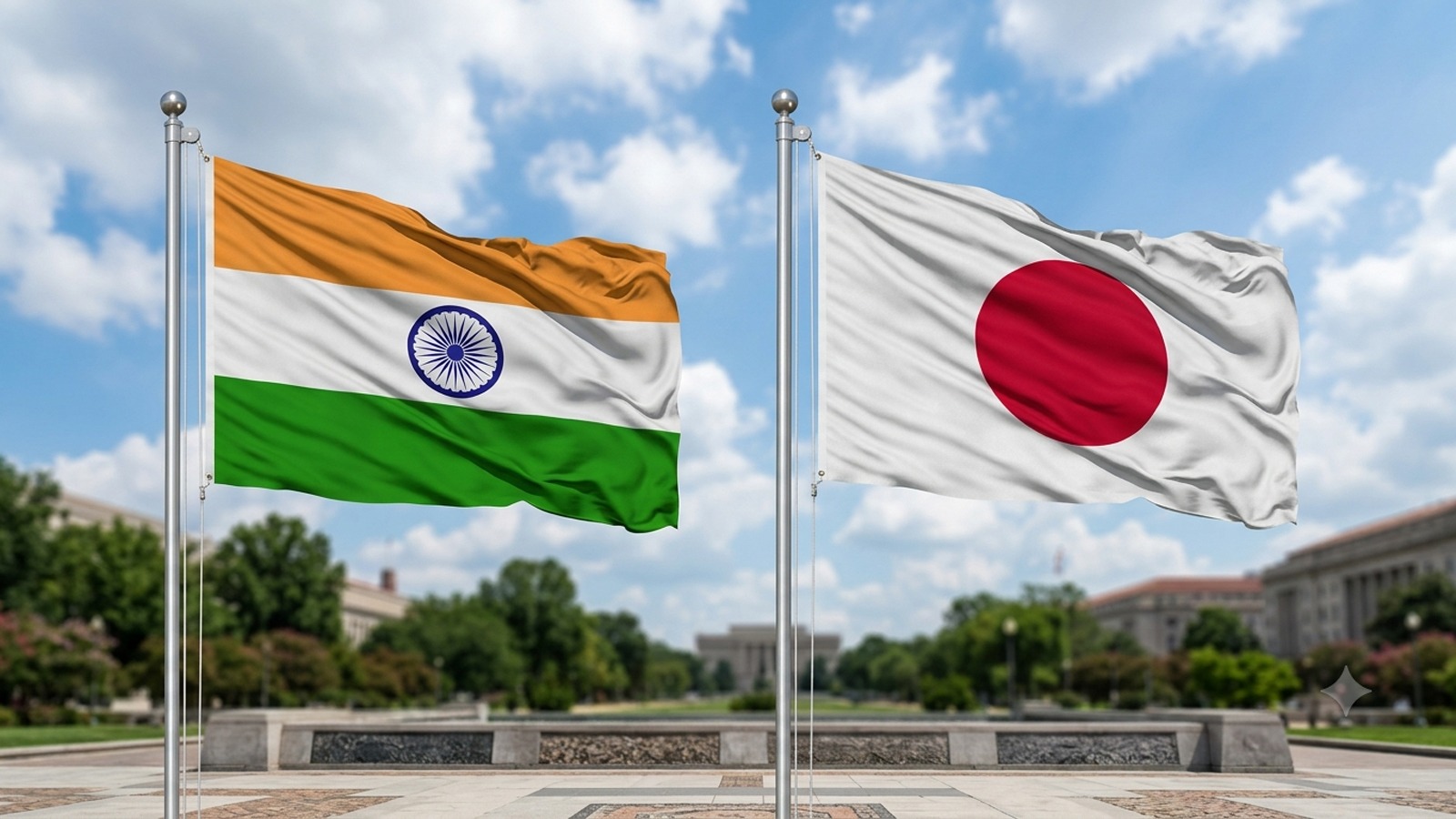
India’s Trade Minister confirmed that India and Japan are strengthening Quad-led cooperation to promote Indo-Pacific peace. Simultaneously, critical land-acquisition approvals in Maharashtra have cleared a major hurdle for the Japan-funded Mumbai-Ahmedabad High-Speed Rail, promising to accelerate the long-delayed project and boost regional economic integration through modernized transport infrastructure.
NEW DELHI – Union Minister for Commerce and Industry Piyush Goyal confirmed that India and Japan are intensifying their strategic partnership, focusing on regional stability and the acceleration of critical infrastructure projects. In an interview with NDTV, the minister highlighted the importance of the two nations’ roles within the Quad framework to promote peace and prosperity across the Indo-Pacific region.
The diplomatic outreach comes as India moves to resolve long-standing bottlenecks in its infrastructure pipeline. Minister Goyal announced that recent land-acquisition approvals in the state of Maharashtra are expected to significantly accelerate the implementation of the long-delayed, Japan-funded Mumbai-Ahmedabad High-Speed Rail (MAHSR) project.
Strengthening the Indo-Pacific Corridor
The collaboration between India and Japan remains a cornerstone of the broader Quad alliance, which also includes the United States and Australia. According to official statements, both nations are working toward a "Free and Open Indo-Pacific," an initiative designed to bolster maritime security, supply chain resilience, and economic stability.
Minister Goyal emphasized that the bilateral relationship has evolved beyond traditional trade. By aligning on geopolitical interests, both countries are leveraging their manufacturing and technological capacities to create a more integrated regional economy. The commitment to these shared objectives serves to balance regional challenges and enhance diplomatic leverage for both New Delhi and Tokyo.
Breakthrough for the Mumbai-Ahmedabad High-Speed Rail
For years, the Mumbai-Ahmedabad High-Speed Rail project—often referred to as the "Bullet Train" initiative—faced substantial delays due to complex land-acquisition processes, particularly within Maharashtra. The project, largely financed through soft loans from the Japan International Cooperation Agency (JICA), is viewed as a flagship of Indo-Japanese engineering cooperation.
"The state government’s recent approvals are a turning point," the Minister indicated, suggesting that the removal of these procedural hurdles would allow construction to proceed at a more efficient pace. The high-speed rail project is set to connect India’s financial capital with the commercial hub of Gujarat, aiming to reduce travel time drastically and foster economic integration between the two states.
Economic Impact and Future Outlook
The acceleration of the high-speed rail corridor carries significant implications for regional development. For businesses, the reduction in travel time between Mumbai and Ahmedabad is expected to stimulate trade and logistics, potentially creating new hubs for investment along the transit route. For the broader public, the project represents a shift toward modernized, climate-friendly transportation infrastructure, aligning with India's broader decarbonization goals.
Investors and market analysts have reacted positively to the news, as the project's progress serves as a litmus test for India's ability to execute large-scale, international-backed infrastructure initiatives. The Ministry of Commerce and Industry remains confident that the removal of administrative roadblocks will serve as a model for future bilateral ventures.
Official Sources and Statements
Government officials stated that the coordination between the Ministry of Railways and state-level authorities in Maharashtra has reached a new level of efficiency. While specific timelines for the completion of the rail line remain subject to ongoing construction updates, the government has signaled that the current fiscal year will see a visible increase in work intensity.
"India and Japan, as key Quad members, are dedicated to ensuring a peaceful and rules-based order in the Indo-Pacific," organizers stated during the recent high-level diplomatic discussions. The alignment between the two nations is further supported by consistent high-level engagement between Prime Minister Narendra Modi and his Japanese counterparts.
Key Facts at a Glance
Strategic Alliance: India and Japan continue to lead regional efforts within the Quad to ensure a free and open Indo-Pacific.
Infrastructure Milestone: Recent Maharashtra state land-acquisition approvals resolve a major stalemate for the Mumbai-Ahmedabad High-Speed Rail.
Financial Backing: The rail project is supported by substantial financing and technical expertise from the Japan International Cooperation Agency (JICA).
Regional Integration: The high-speed rail is expected to transform logistics and business connectivity between Mumbai and Ahmedabad.
Frequently Asked Questions
Why is the Indo-Pacific region a priority for India and Japan?
As Quad members, India and Japan aim to promote peace, stability, and maritime security to counter regional tensions and ensure stable supply chains.
How will the Maharashtra land-acquisition approvals help the rail project?
These approvals clear the path for the National High-Speed Rail Corporation Limited (NHSRCL) to begin construction on previously stalled segments, reducing further project delays.
What is the role of Japan in India's high-speed rail project?
Japan provides both the financing via JICA and the specialized "Shinkansen" bullet train technology, which is being adapted for the Indian landscape.
When will the Mumbai-Ahmedabad rail line be operational?
While construction has accelerated following the recent approvals, official completion dates are updated periodically by the Ministry of Railways.
Source: Ministry of Commerce and Industry, Ministry of Railways, Japan International Cooperation Agency (JICA), NDTV.