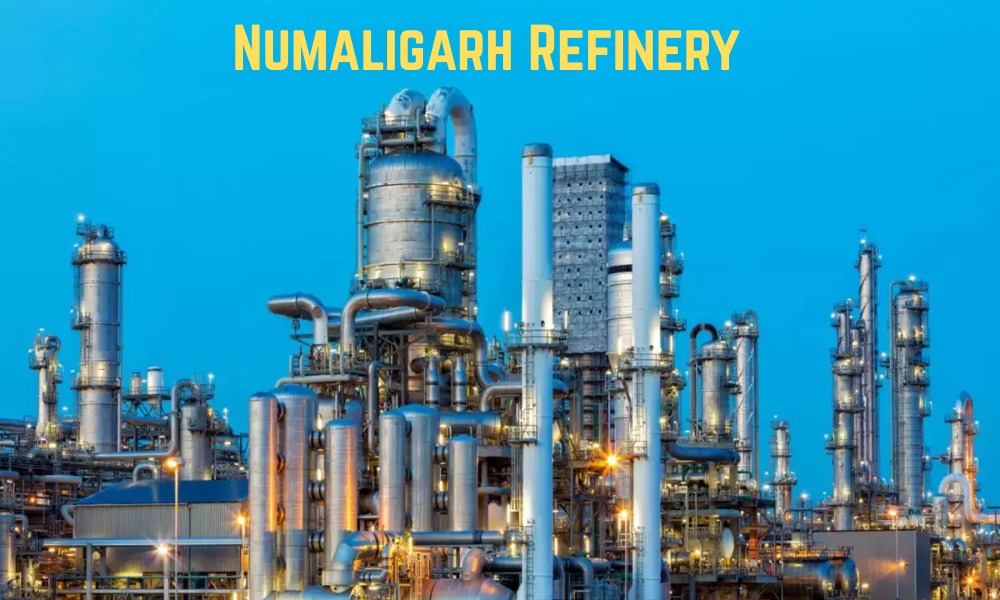
Oil India Limited plans to commission its 9 MTPA Numaligarh Refinery expansion by early 2027. The project, which involves tripling the refinery's capacity, will rely on 5.5-6 million tonnes of annual crude imports via a new Paradip-Numaligarh pipeline, primarily producing diesel and gasoline to serve the domestic Indian market.
GUWAHATI – Oil India Limited (OIL) is set to commission its expanded 9 million metric tonnes per annum (MTPA) Numaligarh Refinery in Assam by early 2027, marking a transformative milestone for the company’s downstream operations. The project, currently in its final stages, will triple the refinery’s existing capacity, bolstering the supply of high-demand fuels across India’s northeastern and eastern regions.
Scaling Up Fuel Production
As part of the refinery’s expanded operations, the facility will primarily focus on the production of diesel and gasoline, two essential components for India's transport and logistics sector. The upgraded refinery is designed to meet stringent BS-VI emission standards, aligning with the country's broader environmental objectives.
"The Numaligarh Refinery is designed to produce significant quantities of motor spirit and high-speed diesel to cater to the growing energy demand," officials noted, emphasizing that the output will be marketed primarily within the local and regional Indian markets. By streamlining the distribution of these fuels, the expansion is expected to reduce reliance on long-distance logistics and stabilize fuel availability in the region.
Securing Supply Through Paradip Pipeline
To feed the expanded 6 MTPA capacity—which is being added to the existing 3 MTPA facility—Oil India has established a strategic supply chain. The refinery will require an annual import of 5.5 to 6 million tonnes of crude oil. This crude will be sourced internationally and transported through a newly constructed, long-distance pipeline originating from the Paradip Port in Odisha.
This crude oil pipeline, a critical component of the expansion project, is essential for maintaining the refinery's operational continuity. The pipeline network allows for the efficient transit of imported sour crude, directly linking the coastal import terminal at Paradip to the inland refinery in Golaghat, Assam.
Strategic Impact on Regional Energy
The Numaligarh Refinery expansion, often referred to as the Numaligarh Refinery Expansion Project (NREP), represents one of the largest industrial investments in Northeast India. According to regulatory filings and project reports, the project is nearing completion, with the final stages focusing on the integration of critical units such as the diesel hydro-treating and motor spirit blocks.
The expansion not only secures the energy future for the state of Assam but also supports the industrial development of Odisha, Bihar, and Jharkhand by ensuring a steady supply of petroleum products. For the domestic market, the increased output is anticipated to facilitate smoother supply-side dynamics for essential petroleum products.
Key Facts at a Glance
Capacity Expansion: The project increases total refining capacity from 3 MTPA to 9 MTPA.
Commissioning Timeline: Full-scale operations are expected to begin by early 2027.
Annual Imports: The facility will import 5.5 to 6 million tonnes of crude oil annually.
Product Focus: The refinery will primarily produce BS-VI compliant diesel and gasoline for the Indian market.
Logistics: A dedicated pipeline connects Paradip Port directly to Numaligarh to ensure reliable raw material delivery.
Frequently Asked Questions
Why is the Numaligarh Refinery expansion important for India?
The expansion triples the refinery's capacity, significantly increasing the domestic production of essential fuels like diesel and petrol to meet rising regional demand in Northeast and Eastern India.
How will the refinery receive its crude oil?
Crude oil will be imported at Paradip Port in Odisha and transported to the Numaligarh refinery via a dedicated cross-country crude oil pipeline.
What kind of fuel will the refinery produce?
The refinery is focused on producing high-quality automotive fuels, including BS-VI grade diesel and gasoline, to support India's emission standards.
When will the refinery be fully operational?
The refinery is scheduled for commissioning in early 2027, following the final stages of unit installation and infrastructure testing.
Source: Oil India Limited, Numaligarh Refinery Limited, Ministry of Petroleum and Natural Gas.