A Bengaluru auto-rickshaw driver has gone viral after showcasing how he uses ChatGPT for daily learning and multi-lingual translation in Kannada. His detailed breakdown of the AI's long-term memory and voice synthesis capabilities caught the attention of OpenAI, which responded directly to praise his grassroots adoption of the technology.
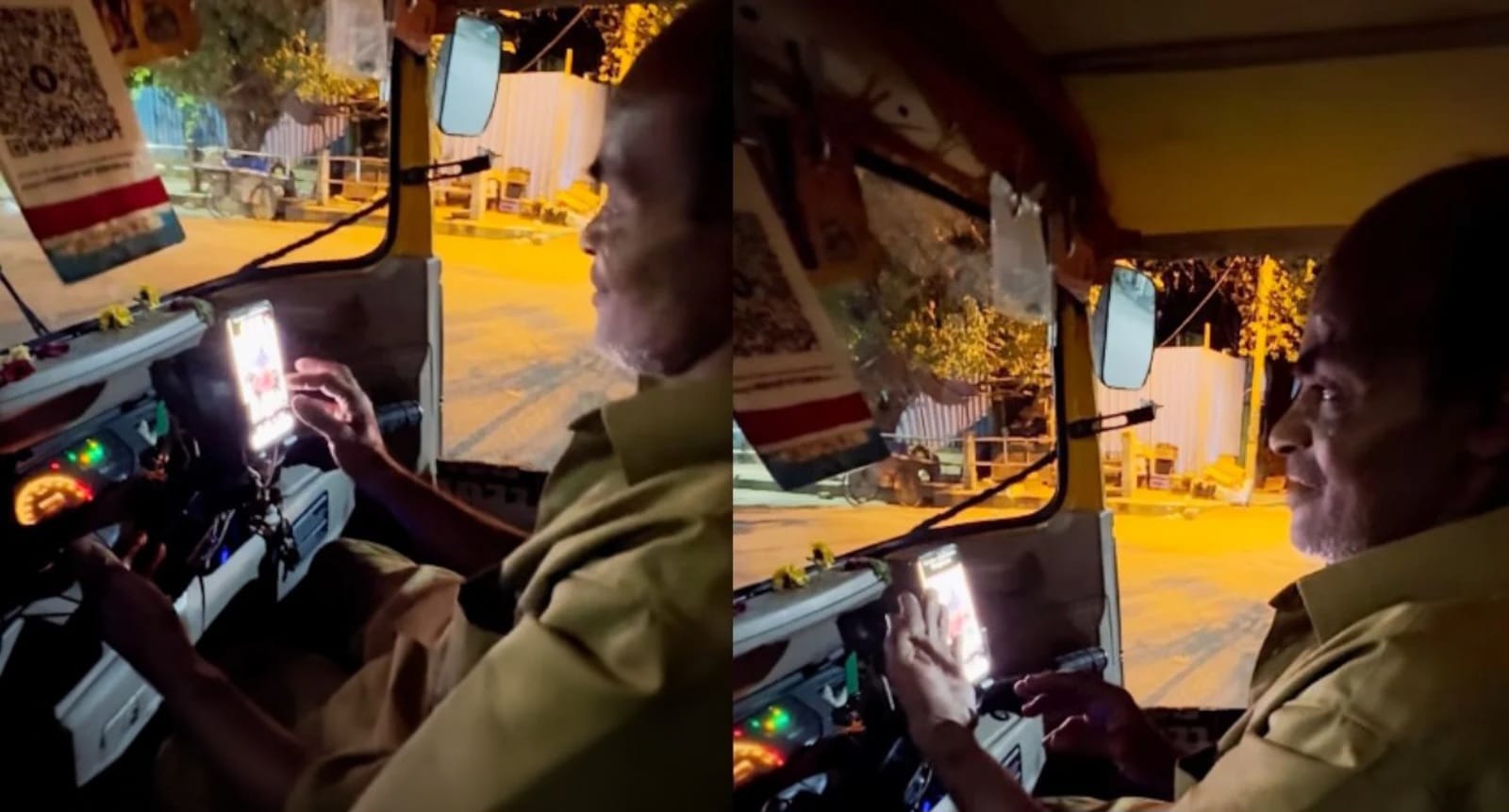
BENGALURU, India — An auto-rickshaw driver in India’s technology hub has captivated the global artificial intelligence community after an online interview surfaced on Sunday, June 28, 2026, detailing how he uses OpenAI’s conversational model, ChatGPT, to assist in his daily life. The interaction became widely notable after OpenAI’s official digital team issued a direct, public reaction to the local transit operator's detailed technical assessment. This development highlights an accelerating shift where generative AI tools are bypassing traditional institutional barriers to achieve organic utility within grassroots working economies.
Organic Adoption of Conversational AI in Transit Sectors
The encounter unfolded during a standard commute when local content creator Gagan Saiprasad recorded an interaction with the Bengaluru auto-rickshaw driver. Speaking predominantly in Kannada, the driver revealed that ChatGPT has transitioned into a fundamental learning, problem-solving, and informational hub within his daily routine.
According to tracking metrics of the viral footage, the driver outlined a multi-lingual pipeline for his daily queries. He explained that while he routinely inputs queries via English text inputs, he directs the generative model to output its synthesized explanations natively in Kannada. This capability allows him to effortlessly deconstruct highly complex global subjects without traditional translation barriers.
Technical Review and Specialized Critique
Beyond basic inquiries, the transit operator demonstrated a refined understanding of conversational memory systems. In the recorded interview, he highlighted the system's contextual tracking features, expressing marvel at how the chatbot actively references specific details from prompts he submitted up to four months prior.
Furthermore, the driver utilized the model's advanced real-time voice synthesis feature during the trip, demonstrating the application's ability to maintain immediate spoken dialogues in regional Indian dialects. However, he also delivered an objective technical critique concerning the tool’s output limitations. Having tested the model with nuanced questions on astrology, zodiac alignments, and sub-lords, the driver noted that the generated responses were occasionally incomplete, suggesting that the underlying training data required further refinement in specialized cultural fields.
Silicon Valley Reacts to Grassroots Feedback
The operational breakdown quickly gained international attention, reaching digital teams at OpenAI’s headquarters. The artificial intelligence firm responded directly to the viral video on Instagram, providing a light-hearted, official comment written entirely in Kannada to thank the driver for his deep technological engagement and constructive feedback.
For global market analysts, this localized corporate engagement underscores a critical market validation milestone. It verifies that the addressable market for large language models (LLMs) is rapidly expanding beyond western desk-bound professionals to include localized transit and service workers in developing economies who use smartphones for micro-learning.
Official Sources Section
The details regarding user metrics, interactive voice capabilities, and regional language models are aligned with corporate product sheets managed by OpenAI and digital repository tracking reported through India Today and NDTV News network logs.
Quote Section
"According to officials and public digital response tracking, the integration of advanced language tools by service professionals demonstrates a massive democratization of computing. When a transit worker successfully evaluates contextual memory and dialect precision, it signals that user curiosity, rather than formal technological training, is driving the current layout of software utility."
Why It Matters
For everyday consumers and software developers, this interaction demonstrates the real-world accessibility of voice-driven AI interfaces in overcoming literacy and language divides. For institutional tech investors, it confirms that the ultimate value of conversational software lies in global, multi-dialect scalability that captures high-volume user engagement across all socioeconomic levels.
Key Facts at a Glance
Dialect Pipeline: The Bengaluru driver uses English text commands but instructs the interface to output complex concepts fluently in Kannada.
Memory Optimization: The user explicitly noted the chatbot's advanced ability to remember and link contextual queries spanning back four months.
Corporate Engagement: OpenAI's official team reacted directly to the viral field report with a custom, native-language message of appreciation.
Constructive Critique: The driver highlighted data gaps within specialized local subjects like traditional astrology, proving active user testing.
FAQ Section
How did the auto driver use ChatGPT despite language barriers?
The driver utilized a cross-lingual strategy, inputting queries using English text or voice functions but commanding the software to process and speak responses natively in Kannada.
What was OpenAI’s specific reaction to the video?
OpenAI’s official social account directly left a playful, supportive comment composed in the regional Kannada language, acknowledging the driver’s unique usage and critique.
Can ChatGPT handle long-term memory across months?
Yes, OpenAI's chat interface contains an explicit "Memory" feature that stores key context and details from older conversations, allowing it to maintain personal context across distinct sessions over several months.
Source: India Today Trending Desk, NDTV Offbeat News, and official public community notifications from OpenAI.