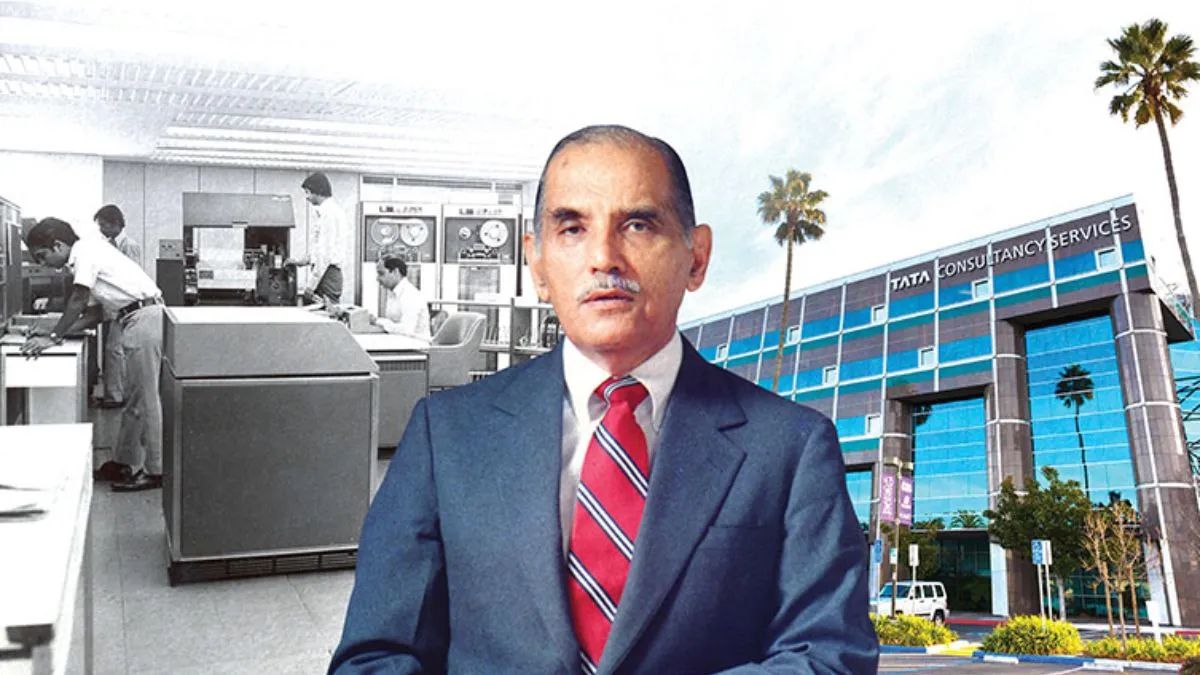
F.C. Kohli, a brilliant engineer who initially preferred his role at Tata Electric, was persuaded to take a new assignment that became Tata Consultancy Services. His disciplined approach to engineering and software helped launch India’s IT sector, creating a massive global industry and shifting the country's economic future forever.
MUMBAI — In 1969, Faqir Chand Kohli, a seasoned engineer at Tata Electric Company, was presented with an assignment that shifted the course of Indian economic history. At 45, Kohli was asked to leave his comfortable, highly mastered role in power grid management to lead an experimental venture into computing—a field that, at the time, lacked a formal vocabulary in India. Reluctantly, Kohli accepted.
His decision to take a job he initially didn't want led to the birth of Tata Consultancy Services (TCS). Over the next three decades, Kohli’s leadership did more than build a company; it established the blueprint for India’s emergence as a global hub for software services, ultimately creating employment for millions and cementing the nation’s reputation on the international tech stage.
From Power Grids to Digital Architecture
Long before the rise of the modern internet, Kohli was mastering the complexities of failure-intolerant systems. Having returned to India in 1951 with an electrical engineering degree from Queen's University and a master's from MIT, his early work at Tata Electric involved building load dispatch systems. This technical foundation proved crucial. Kohli recognized that the rigorous logic required to manage national power grids was the perfect training ground for early-stage computing.
His impact was both structural and visionary. In 1963, Kohli argued in an IEEE Journal article that India should invest in high-voltage 400KV or 500KV transmission lines. This technical foresight eventually formed the bedrock of the Power Grid Corporation of India, demonstrating his unique ability to turn granular engineering problems into national infrastructure.
Scaling the Unattempted
When Kohli pivoted to lead what would become TCS, he encountered an environment lacking modern software giants like Microsoft or SAP. Despite the absence of domestic infrastructure, Kohli focused on deep domain expertise. By securing international contracts—most notably the SEGA deal—Kohli forced TCS to compete with established global consulting firms.
His approach was centered on "human-centric" growth. He invested heavily in training programs, creating a pipeline of talent that would eventually power India's IT revolution. By the time he retired, TCS had surpassed all original projections, evolving from a small consulting division into a global leader.
Why It Matters
The legacy of F.C. Kohli extends far beyond his tenure at TCS. For modern India, his "reluctant" career shift highlights the importance of adaptability and technical excellence. His work essentially created the "outsourcing" industry in India, providing a path for millions of engineers to participate in the global economy. Investors and analysts today view his career as a masterclass in long-term institutional building, proving that enduring success is often the result of rigorous discipline applied to emerging, high-uncertainty industries.
Key Facts at a Glance
The Transition: In 1969, F.C. Kohli moved from Tata Electric Company to spearhead the foundation of TCS.
Academic Roots: Kohli earned his master’s from MIT, bringing advanced engineering knowledge to the fledgling Indian industrial sector.
National Impact: His 1963 proposals laid the groundwork for India’s current Power Grid infrastructure.
The Global Leap: By competing with global consulting giants, TCS placed India firmly on the international map for high-quality software services.
FAQ
Why is F.C. Kohli considered the "Father of the Indian IT Industry"?
He was instrumental in the early adoption and scaling of computer technology in India, establishing TCS as a premier service provider and creating the ecosystem for Indian software exports.
Did he actually want the job at TCS?
No. Reports indicate he was comfortable in his role at Tata Electric and initially accepted the TCS assignment with reluctance, viewing it as a move away from his established expertise.
How did he influence the power sector?
Before his IT career, his work on load dispatch systems and high-voltage transmission lines helped modernize India’s power distribution, directly influencing the creation of the Power Grid Corporation.
Source: Financial Express, Tata Heritage Archives