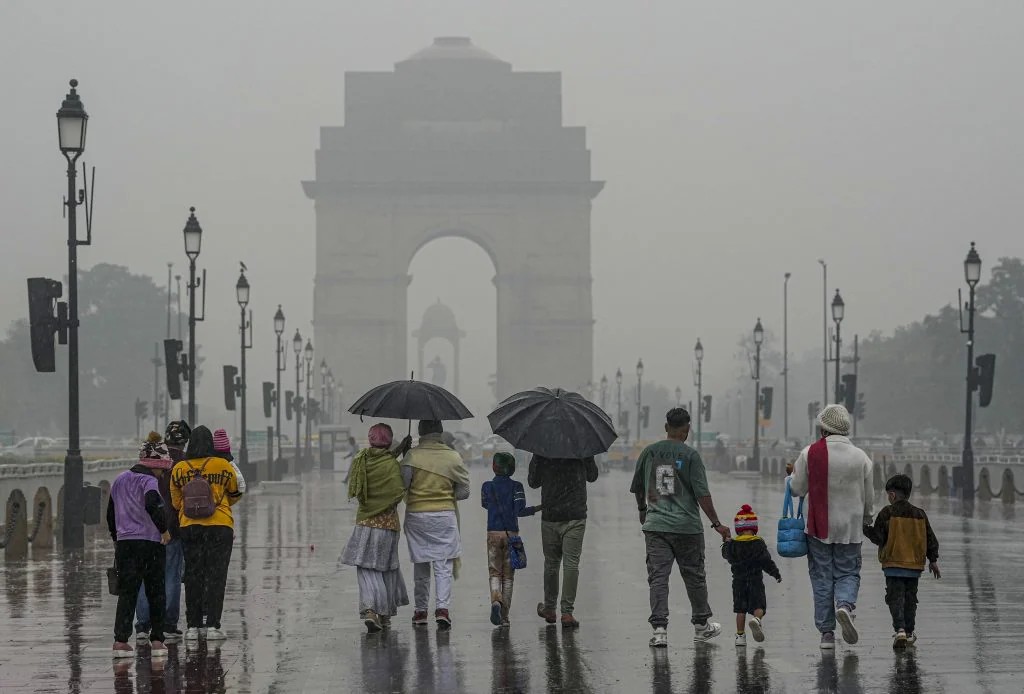
The India Meteorological Department (IMD) has forecast a steady advance of the southwest monsoon across central and north India over the coming days. Following an intense spell of Delhi rains that successfully ended the region's heatwave, the expanding weather system is set to accelerate crucial agricultural sowing cycles nationwide.
NEW DELHI, India — The Indian Meteorological Department (IMD) issued a comprehensive weather tracking bulletin on Sunday, June 28, 2026, forecasting that the southwest monsoon is structurally positioned to advance across remaining parts of central and north India over the coming days. The development follows a major spell of Delhi rains that brought significant accumulation over the weekend, relieving intense heatwave conditions but triggering localized urban waterlogging. The multi-state progression of the seasonal system is critical today as public utilities, agricultural sectors, and transportation networks adjust to the sudden onset of heavy precipitative patterns.
Seasonal System Speeds Up Across the Northern Plains
According to synoptic data provided by meteorologists, atmospheric conditions have turned highly favorable for the deep penetration of moisture-laden winds into the Indo-Gangetic plains. The IMD indicated that a low-pressure system lingering over the Bay of Bengal, combined with strong westerly winds, has effectively accelerated the typical northern trajectory of the seasonal system.
The capital region experienced an intense initial volume of Delhi rains, causing a swift temperature drop of several degrees Celsius. While municipal authorities noted that the moisture influx successfully neutralized a prolonged and hazardous heatwave cycle, the volume of water tested municipal drainage infrastructure across low-lying sectors, temporarily slowing down standard road traffic.
Regional Projections and Agricultural Impact Matrices
The advancing weather front is projected to bring varied precipitation levels across multiple states. IMD regional centers have placed several northern districts on alert, warning of intense downpours capable of causing localized flooding in low-lying rural and urban areas.
For agricultural investors and rural communities, the timely arrival of the system across central and northern breadbaskets is highly beneficial. The water volume is fundamentally essential for initiating the widespread sowing of critical summer crops, such as paddy, soybeans, pulses, and cotton, which directly influences national food security and inflation metrics.
Municipal Containment and Transit Disruptions
Despite the agricultural benefits, the initial spells of Delhi rains have presented immediate operational hurdles for urban administrative bodies. Local civic agencies, including the Municipal Corporation of Delhi (MCD), reported deployment of mobile water-pumping assets to clear inundated underpasses and prevent structural backflows in the city's aging sewer lines.
Public transport services, including regional transit networks and surface bus operations, reported minor schedule variations during the peak downpours. Aviation regulators at Indira Gandhi International Airport (IGIA) stated that while flight operations remained largely stable, ground handling procedures were momentarily paused during localized lightning events to protect runway crew safety.
Official Sources Section
Weather forecasting models, regional precipitation accumulation statistics, and monsoon tracking data are continuously updated and verified against public safety advisories published by the India Meteorological Department (IMD) and emergency transit management reports overseen by the National Disaster Management Authority (NDMA).
Quote Section
"According to officials from the national weather monitoring center, the system's current velocity suggests a steady, uniform advance over the next forty-eight to seventy-two hours. While the initial wave of Delhi rains has successfully broken the summer thermal equilibrium, local disaster management teams must maintain vigilance against brief, intense cloud bursts that challenge urban drainage limits."
Why It Matters
For everyday citizens and commuters, tracking the advance of the monsoon allows for better planning against sudden transit delays and localized power outages. For businesses and agricultural commodity traders, the steady expansion of rainfall across central and northern India serves as a key fundamental metric to predict annual crop yields and stabilize food supply chain logistics.
Key Facts at a Glance
Accelerated Advancement: The IMD explicitly forecasts that the southwest monsoon will cover remaining zones of north and central India ahead of schedule.
Thermal Relief: Recent intense Delhi rains have brought an abrupt end to a historic heatwave cycle, lowering local ambient temperatures significantly.
Agrarian Stimulus: The expanding moisture field provides the required water levels to trigger large-scale Kharif crop sowing across Uttar Pradesh and Madhya Pradesh.
Infrastructure Test: Local civic bodies are managing high volumes of surface runoff to keep major urban transit corridors functional.
FAQ Section
When is the monsoon expected to fully cover all of North India?
According to the latest IMD models, the seasonal system is on track to advance completely over the remaining northern plains and western regions over the next three to five days, assuming current pressure systems hold.
How do the recent Delhi rains impact the regional power grid?
The widespread rainfall causes an immediate drop in ambient temperatures, drastically reducing the city's peak cooling demand and easing the operational load on regional electrical grids.
What precautions should travelers take during heavy monsoon spells?
The NDMA advises commuters to monitor real-time traffic updates, avoid known low-lying waterlogged underpasses, and expect minor schedule adjustments across surface and rail transit networks.
Source: Official weather bulletins from the India Meteorological Department (IMD), civic management briefs from the Municipal Corporation of Delhi, and public safety data hosted by the Ministry of Earth Sciences.