Japanese Prime Minister Sanae Takaichi is in New Delhi for a state visit to bolster the India-Japan strategic partnership. The agenda prioritizes a 10 trillion yen investment goal, defense-industrial cooperation—including naval radar technology—and strengthening supply chains for semiconductors, AI, and clean energy to secure Indo-Pacific regional stability.
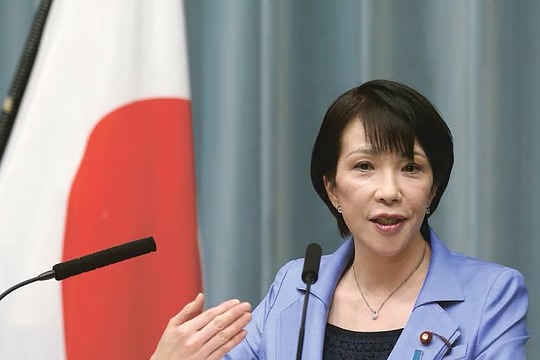
NEW DELHI — Japanese Prime Minister Sanae Takaichi arrived in New Delhi on Wednesday for a three-day official visit, marking a significant milestone in the deepening diplomatic ties between Tokyo and New Delhi. The visit, which runs through July 3, centers on high-level summit meetings with Indian Prime Minister Narendra Modi to advance the bilateral "Free and Open Indo-Pacific" vision and reinforce economic security.
This summit is being closely watched as it is Prime Minister Takaichi’s first state visit to India since assuming office in February 2026. Both nations are expected to focus on fulfilling the ambitious 10 trillion Japanese Yen (approximately USD 68 billion) investment target set for the coming decade, aimed at accelerating infrastructure development and technological collaboration.
Strengthening Defense and Economic Security
The discussions between the two leaders are slated to cover a broad spectrum of cooperation, with defense-industrial collaboration acting as a key pillar. Following the success of joint ventures like the UNICORN naval radar mast project, officials are looking to further integrate stealth antenna technology on Indian naval vessels.
According to the Ministry of External Affairs, the visit builds upon the momentum generated by the 2nd India-Japan Economic Security Dialogue held in May 2026. The two governments are keen to stabilize and diversify critical supply chains, with a specific focus on:
Critical Minerals: Securing resilient access to essential materials for high-tech manufacturing.
Semiconductors and ICT: Expanding collaboration in AI research and telecom infrastructure.
Clean Energy: Joint initiatives to support both nations' net-zero ambitions, including green hydrogen and bioethanol production.
Trade, Investment, and Technological Synergy
Beyond security, the economic agenda remains a primary priority. While Japan has long been a major source of foreign direct investment (FDI) for India—with cumulative investments crossing USD 44 billion—the 2026 summit aims to address structural trade imbalances.
Japanese private sector involvement is expected to increase through the "Make in India" initiative, with emphasis on integrating advanced Japanese automotive engineering with local Indian manufacturing capabilities. Both leaders are expected to review progress on the Japan-India Joint Vision for the Next Decade, ensuring that private sector recommendations from recent Keidanren and Confederation of Indian Industry (CII) dialogues are translated into policy action.
Official Stance
The Ministry of Foreign Affairs of Japan confirmed that the summit meeting on July 2 will serve as a platform to reaffirm the Special Strategic and Global Partnership. Organizers stated that the focus remains on "mutually complementary cooperation" that enhances regional stability and technological resilience in the face of shifting geopolitical dynamics.
Why It Matters
For businesses and investors, this visit signals a continued, long-term commitment to de-risking supply chains and fostering a high-tech manufacturing corridor. For citizens, the partnership promises increased infrastructure projects, such as major road networks and urban transit systems, which continue to benefit from Japanese Official Development Assistance (ODA).
Key Facts at a Glance
10 Trillion Yen Target: Both nations are committed to a goal of 10 trillion JPY in private investment over the next decade.
Strategic Focus: Key discussions revolve around semiconductors, critical minerals, and AI collaboration.
Defense Milestones: Building on the UNICORN naval radar project, furthering the relaxation of Japan’s historic defense export restrictions.
Itinerary: PM Takaichi arrived July 1, with the primary Summit Meeting scheduled for July 2.
Frequently Asked Questions (FAQ)
1. What is the main objective of PM Takaichi’s visit?
The visit aims to strengthen the "Free and Open Indo-Pacific" framework and consolidate the 10 trillion yen investment pledge for infrastructure and industrial cooperation.
2. Is there a change in Japan's defense export policy?
Yes. Recent collaboration on projects like the UNICORN naval radar system signifies a shift in Japan’s approach, allowing for closer defense-industrial integration with partners like India.
3. How does this impact the India-Japan trade deficit?
The two leaders are expected to discuss reforms to the Comprehensive Economic Partnership Agreement (CEPA) and ways to boost Indian exports to Japan to address the current bilateral trade imbalance.
4. What are the priority sectors for 2026?
Priority is given to five key areas: critical minerals, semiconductors, ICT (including AI), clean energy, and pharmaceuticals.
Source: Ministry of Foreign Affairs of Japan, Ministry of External Affairs of India, Drishti IAS