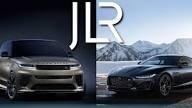
Jaguar Land Rover has announced a medium-term plan to achieve double-digit revenue growth by offering a flexible mix of hybrid and electric options on its Range Rover, Defender, and Discovery models. Backed by an £18 billion investment through FY29, the firm will cut costs by £1.7 billion and target significant expansion in the US market.
LONDON — Jaguar Land Rover (JLR), the luxury automotive subsidiary of India's Tata Motors Limited, announced a comprehensive operational update on Wednesday, June 17, 2026, mapping out its path to medium-term double-digit revenue growth. The British automaker will achieve this financial target by expanding powertrain flexibility across its primary luxury nameplates and driving an aggressive commercial expansion across the North American market.
The strategic shift is highly significant today as global premium automakers adjust to slowing growth rates in battery electric vehicle (BEV) adoption across western economies. Rather than forcing a singular transition to pure electric lineups, JLR is pivoting to a multi-tiered powertrain strategy, ensuring that affluent buyers have immediate access to hybrid alternatives while the firm optimizes its underlying industrial cost structures.
Flexible Powertrains for Core Brands and a Distinct Plan for Jaguar
According to regulatory updates distributed to exchange bourses, JLR’s revised product roadmap splits its global brand portfolio into two distinct operational directions based on market demand. The core utility nameplates will offer customers a broad spectrum of engine setups:
The Core Trio: The Range Rover, Defender, and Discovery brands will simultaneously offer a choice of Mild Hybrid Electric Vehicles (MHEV), Full Hybrid Electric Vehicles (HEV), Plug-in Hybrid Electric Vehicles (PHEV), or Battery Electric Vehicles (BEV).
Halewood Factory Adjustments: To support this change, JLR is adding full hybrid (HEV) engineering capabilities to its upcoming Electric Modular Architecture (EMA) vehicles built at its Halewood plant in the United Kingdom.
The Jaguar Blueprint: In contrast to the multi-energy approach of the SUV brands, the luxury Jaguar badge will remain uniquely and exclusively electric, moving forward with its high-end brand reinvention.
This strategy protects the automaker against short-term regulatory revisions or regional drops in EV charging infrastructure installation, giving consumers the flexibility to choose the powertrain that best fits their driving needs.
Targeted North American Expansion and Cost Reduction Targets
A major core pillar of JLR's mid-term corporate strategy is a large-scale commercial push into the United States. Management revealed a long-term goal to grow its US operations to match the total size of the entire global JLR business as it exists today, viewing the North American luxury market as a key source of highly profitable retail sales.
To shield these expansion tracks from economic volatility, JLR is rolling out internal efficiency programs called "Enterprise Missions." These programs aim to cut structural costs by £1.7 billion over the next 24 months, which will lower the company's operational breakeven point toward 300,000 vehicle units.
Five-Year Investment Matrix Reconfirmed
Despite introducing near-term engine flexibility at its UK assembly lines, JLR reconfirmed its existing long-term capital allocation commitments. The company remains dedicated to its five-year, £18 billion investment roadmap, which runs through fiscal year 2029 (FY29).
| Financial Metric | Strategic Target Details |
| Medium-Term Target | Double-digit revenue growth |
| 5-Year Capital Allocation | £18 billion committed through FY29 |
| Cost Saving Mandate | £1.7 billion reduction via Enterprise Missions |
| Operational Breakeven | Target reduced toward 300,000 units over 2 years |
| Primary Growth Region | North America (United States market focus) |
This multi-billion-pound capital pool will fund the development of next-generation autonomous software modules, advanced battery pack manufacturing centers, premium connected digital services, and the complete transformation of its global retail dealer networks.
Official Sources Section
The corporate guidance metrics, factory adjust arrangements, and financial targets discussed in this report are compiled from official regulatory releases and exchange desks:
Quote Section
"According to officials from the company's financial planning division, introducing a full hybrid option to the EMA platform ensures our manufacturing plants can instantly pivot production balances to match changing customer preferences, helping protect our operating margins throughout the transition."
Why It Matters
JLR's decision to offer a mix of hybrid and electric powertrains highlights a growing trend among luxury car manufacturers to embrace fuel flexibility rather than relying solely on rapid EV adoption. For premium car buyers, this ensures that popular luxury models like the Range Rover retain versatile driving capabilities without requiring immediate access to high-speed public charging networks.
For stock market investors tracking Tata Motors, the dual strategy of lowering the manufacturing breakeven point while expanding in the high-margin US market provides a reliable plan to support long-term profitability amidst changing global trade patterns.
Key Facts at a Glance
Growth Target: JLR is targeting double-digit revenue growth over the medium term by expanding powertrain choices.
Flexible Strategy: The Range Rover, Defender, and Discovery lines will offer MHEV, HEV, PHEV, and BEV configurations, while Jaguar shifts to a purely electric portfolio.
Industrial Adjustments: JLR is adding full hybrid options to vehicles built on its future EMA platform at the Halewood facility in the UK.
Efficiency Focus: The company's "Enterprise Missions" aim to cut costs by £1.7 billion, lowering its two-year operational breakeven point toward 300,000 units.
Investment Commitment: Management reconfirmed its five-year, £18 billion commitment to future technologies and vehicle platforms through FY29.
FAQ Section
Q1: Why is JLR adding full hybrid (HEV) options to its future electric platforms?
The addition of hybrid capabilities gives the company greater manufacturing flexibility to navigate changing global demand, ensuring it can accommodate buyers who are not yet ready to transition to full battery electric vehicles.
Q2: Is Jaguar abandoning its plans to become an all-electric luxury brand?
No. While the Land Rover brands (Range Rover, Defender, Discovery) will offer a mix of hybrid and electric models, the Jaguar brand will remain uniquely and exclusively electric as part of its premium market repositioning.
Q3: How does the company plan to achieve its £1.7 billion cost-saving target?
Through its internal "Enterprise Missions," JLR will streamline component sourcing, optimize vehicle assembly lines, and reduce structural complexities to lower its annual breakeven threshold toward 300,000 units.
Q4: What are JLR's long-term commercial goals for the North American market?
JLR aims to scale its US business over the long term to match the current revenue size of its entire global operations, capitalizating on strong demand for high-end luxury SUVs in the region.
Source: Tata Motors Limited Exchange Filings, National Stock Exchange of India, Jaguar Land Rover Corporate Communications Desk.