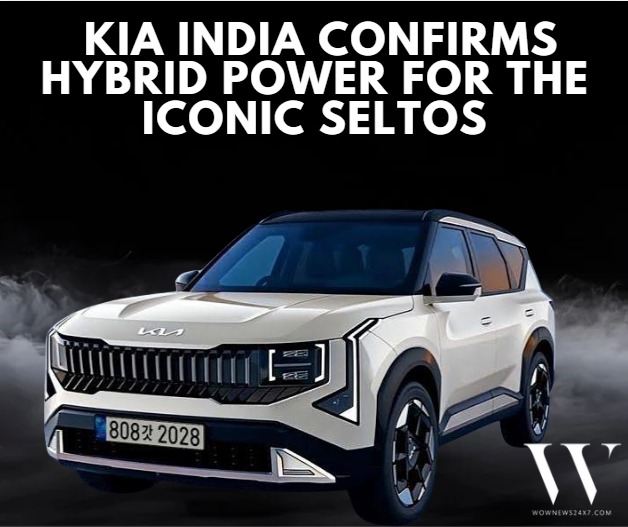
Kia India is set to launch the Seltos Hybrid by 2027, aiming for 25% of its Indian sales to be hybrid models by 2030. The upcoming SUV will feature a localized 1.5-litre petrol-hybrid powertrain designed for high fuel efficiency, marking a strategic shift toward electrification for Kia's popular mid-size SUV lineup.
Kia India has confirmed its roadmap to introduce hybrid technology to the Indian market, with the next-generation Kia Seltos Hybrid slated as a centerpiece of this rollout. While the current internal combustion engine (ICE) versions continue to lead sales, the automaker is gearing up for a transition starting in 2027, aligning with its broader goal to have hybrids account for 25% of its total Indian sales by 2030.
This development comes as the automotive industry in India shifts focus toward fuel-efficient powertrain alternatives. Industry reports indicate that the Seltos Hybrid will be tailored specifically for the Indian market, prioritizing high levels of localization to ensure it remains competitive against established hybrid rivals.
Engineering the Indian Hybrid
Unlike the global-spec Seltos Hybrid, which utilizes a 1.6-litre turbocharged powertrain, the India-bound model is expected to feature a powertrain optimized for the local landscape. According to industry analysis, the vehicle will likely utilize a modified version of the company’s proven 1.5-litre naturally aspirated petrol engine paired with an electric motor and a battery pack.
This configuration is being developed to maximize fuel economy—potentially reaching up to 25 km/l—offering a significant efficiency boost over the standard ICE variants. Kia’s commitment to heavy localization is expected to allow the company to offer this hybrid SUV at a premium of approximately ₹2 lakh over the standard Seltos, ensuring it remains an attractive proposition for mid-size SUV buyers.
Strategic Roadmap for India
The introduction of the Seltos Hybrid is part of a larger, ambitious product pipeline. Kia has confirmed plans to launch seven new models in India by 2029, a lineup that includes:
Kia Seltos Hybrid: A core pillar of the brand’s electrification strategy.
Kia Sorento-based SUV: A premium hybrid offering (codenamed MQ4i) aimed at the three-row SUV segment to compete with vehicles like the Mahindra XUV 7XO and Tata Safari.
Sonet Hybrid: While the next-generation Sonet is expected in 2027, an electrified variant is reportedly in the works for a 2028-29 launch.
Why It Matters
For Indian consumers, the arrival of the Seltos Hybrid represents an accessible gateway to electrified mobility without the range anxiety associated with pure battery electric vehicles (BEVs). For the business, this expansion is critical; by diversifying into the hybrid space, Kia aims to insulate itself from the cyclical nature of traditional fuel markets and better align with India’s evolving environmental standards. As competition intensifies from domestic and international manufacturers, the Seltos Hybrid will serve as a vital product in Kia's effort to capture the growing "green" SUV segment.
Key Facts at a Glance
Expected Debut: The Kia Seltos Hybrid is targeted for an early 2027 launch in India.
Powertrain: Expected to pair a 1.5-litre naturally aspirated petrol engine with an electric motor.
Fuel Efficiency: The setup aims for an approximate fuel economy of 25 km/l.
Long-term Goal: Kia targets 25% of its Indian sales to come from hybrid vehicles by 2030.
FAQ
Will the Seltos Hybrid have all-wheel drive?
While global hybrid configurations often include eAWD, the India-spec version is currently expected to focus on a front-wheel-drive setup to maintain cost-competitiveness.
How will the hybrid variant differ from the current Seltos?
Beyond the hybrid powertrain, the upcoming Seltos is expected to feature the design and technology updates associated with the second-generation global model.
Is Kia launching other hybrid SUVs?
Yes, Kia has confirmed plans for a larger, Sorento-based premium hybrid SUV to compete in the three-row market segment.
Source: Team-BHP, GaadiWaadi, RushLane, India Today