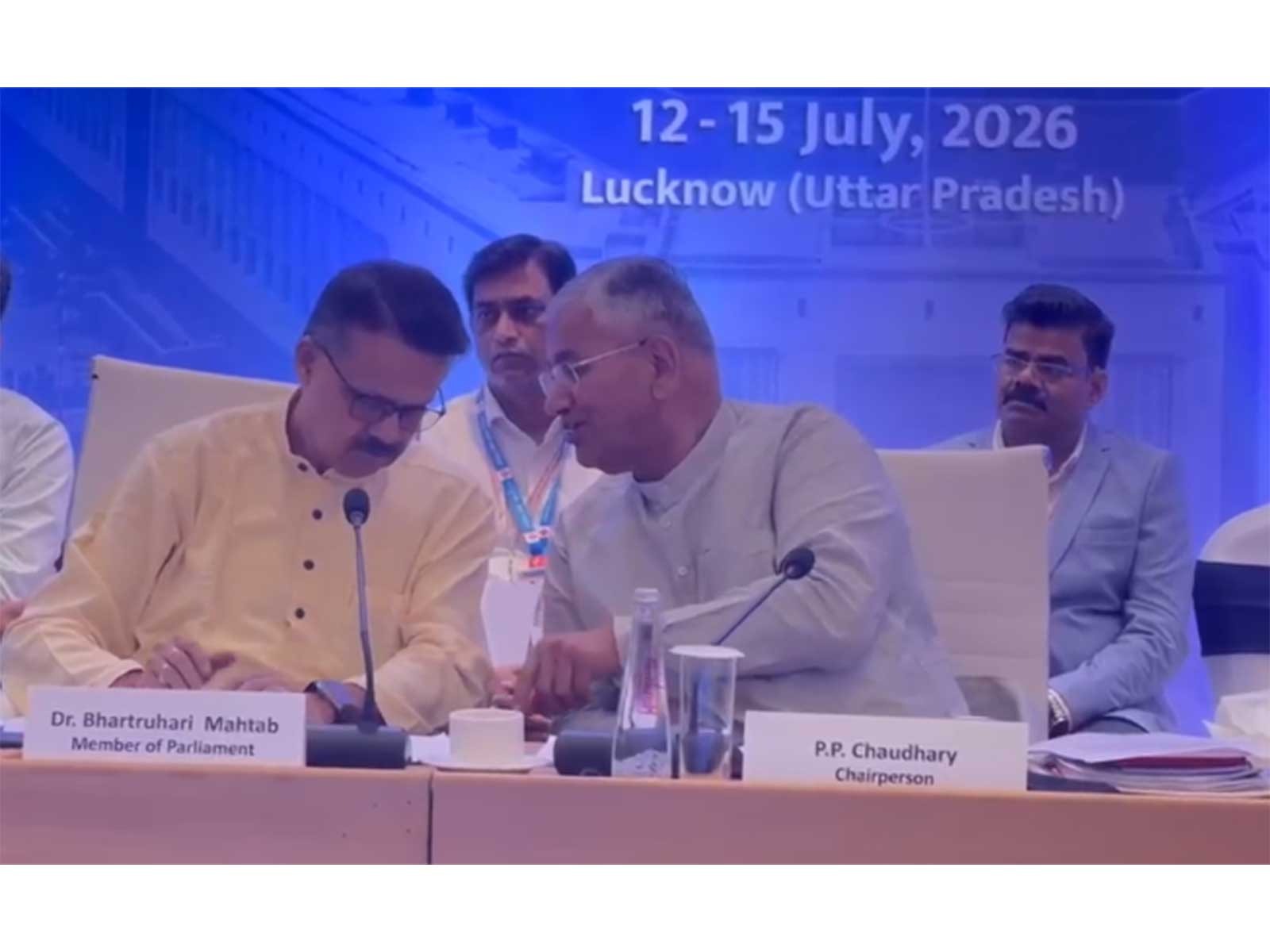
A high-level Joint Parliamentary Committee (JPC) has concluded comprehensive legislative consultations in Lucknow regarding the proposed "One Nation, One Election" framework. The panel engaged in dynamic multi-sector dialogues with senior bureaucrats, legal bodies, political leaders, and premium academic institutions to build national structural consensus.
LUCKNOW, INDIA — The Joint Parliamentary Committee (JPC) reviewing the legislative framework for the implementation of the "One Nation, One Election" (ONOE) protocol has arrived in Uttar Pradesh's capital for an extensive three-day regional consultation schedule. The strategic deployment represents a major milestone in the country's ongoing constitutional review process.
The 39-member legislative committee, operating under the formal directive of the Lok Sabha Secretariat, arrived in Lucknow late on July 12, 2026, after wrapping up its preceding multi-stakeholder assessment tour in Goa. The targeted legislative exercise is designed to rigorously evaluate the systemic amendments required to transition India's administrative machinery toward a synchronized, five-year cycle combining national parliamentary and state legislative assembly polls.
High-Level Bureaucratic Consultations and State Alignment
The official itinerary in Lucknow commenced on July 13, 2026, with an intense slate of informal operational evaluations. JPC Chairperson P.P. Chaudhary led the panel in comprehensive technical discussions aimed at measuring the logistical and economic impact of a unified election setup on the infrastructure of India's most populous state.
The committee met with a massive array of executive state machinery, holding joint diagnostic rounds with:
The Chief Secretary, Director General of Police (DGP), and the Chief Electoral Officer of Uttar Pradesh.
Senior administrative heads representing the Departments of Home, Finance, and Education.
Executive representatives from the Departments of Agriculture, Industries, Tourism, Health, and Labour.
The conversations focused heavily on evaluating the provisions embedded in the Constitution (One Hundred and Twenty-Ninth Amendment) Bill, 2024, alongside the Union Territories Laws (Amendment) Bill, 2024. Administrative experts provided detailed field insights regarding how a simultaneous model would reduce the prolonged operational blocks caused by the repeated enforcement of the Model Code of Conduct (MCC), which frequently freezes welfare projects during separate state and central voting cycles.
Legal Vetting and Corporate Perspective Mapping
Moving beyond administrative feedback, the parliamentary group shifted focus to legal and financial security systems on July 14, 2026. The JPC hosted interactive listening panels with key organizations representing the state’s judicial framework, including the Bar Council of Uttar Pradesh, the Allahabad High Court Bar Association, and the Oudh Bar Association. The focus remains on evaluating constitutional pathways regarding the potential early termination of state assemblies and defining explicit boundaries for the Election Commission of India.
Simultaneously, the committee mapped the perspectives of regional industry networks to understand the business implications of simultaneous voting. Discussions were organized with the Indian Industries Association, the Merchant Chambers of Uttar Pradesh, and Laghu Udyog Bharati, alongside financial institutional experts from the Export-Import Bank of India (EXIM Bank) and the National Bank for Financing Infrastructure and Development (NaBFID). Industrial representatives presented detailed baseline numbers proving that continuous elections disrupt private supply chains and result in irregular government procurement cycles.
Academic Verification and Final Report Preparation
The final leg of the Lucknow study visit, taking place on July 15, 2026, will turn toward academic analysis. The JPC is scheduled to engage with eminent constitutional experts and researchers from top-tier research institutions, including the University of Lucknow, IIM Lucknow, IIT Kanpur, and the Dr. Ram Manohar Lohiya National Law University.
The academic review will address the core impacts of synchronous elections on federalism principles and the Basic Structure Doctrine. This regional consultation run acts as a final data gathering step before the JPC meets on July 17, 2026, to finalize, adopt, and formally submit its recommendation report to the Ministry of Law and Justice for active parliamentary consideration.
Official Sources Section
The timelines, institutional schedules, and participant updates for this regional legislative program conform entirely to official state tracking briefs released by the Lok Sabha Secretariat and verified press releases published by the Press Information Bureau (PIB).
Quote Section
Commenting on the deep institutional intent behind the nationwide consultation tour, JPC Chairperson P.P. Chaudhary stated:
"We will hold a meeting with all the stakeholders over the issue, including the government officials, public representatives, political parties, and industries. When we talk about the will of the people, it is clear that everyone wants a single election cycle in the country to avoid the disruptions caused by near-permanent election mode."
Confirming the collaborative nature of the panel's report drafting, Shiv Sena (UBT) MP and JPC member Anil Desai added:
"I will participate in the meeting on the 'One Nation, One Election' proposal. Various witnesses are scheduled to share their views, and members will offer their opinions to better understand how this concept would benefit the country. The committee will carefully consider these diverse perspectives and incorporate them when drafting its final report."
Why It Matters
For average citizens and taxpayers, a synchronized election framework promises to significantly reduce the massive public expenditure spent on conducting repeated standalone voting drives. For corporate businesses and investors, eliminating frequent regional election windows provides long-term policy predictability and prevents sudden halts in industrial infrastructure projects due to model code restrictions. For state administrators, aligning regional assembly tenures with the national Lok Sabha calendar permits continuous, uninterrupted implementation of long-term development programs.
Key Facts at a Glance
Bilateral Review Scope: The JPC is systematically scrutinizing both the Constitution (129th Amendment) Bill and the Union Territories Laws (Amendment) Bill.
Regional Progress: The Lucknow tour builds directly on successfully completed field assessments in Maharashtra, Gujarat, Goa, and Karnataka.
Deep Consultations: Gathering insights across a 39-member committee representing diverse political entities like the BJP, Congress, and Samajwadi Party.
Definitive Deadline: The JPC is scheduled to adopt its finalized recommendation report on July 17, 2026, ahead of the upcoming parliamentary session.
FAQ Section
Does "One Nation, One Election" imply that voting across India will occur on a single day?
No. As clarified by JPC leaders, the proposal aims to synchronize the broader five-year cycles of Lok Sabha and state assembly elections, which will still be conducted safely in multiple phases based on regional security constraints.
What happens if a state assembly dissolves prematurely under this framework?
The proposed constitutional bills under JPC review include special mechanisms to handle unexpected mid-term collapses, focusing on structural limits that may restrict a subsequent mid-term government to only the remainder of the original five-year cycle.
Which political parties are participating in the Lucknow JPC consultation panels?
The 39-member committee maintains cross-party representation, bringing together MPs from the ruling NDA alliance along with prominent opposition voices from the Congress, Shiv Sena (UBT), Trinamool Congress, and the Samajwadi Party to ensure balanced viewpoints.
Source: Lok Sabha Secretariat; Press Information Bureau (PIB); Ministry of Law and Justice; Uttar Pradesh Government General Administration Portal.