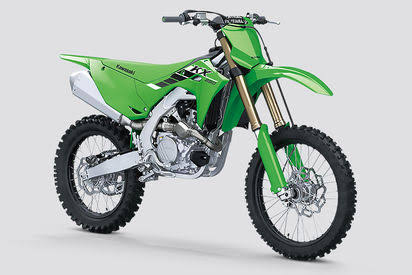
Kawasaki has launched the new Kawasaki KX327 and cross-country KX327X off-road motorcycles. Featuring a highly sophisticated 2-stroke engine upgrade equipped with digital electronic fuel injection and electronic oiling systems, the bikes introduce lightweight, modern competition machinery into an off-road racing market previously dominated by standard four-stroke platforms.
TOKYO, Japan — Kawasaki Heavy Industries has officially announced the global launch of its latest off-road competition motorcycles, the new Kawasaki KX327 motocross bike and its cross-country sibling, the KX327X. The unveiling marks a historic pivoting point for the manufacturer, introducing a completely updated 2-stroke engine upgrade to a premium segment that has long been dominated by four-stroke powerplants.
According to a company statement released today, June 4, 2026, these new models are designed to meet a growing global demand for high-power, lightweight machinery in closed-course racing. By integrating modern electronic fuel injection and digital exhaust valve management, Kawasaki aims to capture market share in both closed-circuit motocross and traditional enduro fields.
Technical Innovation: The 2-Stroke Engine Upgrade
The core development driving these new machines is a ground-up engineering initiative focusing on a mid-bore two-stroke platform. Unlike historical two-stroke architectures that relied entirely on carburetors and mechanical power valves, the new Kawasaki KX327 utilizes advanced Transfer Port Injection (TPI) technology.
Engineers at the Akashi development facility confirmed that the revised engine architecture uses dual injectors located in the cylinder transfer ports to optimize fuel atomization. This system is monitored by an integrated Electronic Control Unit (ECU) that continuously adjusts fuel delivery based on barometric pressure and engine temperature.
The digital power valve system manages the exhaust port timing based on RPM, flattening the traditionally abrupt two-stroke powerband into a linear tractability curve. For riders, this means the 2-stroke engine upgrade delivers the traditional lightweight agility of a two-stroke without the erratic power spikes that historically fatigued racers over long heat sessions.
Differentiating the KX327 and Cross-Country KX327X
Kawasaki is releasing the platform in two distinct configurations to target separate racing disciplines. While both share the core chassis and power units, their peripheral component setups cater to different terrain complexities:
The Motocross Platform (KX327): This variant features an aggressive suspension tuning schedule utilizing Showa 49mm inverted coil-spring front forks and a Uni-Trak rear linkage system optimized for high-impact jump landings. It comes standard with a 21-inch front and 19-inch rear wheel setup running Dunlop Geomax MX34 tires.
The Cross-Country Platform (KX327X): Tailored specifically for off-road woods racing and GNCC-style events, the KX327X features softer internal damping values, an 18-inch rear wheel for increased sidewall flex, handguards, a skid plate, and a side stand. The ECU mapping is adjusted to favor low-end torque extraction rather than peak high-RPM output.
Market Impact on Privateer Racers and Investors
Industry analysts suggest that the launch will create immediate ripples across local racing series and regional retail markets. Over the last decade, European manufacturers have held a functional monopoly over the premium fuel-injected two-stroke off-road market segment.
For consumer racers and privateer teams, the presence of a Japanese major manufacturer in this specific space introduces competitive pricing pressures. Maintenance costs for two-stroke top-ends remain significantly lower than complex four-stroke valve trains, a factor that financial officers at grassroots racing teams heavily prioritize.
From an investment perspective, this release signals that major motorcycle corporations are still willing to invest research capital into internal combustion engine optimization, provided they can clear modern emissions and efficiency benchmarks for closed-course vehicles.
Official Sources Section
Regulatory filings and technical sheets provided directly via the Kawasaki Motors Global Portal confirm the structural specifications of the aluminum perimeter frame and integrated counterbalancer assemblies designed to mitigate engine vibrations. Production schedules indicate that initial dealer allocations will begin shipping to North American and European fulfillment networks in the third quarter of this year.
Quote Section
In an official document distributed during the technical briefing, program directors detailed the testing parameters used to validate the new fuel systems:
"According to officials at the engineering department, our goal was to preserve the signature high-power-to-weight ratio that defines the two-stroke legacy while using electronic sensors to eliminate the need for manual jetting changes across varying altitudes."
Why It Matters
The release of the new Kawasaki KX327 is crucial because it bridges a gap for racers who require more torque than a standard 250cc engine provides but want to avoid the heavier rotational inertia associated with 450cc four-stroke powertrains. The reduced weight decreases rider fatigue, directly impacting safety and performance metrics across amateur and professional racing circuits globally.
Key Facts at a Glance
Power Unit: 326.8cc liquid-cooled, single-cylinder two-stroke engine featuring dual-stage digital electronic fuel injection.
Chassis System: Revised lightweight aluminum perimeter frame shared with the current KX factory racing program.
Electronics Suite: Selectable ignition maps via handlebar-mounted switches, allowing real-time adjustments for muddy or dry terrain conditions.
Weight Reduction: The 2-stroke engine upgrade results in an overall wet weight reduction of roughly 7.5 pounds compared to equivalent four-stroke models.
FAQ Section
Q: Is the new Kawasaki KX327 street legal?
A: No. Both the KX327 and the KX327X variations are classified strictly as competition, closed-course off-road motorcycles and do not feature street-legal lighting or highway registration equipment.
Q: Do these models require pre-mixing oil with gasoline?
A: No. Thanks to the advanced 2-stroke engine upgrade, the fuel delivery architecture incorporates an electronic oil injection pump connected to a separate oil reservoir, eliminating the traditional process of manual fuel pre-mixing.
Q: When will retail pricing be announced for global dealerships?
A: Kawasaki regional distribution offices are expected to release specific MSRP figures within the next 30 days as individual logistical schedules are finalized.
Source: Kawasaki Heavy Industries Press Room, Kawasaki Motors Corporation Technical Release Documents.