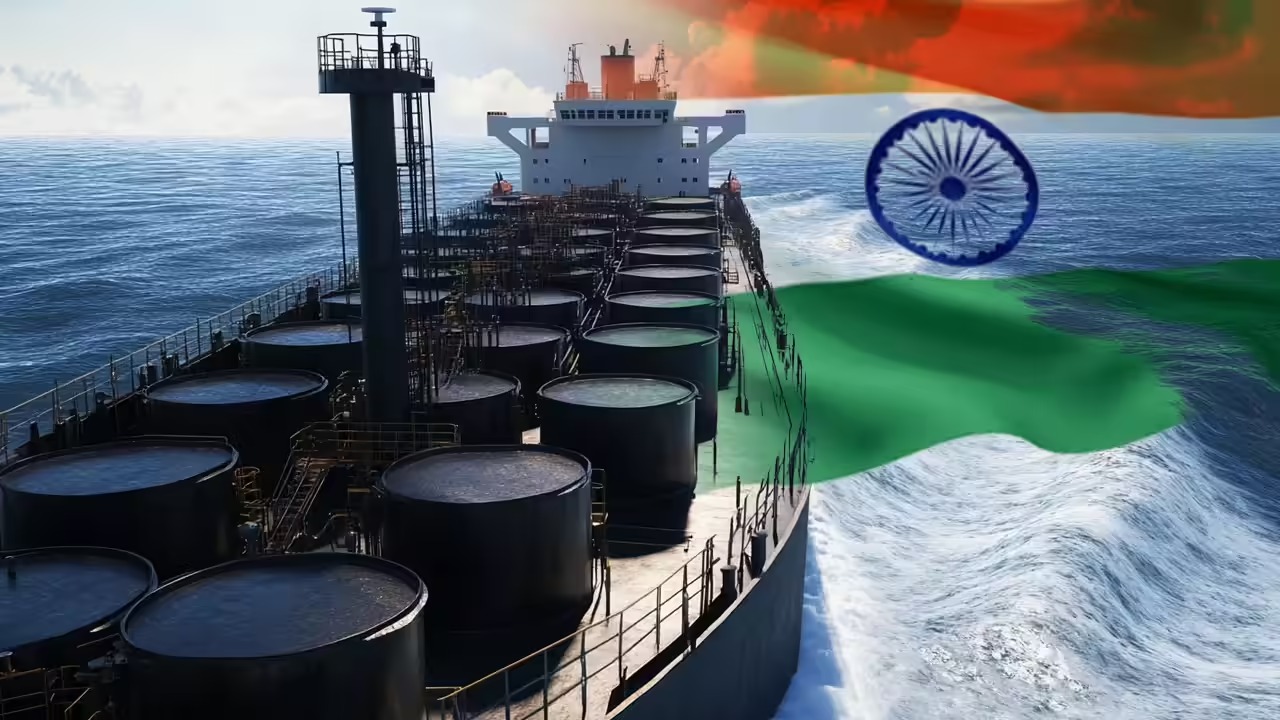
An Indian government official confirmed that Petronet LNG's tanker Disha safely crossed the Strait of Hormuz, though 16 India-bound fertilizer ships remain inside the high-risk waterway. Authorities also stated that all Indian crew members are safe following a drone attack on the chemical tanker Bochem Marengo last week.
In a major development for energy security, the Indian government confirmed on Monday that the Disha, a liquefied natural gas (LNG) tanker operated by Petronet LNG, has successfully transited the highly volatile Strait of Hormuz. The transit occurs against a backdrop of severe geopolitical friction, with top trade and maritime officials revealing that 16 other vessels transporting essential fertilizer shipments destined for Indian ports currently remain within the strategic chokepoint. While the successful crossing provides vital industrial relief, fresh security concerns have emerged following an official disclosure that another merchant vessel with an all-Indian crew survived a drone strike in the same corridor last week.
Petronet Vessel Safeguards Energy Corridor
The successful passage of the Disha marks a critical operational victory for India's energy infrastructure. According to state ship-tracking data and maritime records, the LNG carrier had picked up its cargo from Qatar's Ras Laffan facility on March 1 and had been delayed west of the channel due to compounding regional conflicts.
While the commercial energy corridor showed tentative signs of movement following preliminary discussions of a regional transit agreement, wider shipping traffic remains constrained. Shipowners and global insurance syndicates continue to exercise extreme caution regarding navigation through the waterway, which handles roughly one-fifth of the world’s petroleum and gas supplies.
Drone Strike Highlights Escalating Risks for Indian Crews
The structural volatility of the shipping lane was underscored by an official Indian government update regarding a hostile engagement last week. The Bochem Marengo, a Hong Kong-flagged oil and chemical tanker managed by Anglo-Eastern Ship Management (India) Private Limited, was targeted by an explosive unmanned aerial vehicle (UAV).
The vessel was sailing under the protection of the U.S. Naval Cooperation and Guidance for Shipping (NCAGS) framework when the strike occurred during the overnight hours of June 12–13. Government authorities confirmed the following structural details:
Crew Status: All Indian seafarers steering the vessel escaped without injury and are officially accounted for as safe.
Structural Damage: The kamikaze drone directly impacted the hull, compromising the No. 1 and No. 2 port water ballast tanks alongside the No. 2 port cargo tank.
Emergency Diversion: The vessel maintained propulsion and successfully diverted to the port of Fujairah in the United Arab Emirates (UAE) for emergency assessment and structural welding repairs.
Official Statements
Government representatives emphasizing trade security noted that keeping maritime corridors open remains a top priority to protect both essential imports and citizen mariners.
"According to officials, the LNG tanker Disha has cleared the Strait of Hormuz safely," a senior Indian government representative stated. "However, the situation remains highly fluid. There are currently 16 ships carrying critical fertilizer shipments for India inside the Strait. Regarding the security incident reported on the tanker Bochem Marengo last week, we can officially confirm that all Indian crew members are entirely safe."
The shipping company's internal Emergency Response Team has actively coordinated with the UK Maritime Trade Operations (UKMTO) to monitor the 16 remaining commodity hulls still transiting the high-risk zone.
Why It Matters
The Strait of Hormuz serves as an irreplaceable artery for India's economic stability. A prolonged blockade or persistent drone warfare directly threatens agricultural yields by stalling fertilizer inputs and elevates manufacturing overheads via volatile spot-market energy costs. Securing safe passage for these vessels ensures steady retail fertilizer pricing for domestic farmers and prevents inflationary spikes across the broader consumer economy.
Key Facts at a Glance
Energy Delivery: The Petronet LNG-chartered tanker Disha has cleared the chokepoint after being delayed since its early March loading in Qatar.
Agricultural Risk: Sixteen cargo ships loaded with essential agricultural fertilizer are currently navigating the contested shipping lane.
Security Breach: The chemical carrier Bochem Marengo sustained localized hull damage from a drone strike but safely reached port.
Crew Safety: Government monitoring confirms that no Indian seafarers suffered injuries during last week's aerial attack.
Frequently Asked Questions
What cargo is the LNG tanker Disha carrying and where is it going?
The Disha is transporting liquefied natural gas loaded from Qatar's Ras Laffan terminal. The vessel is en route to India, where it is expected to offload its energy cargo at the Dahej import terminal in Gujarat.
What happened to the Bochem Marengo in the Strait of Hormuz?
The vessel was struck by an explosive unmanned aerial vehicle (UAV) during the night of June 12–13. Despite sustaining structural damage to its ballast and cargo tanks, the vessel reached Fujairah, UAE, and its all-Indian crew remained unharmed.
Why are the 16 fertilizer ships in the Strait critical for India?
India relies heavily on imported mineral fertilizers to sustain its agricultural cycles. Delays to these 16 ships could disrupt supply chains ahead of peak farming seasons, making their safe transit a matter of national food security.
What safety protocols are protecting Indian ships in the region?
Vessels are utilizing international naval support networks, including the U.S. Naval Cooperation and Guidance for Shipping (NCAGS), alongside direct tracking updates coordinated by the UKMTO and Indian maritime authorities.
Source: Ministry of Ports, Shipping and Waterways, Petronet LNG Limited, UK Maritime Trade Operations (UKMTO)