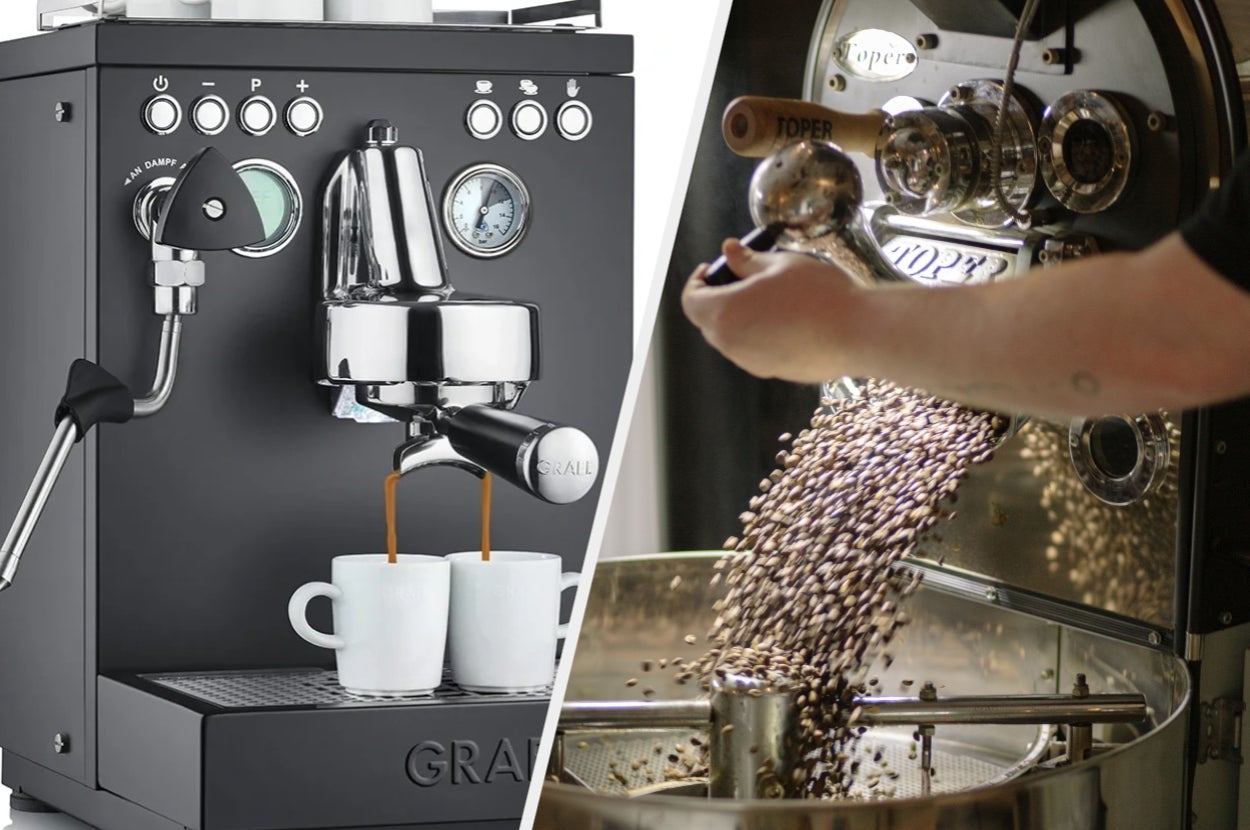
The shift toward premium home brewing has turned everyday kitchens into high-tech coffee labs. By using advanced tools like flat burr grinders, precise gooseneck kettles, and smart scales, home baristas can easily recreate café-quality espresso and pour-overs while saving significantly on their daily caffeine routines.
NEW YORK — The global home coffee market is experiencing a significant shift toward café-quality precision, as retail consumer behaviors monitored on June 9, 2026, show an unprecedented demand for commercial-grade brewing accessories. Industry retail logs indicate that the average consumer is moving away from basic capsule systems and toward data-driven, manual extraction products.
Driven by culinary curiosity and a collective desire to avoid rising café prices, casual drinkers are transforming their kitchens into professional stations. To bridge the gap between amateur brewing and professional craftsmanship, industry professionals have highlighted the 21 best coffee products designed to deliver café-grade flavor clarity at home.
The Core Foundations: Precision Grinding and Controlled Heating
According to comprehensive testing data managed by independent laboratory testing groups, achieving a balanced espresso shot or a clean pour-over depends heavily on two core variables: precise particle uniformity and precise temperature control. Legacy blade grinders, which unevenly chop coffee beans, are being replaced by advanced electric burr systems.
The fundamental components of a high-performance home espresso station require a methodical breakdown:
Market telemetry reports show that the Fellow Ode Gen 2 and the ultra-affordable DF54 flat burr grinder lead the industry in grind consistency. When paired with a variable-temperature gooseneck kettle—such as the Fellow Stagg EKG—users gain exact control over their extraction timing. This prevents the bitter over-extraction caused by uncalibrated, boiling water.
Technical Specifications of Elite At-Home Brewing Systems
Data compiled across e-commerce retail networks shows that home baristas are splitting their investments between premium, automatic espresso machines and highly versatile manual tools. To help buyers choose the right setup, product testing leagues have grouped the top-performing gear by budget and brewing style:
| Specialized Equipment Category | Industry Benchmark Model | Core Mechanical Advantage |
| All-in-One Espresso Machine | Breville Barista Pro | Built-in 30-setting grinder; pre-infusion pressure control |
| Precision Drip Brewer | Technivorm Moccamaster KBGV | Copper heating element holds water between 196°F to 205°F |
| Professional Espresso Scale | Acaia Lunar | Water-resistant housing; automatic timer auto-starts on drip |
| Puck Distribution Upgrade | WDT Needle Tool (0.35mm) | Eliminates internal channeling for smoother extraction |
| Portable Hybrid Press | AeroPress Clear with Prismo | Generates manual pressure without expensive pump machinery |
For milk-focused drinkers who prefer lattes and cappuccinos, automatic texturing steam wands—like the one on the compact Breville Bambino Plus—have become essential. These tools automatically inject micro-bubbles into milk, creating the perfect silky texture needed for pouring latte art without requiring years of commercial training.
Official Sources Section
The market valuations, mechanical temperature ranges, particle extraction data, and product performance reviews detailed in this report are compiled from product testing dossiers published by the Specialty Coffee Association (SCA), industrial manufacturing data sheets from Breville and Technivorm, and comprehensive user registries hosted by Home Barista Forums.
Quote Section
"According to officials at the Specialty Coffee Association, the democratization of high-end home equipment has fundamentally shifted consumer expectations. When an enthusiast can access a flat burr grinder and a stable temperature profile for under $400, they begin demanding the same flavor complexity from their home setup that they previously could only find at premium, third-wave specialty cafes."
— Specialty Coffee Retail Alliance Quarterly Brief
Why It Matters
The widespread adoption of specialized coffee products has immediate financial benefits for daily consumers. While building a premium home setup requires a higher upfront cost, it completely changes long-term spending habits. By shifting away from a daily $6 cafe habit, an at-home barista can fully recover their initial gear investment within less than a year, all while enjoying fresher, sustainably sourced single-origin coffees.
Key Facts at a Glance
Grinder Priority: Industry experts confirm that investing in a high-quality burr grinder, like the Baratza Encore ESP or DF54, is far more critical to flavor than buying an expensive espresso machine.
Thermal Stability: Top-tier drip machines like the Moccamaster KBGV Select are certified by the SCA because they strictly keep water temperatures in the ideal 196°F to 205°F extraction zone.
The Power of 0.1 Grams: Utilizing a specialized digital scale allows home brewers to lock in precise coffee-to-water ratios, ensuring a consistent taste cup after cup.
Low-Cost Upgrades: Micro-accessories like the Weiss Distribution Technique (WDT) needle tool cost under $30 but drastically reduce espresso channeling to deliver a much smoother shot.
FDI and Expansion: Rapid innovation in home espresso gear has brought prosumer features—such as PID temperature controllers and pre-infusion—into accessible, entry-level budgets.
FAQ Section
1. Why is a burr grinder preferred over a standard blade grinder?
Blade grinders chop coffee unevenly, creating a mix of large chunks and fine dust that leads to a sour and bitter cup. Burr grinders use parallel surfaces to crush beans into highly uniform particle sizes, allowing for an even, balanced extraction.
2. What does a WDT tool do for home espresso extraction?
The Weiss Distribution Technique (WDT) tool uses ultra-thin needles to break up clumps in the espresso basket. This ensures the water flows evenly through the coffee puck, preventing "channeling" where water finds a fast path through a clump and ruins the flavor.
3. Do I need an expensive machine to make great espresso drinks?
No. Manual alternatives like the AeroPress paired with a Fellow Prismo attachment, or a manual press like the Flair Pro 2, let you create authentic espresso-level pressure for a fraction of the cost of a commercial electric pump machine.
Source: Specialty Coffee Association Certification Logs, Home Barista Equipment Archives, and corporate specifications from Technivorm and Breville Global.