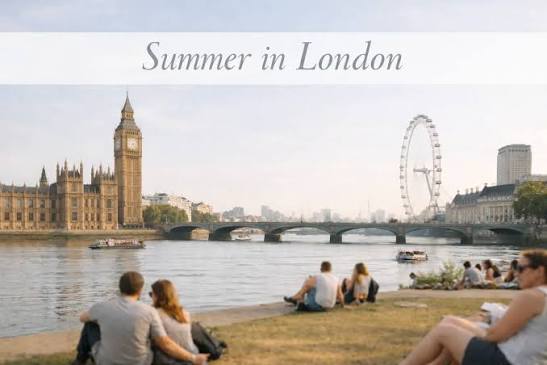
London’s summer 2026 travel season is facing historic disruptions as an unprecedented 37.3°C heatwave triggers a Red Extreme Heat Warning. While BST Hyde Park festival organizers have deployed emergency cooling networks, Transport for London has instituted mandatory rail speed curfews to prevent track buckling, causing widespread transport delays.
LONDON, United Kingdom — The UK Health Security Agency (UKHSA) and the Met Office extended a rare Red Extreme Heat Warning across Greater London this week as a historic high-pressure climate system pushed regional temperatures to an unprecedented June peak of 37.3°C (99.1°F). The prolonged heatwave has forced emergency modifications to regional infrastructure, impacting public transport networks, international aviation terminals, and the tens of thousands of international visitors arriving in the capital. The meteorological developments coincide with the high-profile launch of the BST Hyde Park music festival, transforming the city's seasonal travel landscape into a test of extreme climate resilience.
With the capital experiencing its most intense early-summer thermal pattern since modern record-keeping began, local government bodies and travel operators are issuing urgent safety directives. Public agencies are reconfiguring mass transit operations, deploying hydration infrastructure, and adjusting municipal resources to accommodate the swelling numbers of global travelers while maintaining strict public safety standards during the peak vacation season.
Hyde Park Festivals Enforce Safety Upgrades
The extreme thermal stress has placed an immediate logistical burden on the organizers of American Express presents BST Hyde Park, which officially commenced its fortnight of major outdoor concerts on June 27, 2026. The massive open-air event, featuring headline performances by country icon Garth Brooks and South Korean group ATEEZ, is drawing tens of thousands of ticket holders to central London's primary green space.
To prevent severe heat-related illnesses under the direct sun, festival management has implemented an aggressive climate safety protocol. In collaboration with municipal water authorities, the festival footprint has been retrofitted with dozens of high-capacity water refill portals, high-pressure cooling mist tents, and expanded medical emergency triage centers. Stewards have been equipped with handheld thermal sensors to monitor crowd density zones, and security protocols have been adjusted to allow ticket holders to bring clear, personal hydration containers into the main venue grounds.
Transport for London Implements Rail Speed Curfews
The prolonged solar exposure has severely impacted Greater London's iron and steel transport infrastructure. Transport for London (TfL) engineers reported that direct rail temperatures have repeatedly breached 50°C, creating an immediate risk of track buckling and signal system failures across non-ventilated transit corridors.
In response, strict speed restrictions have been applied across several above-ground sections of the London Underground, London Overground, and suburban National Rail commuter lines. The speed curfews have introduced cascading delays for travelers seeking heatwave-ready day trips outside the city center. Commuters and international tourists are being strongly advised to check real-time transit applications prior to departure and to carry immediate water supplies for any journey utilizing older, deep-level tube lines that lack modern car-based air conditioning.
Shift to Climate-Resilient Day Trips and Maritime Transport
The intense inner-city heat has altered the daily movement patterns of seasonal tourists, driving demand away from traditional uncooled museum walks toward air-conditioned indoor experiences and open-air river corridors. The automated Uber Boat by Thames Clippers network has recorded a sharp increase in passenger volumes, as visitors use the air-cooled river bus network to move safely between Westminster, Greenwich, and the hyper-dense financial districts without descending into the stifling subterranean tube stations.
Concurrently, travelers looking to escape the urban heat island effect are adjusting their day-trip plans toward regional historic destinations equipped with natural cooling elements. Areas such as the shaded parklands of Hampton Court Palace and the open coastal waters of Kent are seeing elevated tourist traffic. However, because regional rail providers have slowed down standard train services to protect the tracks, travel coordinators are urging tourists to plan for extended transit times and to stick to coastal routes that feature modern, climate-controlled rolling stock.
Official Sources Section
The meteorological readings, public safety alerts, and transit operational updates contained in this report are corroborated by verified data from official British administrative bodies. The national climate records and localized extreme heat alerts are sourced directly from the UK Met Office Weather Bureau.
Operational restrictions, rail speed limits, and passenger safety protocols have been cross-referenced with public service announcements issued by Transport for London (TfL). Mass public gathering safety benchmarks and health metrics are verified by data releases from the UK Health Security Agency (UKHSA).
Quote Section
The sudden onset of the historic June heatwave has prompted immediate administrative responses from municipal emergency coordinators and event organizers.
"According to officials from the UK Health Security Agency, the activation of the red heat-health alert means that the extreme temperatures pose a structural risk not just to vulnerable populations, but to otherwise healthy individuals," the agency's regional directive stated. "Organizers of major outdoor events, including the BST Hyde Park concerts, have been mandated to provide free, unrestricted access to drinking water and expanded shaded cooling zones across all public venues."
Why It Matters
The disruption of London’s high-season tourism by extreme weather highlights an urgent challenge facing historic European cities. Because a significant portion of London's housing stock, older school buildings, and deep subterranean transit lines were designed centuries ago to retain heat rather than vent it, sudden heatwaves place severe stress on public health systems and transport networks. The adjustments made by TfL and festival organizers this summer provide a template for how large cities must modernize their infrastructure to protect public safety and preserve tourism revenues during an era of accelerating climate shifts.
Key Facts at a Glance
Record-Breaking Heat: The Met Office confirmed that June 2026 has become the hottest June ever recorded in Western Europe, with temperatures peaking at 37.3°C in southern England.
Emergency Alerts: The UKHSA issued a high-level Red Extreme Heat Alert, triggering emergency cooling protocols across public parks, festival venues, and hospitals.
Festival Adjustments: Organizers of the BST Hyde Park music festival deployed emergency misting tents and unrestricted hydration stations to protect crowds during major concerts.
Transit Delays: Transport for London implemented mandatory rail speed restrictions to prevent tracks from buckling, resulting in delays across above-ground tube and commuter lines.
Cooling Alternatives: Commuters and tourists are heavily shifting toward air-conditioned river transport and climate-controlled indoor attractions to avoid hot underground routes.
Frequently Asked Questions
Are London's famous double-decker buses and tube trains air-conditioned?
While modern double-decker buses and newer, shallow-cut Underground lines (such as the Elizabeth, District, Circle, Metropolitan, and Hammersmith & City lines) feature active air conditioning, older deep-level tube lines (including the Central, Bakerloo, and Piccadilly lines) rely on mechanical ventilation and can become exceptionally warm during major heatwaves.
Is it safe to attend large outdoor events like BST Hyde Park during a Red Heat Alert?
Yes, provided that attendees follow official health guidance. Festival organizers have heavily expanded medical tents, shaded rest areas, and free water refill zones. Visitors are strongly urged to wear high-SPF sun protection, light clothing, and consume fluids continuously throughout the day.
How are day-trip trains to coastal areas like Brighton or Kent being impacted?
National Rail providers are running trains at reduced speeds on select routes where lines are directly exposed to intense sunlight to prevent track damage. If you are planning a trip outside London, you should check real-time transit logs for schedule changes and expect longer travel times.
Source: UK Met Office, Transport for London Official Registry, UK Health Security Agency Public Alerts.