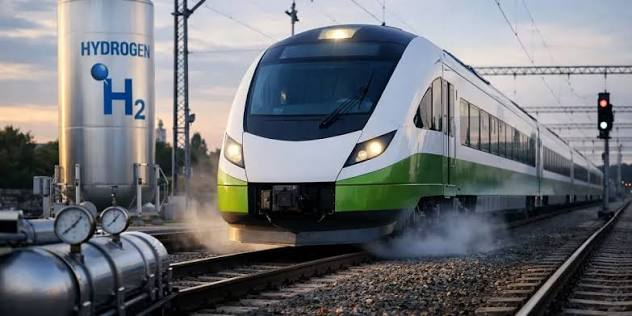
The Railway Board has approved India’s first indigenously developed hydrogen-powered train for the Jind-Sonipat route in Haryana. Driven by a 1,200 kW fuel cell system emitting only water vapor, the 10-coach trainset marks a major milestone for the National Green Hydrogen Mission and sustainable mass transit.
NEW DELHI, India — In a major development for sustainable mass transit, the Railway Board has granted formal regulatory approval for the introduction of India's first hydrogen-powered train. The administrative sanction authorizes the commercial deployment of an indigenously developed, 10-car hydrogen fuel cell-based Diesel Electric Multiple Unit (DEMU) trainset. The pioneering rolling stock is scheduled to commence pilot operations on the dedicated Jind-Sonipat section of the Northern Railway's Delhi Division in Haryana.
The regulatory nod follows successful oscillation and technical validation trials overseen by the Research Designs and Standards Organisation (RDSO). A critical final trial run was conducted on the Delhi-Jind corridor to verify essential safety benchmarks, including emergency braking distances and dynamic coach stability under high-stress tracking conditions. The rollout aligns directly with India’s overarching National Green Hydrogen Mission, which aims to transition energy-intensive public infrastructure away from imported fossil fuels toward net-zero emissions.
Technical Specifications and Propulsion Architecture
The newly approved hydrogen trainset marks a profound technological evolution from traditional diesel-hydraulic or grid-tied electric multiple units. The train features a distributed power configuration spread across 10 passenger coaches, replacing the centralized weight distribution of standard locomotive-pulled systems.
According to mechanical briefs approved by the Ministry of Railways, the trainset is powered by a specialized 1,200-kilowatt (kW) hydrogen fuel cell propulsion system. This architecture generates onboard electricity through a controlled chemical reaction combining compressed hydrogen gas with atmospheric oxygen. Because the system bypasses combustion entirely, the train produces zero localized ambient air pollutants—emitting only pure water vapor and heat as physical byproducts. The Railway Board has restricted initial commercial cruising operations to a maximum safe speed of 75 kilometers per hour (km/h), though technical trial runs evaluated the platform's stability at speeds reaching up to 120 km/h.
Infrastructure Logistics and Fuel Dispensing Network
To support the immediate operational requirements of the pilot route, Indian Railways has established a dedicated, indigenous hydrogen production, storage, and refueling facility at the Jind station hub in Haryana. The logistics facility integrates an advanced hydrogen compression system tailored for high-pressure vehicle dispensing alongside an inventory of critical spares to ensure continuous, fail-safe fleet replenishment.
Statutory oversight for the fuel network has been formally cleared by the Petroleum and Explosives Safety Organisation (PESO), which granted the required operational licenses for dispensing compressed hydrogen gas at the pilot site. Due to the highly volatile physical properties of compressed hydrogen, the facility features automated safety sensors, including localized hydrogen leak detectors and dedicated optical flame sensors. The Ministry has mandated round-the-clock security and routine maintenance sweeps across the terminal to mitigate unauthorized access and eliminate dust accumulation on critical safety instruments.
Fleet Maintenance Framework and Economic Context
The long-term engineering maintenance for the zero-emission trainset will be managed at the Shakurbasti depot in New Delhi. Operational directives outline strict logistical requirements for moving the rolling stock between its commercial route in Haryana and the Delhi maintenance center. When transit occurs in a non-operational state, the trainset must remain completely powered down and be physically hauled as a "dead rake" by a standard diesel or electric utility locomotive.
While environmental advocacy groups have welcomed the emission-free operational profile, industrial analysts highlight notable economic and logistical challenges. Initial fiscal outlays for hydrogen infrastructure remain high, with the federal government allocating approximately ₹2,800 crore to develop an initial fleet of 35 hydrogen-powered trains. Experts note that because over 95% of India’s broad-gauge rail network is already electrified, hydrogen traction will provide the highest economic utility on isolated heritage, hill, and non-electrified scenic circuits where standard overhead line electrification remains structurally or economically unfeasible.
Official Sources Section
The engineering parameters, route allocations, and safety metrics detailed in this report are verified by official administrative records. The structural approval timelines and operational conditions were formalized via official circulars issued by the Ministry of Railways through the Press Information Bureau. Technical trial parameters, safety sensor configurations, and licensing milestones were corroborated through official project briefs published by the Research Designs and Standards Organisation (RDSO).
Quote Section
"The introduction of hydrogen-powered trains represents a key step in India's efforts to adopt alternative fuel technologies within its vast railway network," the Railway Board noted in its official sanction circular.
According to officials from the Ministry of Railways, the pilot project introduces an entirely new safety culture. "Initially, for a period of three months, the train shall be accompanied en route by trained technical staff possessing specialized competencies in hydrogen trainset operations to immediately address any real-time technical or dispensing anomalies."
Why It Matters
The deployment of hydrogen fuel cell trains bridges a critical gap in India's green transport architecture. While standard electric lines efficiently power major commercial corridors, they alter the landscape of sensitive eco-zones and heritage routes. Utilizing indigenous green hydrogen allows Indian Railways to retire aging diesel locomotives on scenic lines without installing costly overhead wires, preserving natural topography while eliminating localized diesel exhaust.
Key Facts at a Glance
Official Sanction: The Railway Board has approved India's first 10-coach hydrogen fuel cell DEMU trainset for the Jind-Sonipat pilot line.
Propulsion Baseline: The train runs on a 1,200 kW hydrogen fuel cell system, keeping local emissions limited exclusively to water vapor.
Velocity Metrics: Commercial operations are capped at a maximum speed of 75 km/h, following successful structural stability trials that tested speeds up to 120 km/h.
Regulatory Clearance: The Petroleum and Explosives Safety Organisation (PESO) has officially licensed the new hydrogen refueling and storage depot at Jind.
Capital Commitment: The federal government has earmarked an initial budget of ₹2,800 crore to support the development and deployment of 35 hydrogen-based trains.
Frequently Asked Questions
How does a hydrogen train generate power compared to a standard electric train?
Standard electric trains pull power directly from an external grid via overhead wires. Hydrogen trains carry their own fuel source in onboard tanks, combining compressed hydrogen gas with atmospheric oxygen inside a fuel cell to generate electricity internally.
Where will the maintenance of India's first hydrogen train take place?
Primary technical maintenance and safety audits will be conducted at the specialized Shakurbasti depot in Delhi. The train will be hauled there in a powered-down, non-operational state by a standard utility locomotive.
Is hydrogen fuel technology safe for high-volume passenger rail transport?
Yes. The rolling stock and refueling stations feature strict safety layers, including automated hydrogen leak detectors, optical flame sensors, standalone backup compressor units, and round-the-clock monitoring protocols mandated by PESO and the RDSO.
Source: Ministry of Railways (Press Information Bureau), Research Designs and Standards Organisation Technical Registry.