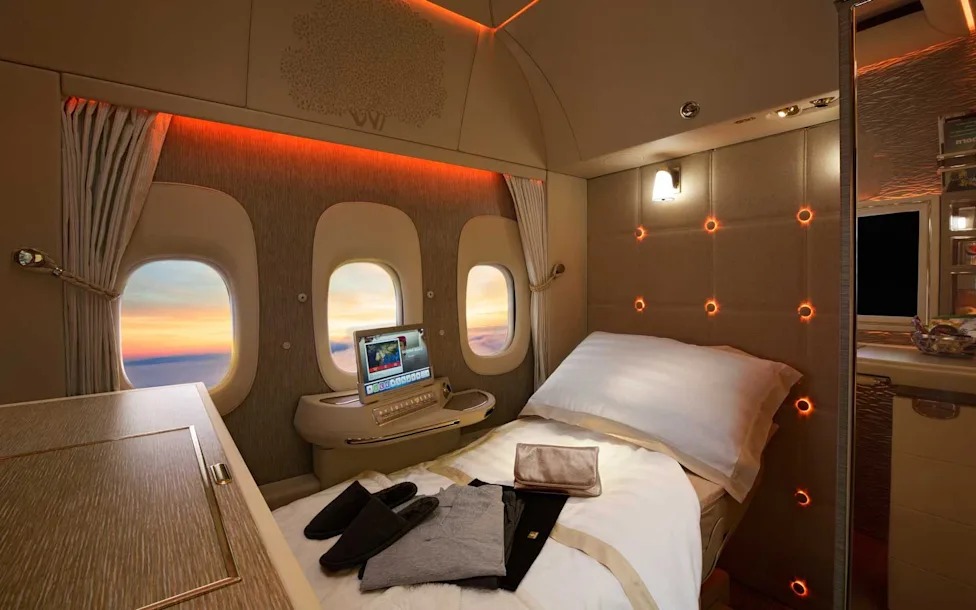
Airlines are launching ultra-premium airplane suites featuring private bedrooms, showers, and on-demand fine dining to cater to high-net-worth travelers. These luxury configurations, found on flagship aircraft, aim to transform long-haul flights into hotel-like experiences, reflecting a significant industry shift toward personalized, high-margin, private air travel services.
LONDON/DUBAI — As competition for high-net-worth travelers intensifies, major international airlines are unveiling ultra-premium airplane suites that prioritize privacy and exclusivity. These new cabin configurations, currently being deployed on flagship A380 and 777-9 fleets, aim to transform the long-haul flight experience into a hotel-like stay, complete with private bedrooms, personal showers, and on-demand fine dining services.
The recent introduction of these flagship suites reflects a strategic pivot in the aviation industry toward high-margin "first-class-plus" products. As business and leisure travelers increasingly demand seamless transitions between air travel and luxury ground accommodations, carriers are investing heavily in personalized onboard experiences.
Redefining Onboard Amenities
The latest generation of premium airplane suites goes beyond traditional seat recline features. According to corporate filings and airline product launch documentation, these suites are engineered as self-contained environments.
Private Bedroom Configurations
These suites feature full-sized beds with privacy doors that seal the cabin from the aisle. Unlike conventional first-class pods, these bedrooms include dedicated vanity areas, ambient lighting controls, and noise-cancellation technology.
In-Flight Spa Facilities
Select operators have integrated walk-in shower spas into their premium cabin layout. These facilities, serviced by dedicated flight attendants, offer amenities such as designer skincare products and temperature-controlled water systems, allowing passengers to arrive at their destination refreshed.
Bespoke Culinary Services
The dining experience in these suites is shifting toward a restaurant-style model. Flight crews provide on-demand caviar service, personalized menu preparation, and wine pairings tailored to individual passenger preferences. Passengers can dine at private tables within their suites at any time throughout the flight.
Industry Trends in Premium Travel
The aviation sector is seeing a renewed focus on the ultra-premium market. According to International Air Transport Association (IATA) reports, the demand for premium cabin seats has rebounded significantly as corporate travel budgets recover and high-net-worth individuals seek enhanced safety, comfort, and privacy.
Airlines are treating these suites as flagship offerings to build brand loyalty among frequent flyers. By providing a product that exceeds the quality of most business-class hotel rooms, carriers aim to capture a larger share of the lucrative transcontinental and long-haul market.
Impact on Passengers and Aviation Markets
For travelers, the availability of these suites marks a high point in airborne comfort. However, the premium pricing models associated with these services mean they remain exclusive to a small segment of the market. For businesses, the ability to conduct high-level meetings or rest comfortably during long flights is a strategic tool, ensuring personnel arrive ready for immediate engagement upon landing.
For the aviation industry, these suites serve as a showcase for engineering and design capabilities. The integration of specialized plumbing for showers and high-density electrical systems for luxury cabin features requires significant modifications to aircraft certification, reflecting the high capital expenditure involved in these products.
Official Sources
According to official product releases from Emirates, Singapore Airlines, and Etihad Airways, the development of these suites is part of a broader fleet modernization strategy. These airlines have collaborated with luxury interior design firms to ensure that every element of the suite meets the rigorous safety standards mandated by aviation authorities.
Organizers stated that the focus of these configurations is to provide a "home-away-from-home" environment, minimizing the physical toll of long-duration international travel.
Why It Matters
The emergence of these suites signals a structural change in how airlines view the "first class" experience. By treating the airplane suite not just as a seat, but as a multifunctional living space, airlines are setting new standards for the global travel industry. This trend is expected to influence future aircraft interior designs, as passengers increasingly prioritize privacy and high-end services as fundamental requirements for international transit.
Key Facts at a Glance
Cabin Features: Fully private bedrooms, en-suite spa facilities, and personalized dining.
Target Market: High-net-worth individuals and corporate executives on long-haul routes.
Industry Drivers: Recovering global premium travel demand and the need for differentiated passenger experiences.
Infrastructure Requirements: Specialized aircraft modifications for water usage, power management, and privacy partitioning.
Frequently Asked Questions (FAQ)
How are airlines managing the space for these suites?
Airlines are utilizing the expansive real estate on aircraft like the Airbus A380 and the wide-body Boeing 777-9 to integrate larger, modular suite layouts.
What is the primary difference between these suites and standard first class?
These suites offer full-height walls for complete privacy, a separate bed distinct from the seat, and integrated spa facilities, whereas standard first class often utilizes open-concept pods.
Are these premium airplane suites available on all routes?
No. These luxury services are typically limited to high-density, long-haul international routes and are primarily featured on newer or retrofitted flagship aircraft.
Source: International Air Transport Association (IATA), Emirates, Singapore Airlines, and Etihad Airways.