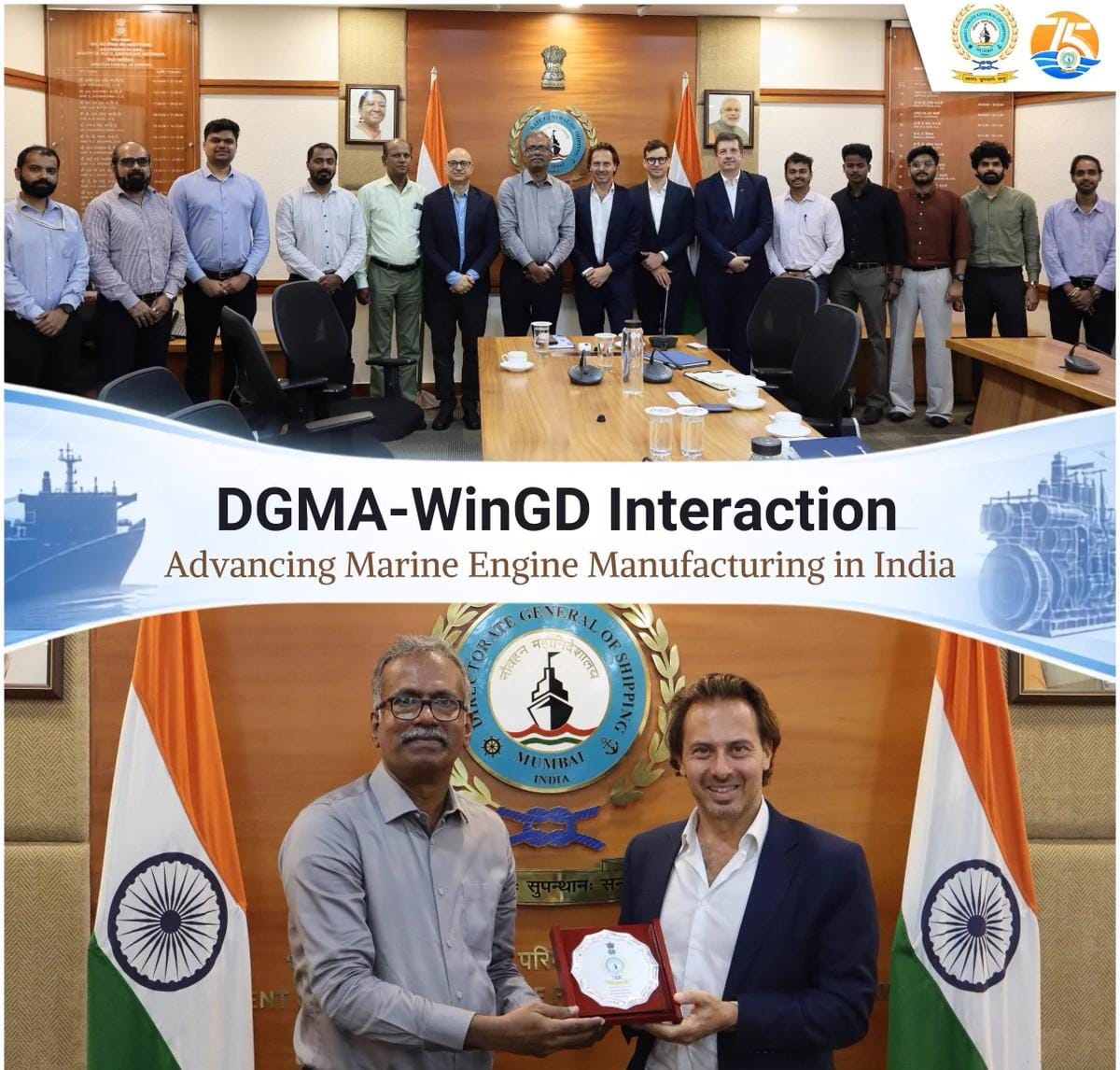
India's Directorate General of Maritime Administration has invited Swiss marine engine developer WinGD to establish a local manufacturing plant. The move seeks to expand the nation's shipbuilding ecosystem, improve access to advanced dual-fuel propulsion technologies, and localize critical equipment supply chains under the Maritime Amrit Kaal Vision 2047.
NEW DELHI - In a strategic push to expand the nation's domestic industrial base, India's Directorate General of Maritime Administration (DGMA) formally invited Swiss-headquartered marine power developer Winterthur Gas & Diesel (WinGD) to establish a localized marine engine manufacturing hub. The proposal was tabled during high-level bilateral discussions held in New Delhi, outlining the country's growing commercial shipping demands under the overarching framework of the Maritime Amrit Kaal Vision 2047. The initiative aims to integrate Indian manufacturing deeper into global maritime supply chains while scaling up domestic capacities across the entire vessel lifecycle.
Expanding India’s Shipbuilding Ambitions
During the administrative review, Indian maritime authorities detailed the robust pipeline of commercial shipbuilding demand emerging from planned mega maritime clusters across the country. The administration presented its four-pillar shipbuilding strategy, emphasizing that expanding domestic heavy manufacturing is critical to reducing foreign dependency for high-value propulsion equipment.
WinGD, a major international designer of two-stroke low-speed gas and diesel engines, showcased its specialized technology portfolio during the talks. The presentation covered advanced dual-fuel propulsion systems engineered to run on alternative energies such as liquefied natural gas (LNG), methanol, and ethanol—technologies vital for compliance with tightening international decarbonization standards.
Localization and Policy Incentives
The DGMA outlined various government policies, financial incentives, and regulatory frameworks established to attract foreign original equipment manufacturers (OEMs) to Indian industrial corridors. Setting up an indigenous marine engine production plant would directly support the localization of critical components, ranging from heavy casting blocks to complex digital control architecture.
While WinGD executives acknowledged the expanding potential of India's maritime sector, no specific capital outlay, project location, or production timeline has been finalized. Industry observers note that any prospective manufacturing partnership would require extensive feasibility studies, particularly given the specialized technical precision needed for two-stroke marine propulsion systems.
Impact on Domestic Industry and Global Supply Chains
For domestic shipyards, component suppliers, and maritime investors, a localized manufacturing hub would significantly streamline the procurement of compliant propulsion machinery, reducing lead times and import tariffs. Integrating Indian engineering firms into WinGD's global vendor network would also foster technical skill development and enhance the export competitiveness of the country's expanding shipbuilding ecosystem.
Official Sources Section
Details regarding the bilateral discussions and policy frameworks are based on official sector announcements and institutional disclosures:
Quote Section
"According to officials from the Directorate General of Maritime Administration, the government has invited WinGD to establish a marine engine manufacturing hub to support domestic capabilities across the vessel lifecycle."
Why It Matters
Heavy propulsion units represent one of the single most expensive and critical elements in commercial vessel construction. Securing domestic manufacturing capabilities for advanced dual-fuel marine engines allows India to insulate its expanding shipyards from global supply chain bottlenecks while advancing national green-shipping goals.
Key Facts at a Glance
Strategic Proposal: India's DGMA invited WinGD to set up a marine engine manufacturing facility within the country.
Policy Framework: The outreach aligns with the long-term goals outlined in India's Maritime Amrit Kaal Vision 2047.
Technology Focus: Discussions emphasized low-speed, dual-fuel engines capable of operating on alternative clean marine fuels.
Current Status: Preliminary talks took place in New Delhi, with no formal investment figures or deployment timelines disclosed yet.
FAQ Section
Why did India invite WinGD to set up a plant?
The invitation aims to boost domestic marine manufacturing capabilities, increase local component sourcing, and support India's expanding commercial shipbuilding targets.
What types of engines does WinGD specialize in?
WinGD designs two-stroke, low-speed gas and diesel engines for commercial shipping, including advanced dual-fuel systems that support alternative marine fuels.
Has WinGD finalized an agreement to build a factory in India?
No binding agreements, investment figures, or timelines have been announced, as discussions remain in the exploratory phase.
How does this initiative impact Indian shipyards?
Local production of marine engines would reduce reliance on imported propulsion units, lower supply chain costs, and shorten construction times for domestic shipbuilders.
Source: Future Fuels, WinGD Official Portal, Ministry of Ports, Shipping and Waterways India