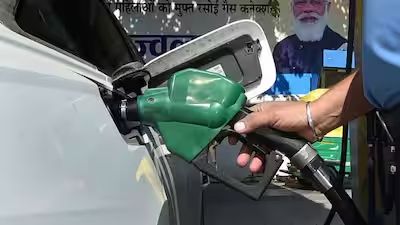
A Raipur consumer court has ordered Maruti Suzuki to replace a customer's Grand Vitara or refund over ₹20.5 lakh, ruling in favor of a complainant who alleged engine failures due to E20 fuel. Maruti Suzuki has denied the claims, citing fuel contamination, and intends to appeal the decision.
A consumer court has ordered the automaker to replace a vehicle citing E20 compatibility concerns, marking a significant legal challenge for the industry.
RAIPUR — The District Consumer Disputes Redressal Commission in Raipur, Chhattisgarh, has issued a landmark ruling directing Maruti Suzuki India Limited to replace a customer’s vehicle or provide a full refund due to alleged issues stemming from E20 fuel. This order, dated July 14, 2026, is believed to be the first of its kind in India to address consumer grievances linked directly to the country’s ethanol-blended petrol rollout.
The case involves a Maruti Grand Vitara Strong Hybrid Zeta Plus, manufactured in January 2023, which the complainant alleged suffered from recurring engine stalls and mechanical failures after running on E20 petrol—a fuel blend containing 20% ethanol.
Court Findings on Service Deficiency
The Commission’s 23-page order concluded that the vehicle sold to the complainant, Dr. Premraj Debta, was not adequately compatible with E20 fuel, despite E20 becoming the standard fuel available at retail outlets nationwide. The court observed that the customer faced repeated operational issues and engine warnings after covering approximately 21,913 km.
Despite multiple visits to authorized workshops and repeated efforts to rectify the defects, the problems persisted. The Commission ruled that the failure to effectively resolve these technical issues, combined with the lack of clarity regarding the vehicle's E20 compatibility at the time of sale, constituted a deficiency in service and an unfair trade practice.
Maruti Suzuki to Challenge Ruling
Maruti Suzuki has officially contested the Commission's findings. In a statement, the automaker emphasized that the specific vehicle in question was “fully equipped to handle E20 fuel,” with the necessary disclosures provided in the owner’s manual.
The company further argued that laboratory testing of fuel samples taken from the complainant's vehicle showed signs of contamination, which it maintains is the root cause of the engine damage. “Maruti Suzuki will take necessary steps to challenge the impugned order before an appropriate higher forum in accordance with law,” the company stated, reiterating its commitment to quality and engineering standards.
Impact on Stakeholders
This ruling carries significant implications for both consumers and automakers in the context of India's broader biofuel policy. As E20 petrol becomes the default option at fuel stations, the judgment highlights potential challenges regarding manufacturer responsibility and consumer rights in a shifting energy landscape. Legal experts note that while the order is binding for the parties involved, it is subject to appeal before higher consumer fora or the High Court.
Why It Matters
This case underscores the growing tension between government-mandated transitions to cleaner fuel and the practical operational realities faced by vehicle owners. It sets a legal precedent that may encourage other motorists to seek judicial recourse for performance issues they attribute to ethanol-blended petrol.
Key Facts at a Glance
Court Order: Maruti Suzuki must replace the vehicle or refund ₹20,50,494 (including purchase price, RTO charges, and insurance).
Compensation: The court also awarded ₹1 lakh for mental harassment and ₹10,000 for litigation costs.
Compliance Timeline: The manufacturer has 45 days to comply with the directive before additional interest applies.
Key Allegation: The complainant claimed the vehicle stalled repeatedly after using E20 fuel.
Frequently Asked Questions
Q: What was the primary reason for the consumer court ruling?
A: The court found a "deficiency in service" because the vehicle reportedly stalled repeatedly despite multiple repairs, and the court held that the manufacturer failed to ensure effective E20 compatibility for the customer.
Q: Can Maruti Suzuki appeal this decision?
A: Yes, Maruti Suzuki has confirmed its intention to challenge the ruling in a higher consumer forum or relevant legal body.
Q: Does this order apply to all Maruti cars?
A: No, the order is specific to the individual case and the particular vehicle model involved. It does not establish a blanket policy for all Maruti Suzuki vehicles.
Source: District Consumer Disputes Redressal Commission, Maruti Suzuki, Economic Times, LiveMint.