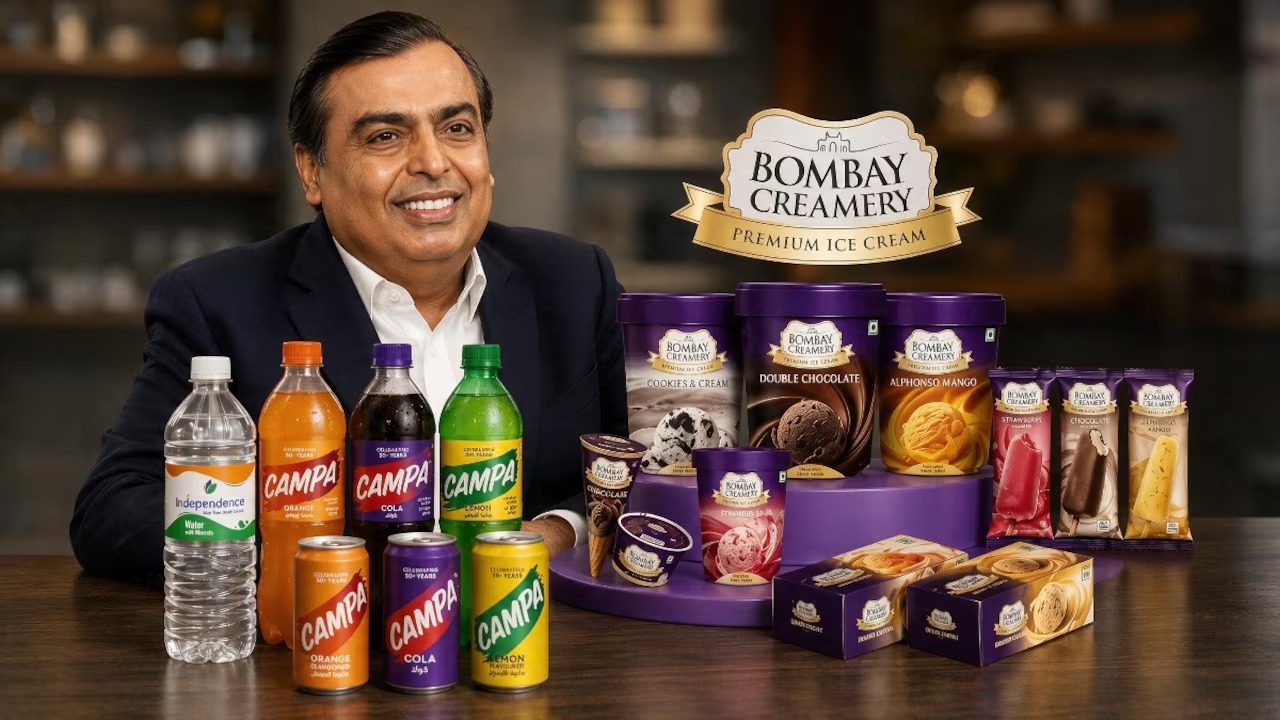
While Reliance has successfully used aggressive pricing to scale Campa Cola, disrupting the ice cream market involves steep hurdles. Obstacles include rigid cold-chain logistics, high energy dependencies, and fierce competition for limited retail freezer space controlled by established dairy incumbents.
Structural supply chain barriers, cold-chain logistics, and the physical scarcity of retail freezer space mean Reliance Consumer Products faces a tougher battle expanding its new ice cream brand than it did with soft drinks.
NEW DELHI — Following the rapid market penetration of Campa Cola across India, Reliance Consumer Products Limited (RCPL) has entered the domestic frozen desserts sector with its newly launched brand, Bombay Creamery. Deploying a familiar playbook, the company has priced entry-level cups, sticks, and cones starting at ₹10. According to corporate statements from Reliance Industries Limited, the initiative aims to capture high-volume impulse-buy segments currently dominated by legacy firms such as Amul, Vadilal, Mother Dairy, and Unilever's Kwality Wall's. However, financial analysts, supply chain experts, and market researchers emphasize that replicating the explosive growth trajectory of a bottled beverage is fundamentally more complicated within a cold-chain dependent category.
The Cold-Chain Infrastructure Bottleneck
Unlike carbonated soft drinks, which can be stored safely at ambient room temperatures on standard retail shelves, ice cream demands an uninterrupted sub-zero supply chain from factory floor to consumer checkout. According to industry analyses from DRChoksey FinServ and retail consulting firms, establishing this thermal logistics network involves significant capital expenditure and temperature-monitoring precision. While a standard grocery store can easily accommodate multiple ambient snack or beverage SKUs, physical retail capacity for frozen goods is severely restricted.
Freezer Space Constraints: Local mom-and-pop kirana stores typically rely on branded freezers supplied exclusively by incumbent market leaders.
Capital Intensity: Maintaining localized cold-storage hubs across tier-2 and tier-3 cities requires specialized refrigerated transport fleets.
Power Reliability: Intermittent electricity grids in semi-urban and rural areas expose frozen inventory to spoilage risks absent robust backup infrastructure.
Competitive Retailing and Incumbent Defenses
The retail battlefield for frozen novelties revolves heavily around point-of-sale visibility. Competitors like Amul and Kwality Wall's have spent decades securing exclusive dealer contracts by embedding branded chest freezers directly into millions of neighborhood shops. While RCPL has successfully deployed branded Campa cooling units across segments of its vast retail network, breaking the entrenched freezer-space monopoly of legacy dairy cooperatives and multinationals requires sustained structural incentives. Industry observers note that while a ₹10 price point effectively lowers the consumer barrier to trial, maintaining product integrity across a massive geographic footprint will test the operational limits of Reliance's distribution architecture.
Official Sources Section
Corporate strategy updates, portfolio expansion disclosures, and pricing data are sourced from announcements by Reliance Consumer Products Limited (RCPL).
Market valuation metrics and industry growth projections are referenced from sectoral analyses by Expert Market Research and The Economic Times.
Quote Section
"According to officials, building a sustainable presence in the frozen segment requires long-term commitments to cold-chain infrastructure rather than relying solely on aggressive pricing strategies."
Why It Matters
For consumers and retail investors, the intensification of market competition signals potential price corrections and greater product availability across urban and rural tiers. However, for smaller independent ice cream manufacturers and established market leaders alike, margin pressures will likely intensify as Reliance absorbs initial distribution costs to capture market share.
Key Facts at a Glance
Reliance Consumer Products launched Bombay Creamery with items starting at an aggressive ₹10 price point.
The India ice cream market is projected to reach $16.10 billion by 2035, growing at a 15% compound annual rate.
Unlike ambient soft drinks, ice cream distribution depends entirely on rigid cold-chain logistics and dedicated retail freezers.
Incumbent brands maintain deep-rooted retail dominance through exclusive freezer placement agreements in neighborhood shops.
FAQ Section
Why is ice cream harder to distribute than soft drinks for new market entrants?
Ice cream requires an uninterrupted sub-zero cold chain and dedicated freezer space at retail outlets, whereas bottled soft drinks can sit at ambient temperatures on standard shelves.
What is the starting price point for Reliance's Bombay Creamery products?
Selected entry-level cups, sticks, and cones are priced starting at ₹10 to stimulate consumer trial.
How do established brands protect their retail shelf space?
Legacy competitors typically supply branded freezers directly to neighborhood kirana stores, locking out unauthorized or competing inventory.
Where can official corporate disclosures regarding Reliance's consumer goods be accessed?
Official press statements and regulatory updates are published through the investor relations portal of Reliance Industries Limited.
Source: Reliance Industries Limited, Expert Market Research, The Economic Times