Mumbai's Dahi Handi festival continues to unite generations through vibrant human pyramids and cultural celebrations. While retaining its deep-rooted traditional significance, modern events incorporate strict municipal safety protocols, mandatory protective gear, and medical oversight to ensure secure participation for thousands of Govindas across the city.
Mumbai's annual Dahi Handi celebrations continue to bridge generational divides, drawing millions of participants and spectators into a vibrant display of cultural heritage and collective endurance.
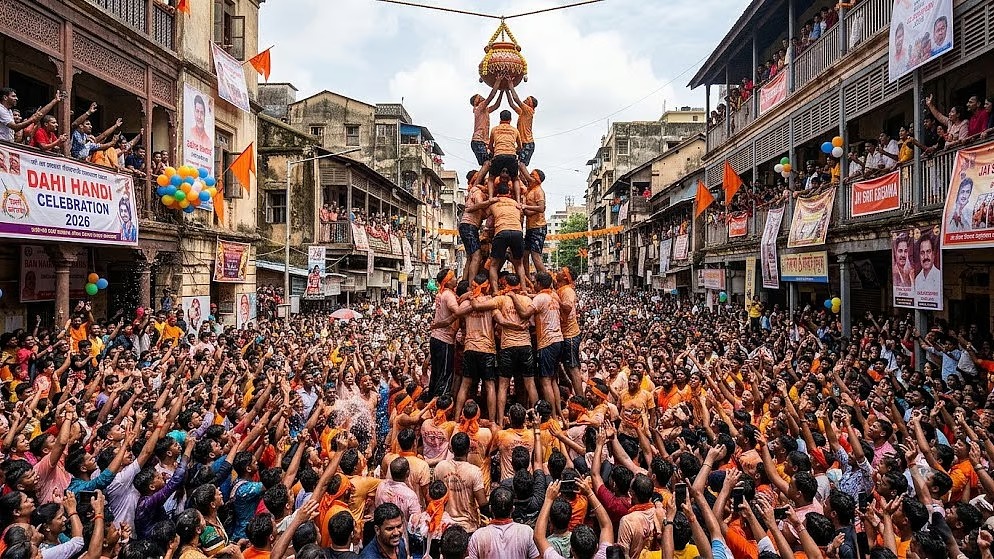
MUMBAI — Across neighborhoods throughout the financial capital, the annual Dahi Handi festival on September 6, 2026, once again transformed urban streets into arenas of high-energy celebration. Commemorating the birth of Lord Krishna, the grand festival unites multi-generational communities through the formation of towering human pyramids designed to shatter suspended curd-filled pots (handis). According to cultural briefs and municipal safety records from the Brihanmumbai Municipal Corporation (BMC), the festival remains a cornerstone of Maharashtra’s socio-cultural identity, drawing families, youth groups, and seasoned practitioners together to honor centuries-old traditions.
Evolution of Safety Protocols and Youth Participation
While the core ritual of human tower formation relies on raw athletic coordination and physical balance, modern Dahi Handi celebrations place heavy emphasis on structural safety and regulatory oversight. Youth organizations, known locally as Govinda pathaks, train for months across local gymnasiums and open grounds.
Mandatory Protective Gear: Following state directives, participants operating at higher tiers of human pyramids are legally mandated to wear safety helmets, harnesses, and ankle padding.
Medical Readiness: Local event organizers coordinate directly with civic health authorities to station emergency response medical tents and ambulances near major celebration sites.
Insurance Coverage: Prominent mandals ensure all participating Govindas are covered under accident insurance policies endorsed by state welfare boards.
Economic and Social Impact Across Communities
Beyond its religious significance, the Dahi Handi festival serves as a major economic catalyst for local commerce, small vendors, and the entertainment sector. Street-side vendors report substantial spikes in sales for traditional attire, ritual offerings, and festive refreshments. Furthermore, corporate sponsorship and political patronage have turned competitive handi events into high-stakes spectacles, offering cash prizes that run into millions of rupees. This commercial influx supports grassroots athletic training while generating widespread media engagement that showcases Mumbai’s cultural dynamism to global audiences.
Official Sources Section
Quote Section
"Organizers stated that the active involvement of younger generations ensures the preservation of traditional values while maintaining strict adherence to contemporary safety standards."
Why It Matters
For citizens, community groups, and local businesses, the Dahi Handi festival reinforces social cohesion and municipal pride. Balancing energetic cultural traditions with stringent safety regulations protects participants from injury while allowing traditional street-level celebrations to thrive safely within a modern metropolitan environment.
Key Facts at a Glance
Mumbai celebrated the Dahi Handi festival on September 6, 2026, marking the birth of Lord Krishna.
Govinda pathaks construct multi-tiered human pyramids to break suspended curd pots.
The BMC and state authorities enforce mandatory safety gear, including helmets and harnesses.
Corporate sponsorships and cash prizes drive significant economic activity for local vendors and community groups.
FAQ Section
What is the historical significance of the Dahi Handi festival?
The festival commemorates the childhood playful acts of Lord Krishna, where he formed human groups to steal butter and curd hung high out of reach.
What safety measures are enforced during Mumbai's Dahi Handi events?
Participating Govindas must wear protective gear such as helmets and harnesses, and organizers are required to provide on-site medical support and insurance.
How do Govinda teams prepare for the festival?
Teams train for weeks or months in advance, focusing on core strength, balance, and precise coordination to build stable multi-tiered human pyramids.
Where can official municipal guidelines for local festivals be found?
Civic safety notices and regulatory frameworks are published on the Brihanmumbai Municipal Corporation (BMC) portal.
Source: Brihanmumbai Municipal Corporation (BMC), Government of Maharashtra