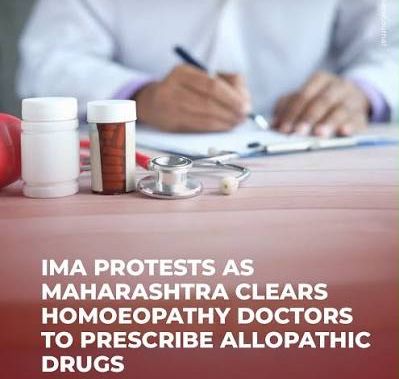
Maharashtra has operationalized rules allowing qualified homeopathic practitioners who complete a pharmacology bridge course to prescribe allopathic medicines and register with the state medical council. While authorities aim to bridge rural doctor shortages, the decision has sparked sharp backlash from allopathic medical associations concerned over patient safety.
As the state medical council implements long-standing cross-practice provisions, the decision has ignited intense debate among medical professionals regarding patient safety and clinical standards.
Sparking a fierce debate across the healthcare sector, the Maharashtra Medical Council (MMC) has begun operationalizing regulatory provisions enabling qualified homeopathic practitioners to prescribe allopathic medicines. Under guidelines implemented in Mumbai, registered Bachelor of Homeopathic Medicine and Surgery (BHMS) practitioners who successfully complete the Certificate Course in Modern Pharmacology (CCMP) are now officially permitted to register under state medical registers for modern practice. While state officials position the move as a practical measure to bolster primary healthcare access in underserved rural and semi-urban regions, the decision has drawn immediate and vehement pushback from allopathic doctors and resident medical associations.
Navigating the Legal Framework and the CCMP Bridge Course
The policy stems from legislative amendments enacted to the Maharashtra Homoeopathic Practitioners Act and the Maharashtra Medical Council Act. For over a decade, implementation remained stalled amid persistent legal and professional friction.
Key operational parameters governing the updated framework include:
Mandatory Pharmacology Training: Practitioners must complete the designated CCMP course administered through recognized state health universities.
Separate State Register: Eligible homeopaths are issued specific registration certificates permitting them to practice within the defined scope of their modern pharmacology training.
Standard Operating Procedures (SOPs): State-appointed expert committees are currently tasked with drafting precise clinical guidelines and boundaries to govern cross-practice prescriptions.
Rural Healthcare Intent: Proponents argue the framework addresses persistent shortages of primary care physicians in remote talukas.
Impact on Patients, Doctors, and Healthcare Standards
The integration of alternative and modern therapeutic disciplines carries profound implications for citizens, clinical practitioners, and public health infrastructure. Allopathic medical bodies, including resident doctor associations, have strongly denounced the move, arguing that a short pharmacology course cannot replicate the rigorous diagnostic training, clinical postings, and multi-year anatomy education embedded in an MBBS curriculum. Critics caution that blurring disciplinary boundaries risks compromising patient safety and diluting scientific treatment protocols. Conversely, supporters maintain that grassroots practitioners already manage bulk primary care duties in villages, making formal legal frameworks and standardized training essential.
Why It Matters
Balancing rural healthcare accessibility with strict clinical standards remains a critical challenge for health administrators. Establishing transparent regulatory boundaries ensures that patient safety is preserved while addressing regional medical deficits.
Key Facts at a Glance
Policy Focus: Permitting qualified homeopaths to prescribe specified allopathic medicines.
Prerequisite: Completion of the Certificate Course in Modern Pharmacology (CCMP).
Regulatory Body: Maharashtra Medical Council (MMC).
Primary Contention: Balancing rural physician availability against modern medical training standards.
FAQ Section
Who is eligible to practice modern medicine under the updated Maharashtra rules?
Registered BHMS practitioners who have successfully completed the state-approved Certificate Course in Modern Pharmacology (CCMP) are eligible.
Why did the state government introduce this cross-practice provision?
State authorities framed the policy to help alleviate primary healthcare provider shortages across remote and rural pockets of Maharashtra.
What are the main concerns raised by allopathic medical associations?
Medical organizations argue that bridge courses cannot replace comprehensive MBBS training, raising serious concerns regarding patient safety, diagnostic accuracy, and professional standards.
Where can citizens verify official medical council notifications regarding practitioner registration?
Verified circulars and registration notices are accessible directly through the Maharashtra Medical Council Portal.
Source: Maharashtra Medical Council, Ministry of Ayush, National Commission for Homeopathy