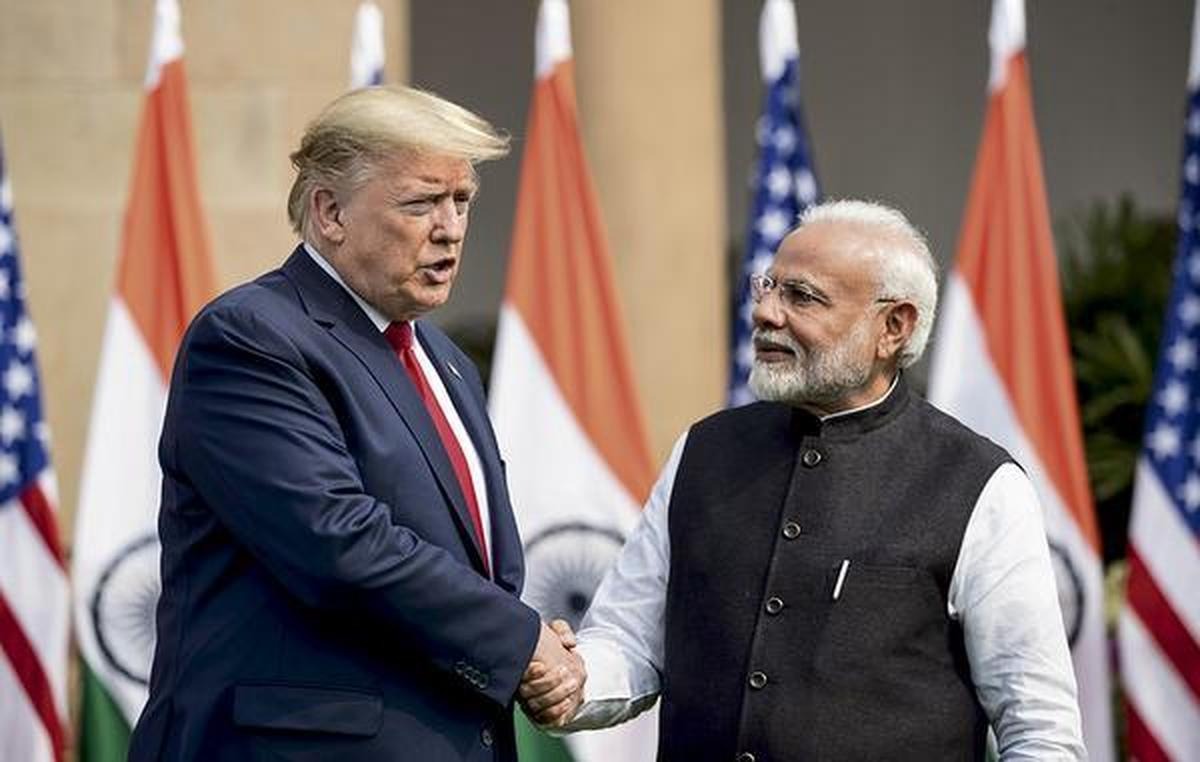
Prime Minister Narendra Modi and U.S. President Donald Trump are likely to hold a bilateral meeting on the sidelines of the G7 Summit in Évian-les-Bains, France, on June 16–17, 2026. The potential encounter comes at a pivotal moment as both nations accelerate efforts to finalize the first phase of a comprehensive bilateral trade agreement. According to official sources, while the meeting is not yet finalized and remains subject to the leaders' evolving schedules during the three-day summit, it is viewed as a critical opportunity to resolve lingering "minor details" in the trade deal. Negotiations have been ongoing throughout June, with Indian Commerce Minister Piyush Goyal recently stating that nearly 99% of the issues regarding the interim agreement have been resolved.
Strengthening Bilateral Trade and Economic Alignment
The anticipated summit discussions are expected to go beyond trade, covering critical regional and global matters. Recent high-level negotiations, including a visit by a U.S. delegation to New Delhi from June 1–4, 2026, focused on market access, non-tariff measures, customs facilitation, and investment promotion.
The two countries aim to boost bilateral trade to $500 billion by 2030. However, the path to this target has been complicated by recent geopolitical shifts, including U.S. tariff measures and visa policy adjustments. As of May 2026, the EB-2 visa category for Indian applicants reached its annual limit, creating significant concern within the Indian expatriate community. Observers anticipate that PM Modi will raise these mobility and visa constraints to ensure that professional and economic integration remains a core pillar of the partnership.
Official Sources
The possibility of the meeting was confirmed by diplomatic sources following the announcement of PM Modi’s multi-nation travel itinerary, which includes official state visits to France and the Slovak Republic. The status of the trade negotiations was corroborated by recent statements from the Indian Ministry of Commerce and Industry and U.S. diplomatic representatives.
"According to officials, the two sides are finalizing the text of the interim trade agreement, and a meeting between the leaders would serve to provide the necessary political impetus to conclude the deal," a source familiar with the negotiations stated.
Why It Matters
For businesses and investors, the potential meeting is a bellwether for the future of India-U.S. relations. Successfully signing the first phase of the bilateral trade agreement would provide much-needed certainty for exporters in sectors such as agriculture, automotive manufacturing, and technology. Furthermore, addressing visa and professional mobility concerns is essential for the large Indian diaspora and the tech sector, both of which rely heavily on predictable movement between the two nations.
Key Facts at a Glance
Event: G7 Summit in Évian-les-Bains, France (June 15–17, 2026).
Bilateral Focus: Finalizing the interim India-U.S. Bilateral Trade Agreement (BTA).
Key Issues: Market access, customs facilitation, and professional visa mobility.
Trade Goal: Boosting bilateral commerce to $500 billion by 2030.
Recent Progress: U.S. and Indian delegations concluded intensive talks in New Delhi earlier this month.
FAQ
What is the main objective of the proposed Modi-Trump meeting?
The primary focus is expected to be the conclusion of the interim bilateral trade agreement, alongside addressing regional security and professional visa mobility concerns.
How close are India and the U.S. to a trade deal?
Commerce Minister Piyush Goyal recently noted that approximately 99% of the issues for the first phase of the deal have been settled, with only minor details remaining.
Why are visa concerns on the agenda?
Recent visa caps and changes to status adjustment policies have caused anxiety for the Indian professional community, making it a critical point of discussion for the Indian government.
Is India a member of the G7?
No, India is not a member, but PM Modi has been invited by French President Emmanuel Macron to attend as a partner to discuss global innovation and sustainable economic growth.
Source: Press Information Bureau (PIB) India, The Hindu, India Today, Bilaterals.org