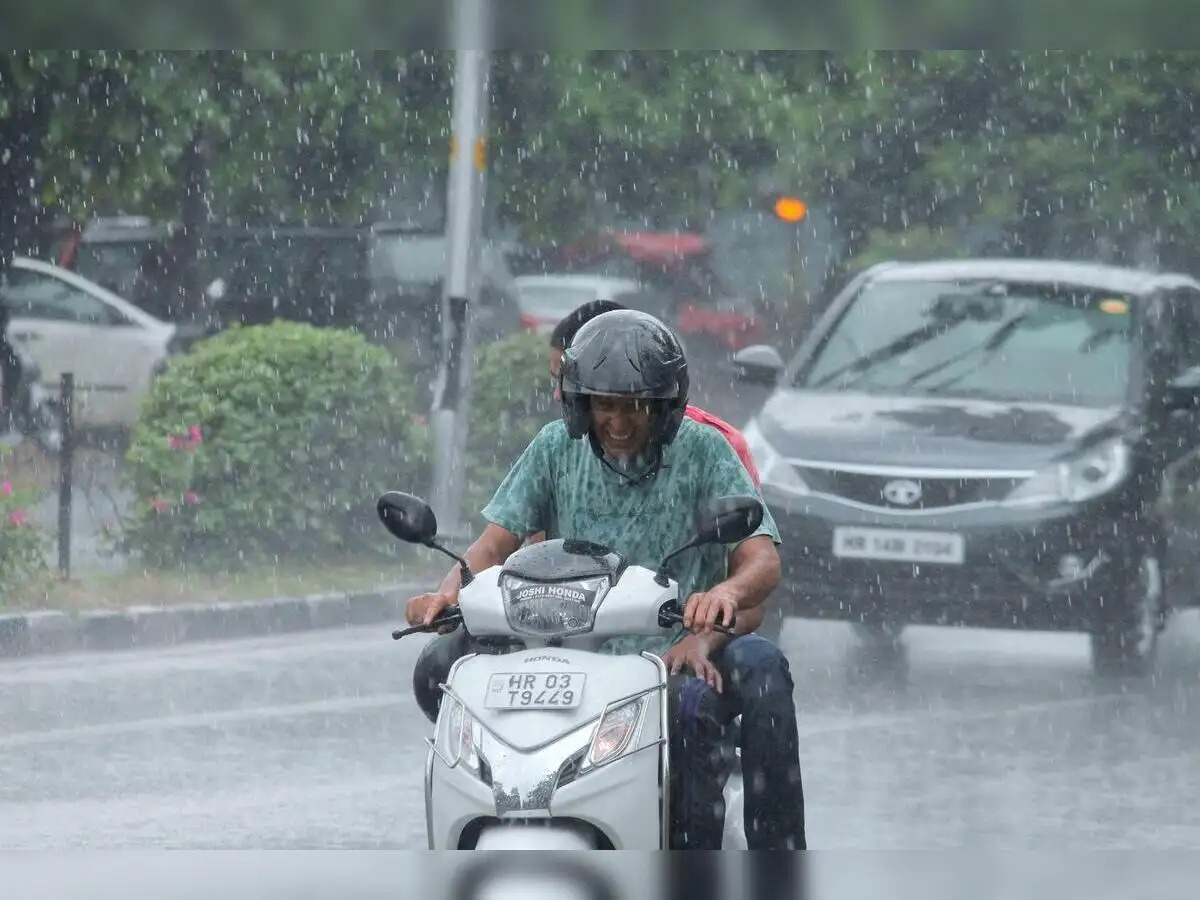
The Southwest Monsoon has officially covered India, unleashing torrential rain across the northern plains. The severe downpours have triggered a Red Alert in Western Uttar Pradesh and an Orange Alert in Delhi, prompting authorities to close schools in Ghaziabad and surrounding districts as widespread urban waterlogging paralyzes transit links.
NEW DELHI — In a major meteorological development, the India Meteorological Department (IMD) confirmed that the Southwest Monsoon has officially covered the entire country. The advance has triggered severe weather warnings across North India, prompting district administrations in Uttar Pradesh to order the immediate closure of all schools from nursery to Class 12 in Ghaziabad, Meerut, Baghpat, and Bulandshahr due to persistent inundation.
A series of active low-pressure systems has concentrated heavy rainfall over the National Capital Region (NCR), Western Uttar Pradesh, and the Himalayan tracks of Uttarakhand. Financial operations, daily commutes, and logistics have faced immediate disruptions as regional administrations issue 'red' and 'orange' alerts, warning citizens to limit non-essential travel.
Heavy Rain Disrupted Infrastructure and Daily Life
According to the latest meteorological updates from the India Meteorological Department (IMD), the monsoon advanced into the final remaining corridors of Rajasthan, Haryana, and Punjab, completing its nationwide coverage just one day after its traditional schedule. This systemic integration has unlocked severe precipitation bands. In Delhi, continuous downpours forced an orange alert as prime commuting zones like the New Delhi Railway Station, Munirka, and Pragati Maidan experienced deep waterlogging.
The impact inside Uttar Pradesh has been particularly severe. In Ghaziabad, the sudden intensification of rain overnight resulted in widespread urban flooding, structural uprooting, and severe traffic gridlocks during peak operational hours. Similar disruptions hit Gautam Buddh Nagar (Noida), where several private schools had to curtail schedules or shift to online instruction models as high water levels stalled public transit fleets.
Administrative Closures and Red Alerts in Western UP
Faced with hazardous road conditions, the Ghaziabad District Magistrate issued a structural safety directive, suspending all physical operations for primary and secondary educational institutions. The preventative measure follows intense weather reports out of Western Uttar Pradesh, where the IMD has placed multiple sectors under a high-alert status.
The monsoon spell has already exacted a severe toll:
Fatality Reports: At least five individuals lost their lives in rain-related incidents across Uttar Pradesh, including tragic lightning strikes in Kushinagar and Sant Kabir Nagar.
Precipitation Metrics: Lodi Road in Delhi registered 79 mm of rain, while Mehrauli recorded a high peak of 83 mm within a short tracking window.
Regional Structural Vulnerability: In Bulandshahr, structural collapses resulting from intense water absorption led to two reported casualties.
Official Sources Section
Emergency operational parameters are actively coordinated by state disaster management authorities alongside local municipal corporations. Current regional alerts and technical rain updates remain anchored underneath statutory advisories published by the Ministry of Earth Sciences and regional police commands.
Quote Section
"The Southwest Monsoon has further advanced into the remaining parts of the country and has covered the entire nation," the India Meteorological Department (IMD) stated in its nationwide weather summary bulletin.
"According to officials in the Ghaziabad district administration, school closures were mandated as an urgent precautionary action to secure public safety and prevent students from getting stranded in severe waterlogged choke points."
Why It Matters
The rapid onset of heavy monsoon rainfall poses immediate logistical challenges for retail consumers, daily office commuters, and supply chain businesses. Widespread flooding halts land shipping, drives down daily consumer attendance at retail venues, and threatens standing seasonal agriculture crops if proper drainage is not maintained. Investors and municipal bodies are closely tracking these developments to gauge structural resilience and assess potential economic damage to regional commerce hubs.
Key Facts at a Glance
Full Monsoon Coverage: The Southwest Monsoon has successfully enveloped all regions of India as of July 2026.
School Closures Enforced: All schools up to Class 12 are ordered shut in Ghaziabad, Meerut, and Bulandshahr due to flooding risk.
High-Level Warnings: Delhi remains under an Orange Alert, while sections of Western UP face active Red Alert advisories.
Infrastructure Strain: Key transit networks across the national capital region report major delays, water snarls, and power variations.
FAQ Section
Are schools closed everywhere across the Delhi-NCR area?
No. Blanket school closures are restricted primarily to the Ghaziabad, Meerut, Bulandshahr, and Baghpat districts. Institutions in Delhi, Noida, and Gurugram remain officially open unless individual private administrations dictate otherwise.
What is the difference between an Orange Alert and a Red Alert?
An Orange Alert indicates that residents should be prepared for significant disruptions due to heavy rainfall, while a Red Alert represents an urgent directive to "Take Action" as severe weather is highly likely to cause life-threatening flooding and infrastructure breakdown.
How long is this current heavy rain spell expected to last?
According to the IMD, heavy to widespread rainfall patterns are anticipated to impact Delhi, Haryana, and Western Uttar Pradesh continuously through the week, with secondary cycles moving towards northeastern Uttar Pradesh.
Source: Official daily press updates from the India Meteorological Department (IMD) and press releases issued by the Office of the District Magistrate of Ghaziabad.