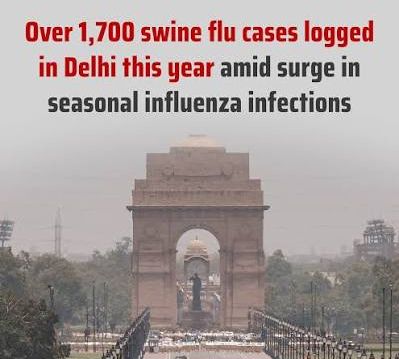
Amid a sharp monsoon-driven surge, Delhi has registered over 1,700 confirmed H1N1 swine flu cases this year, marking an eight-fold increase compared to last year. Union Health Minister JP Nadda and Delhi Health Minister Pankaj Kumar Singh convened a high-level review meeting to strengthen hospital beds, testing facilities, and public health surveillance.
Backed by official health disclosures in New Delhi, federal and state authorities have convened emergency reviews as seasonal influenza infections register an eight-fold year-on-year increase.
Escalating H1N1 Numbers Prompt Urgent Inter-Governmental Review
Public health infrastructure in the national capital is facing heightened seasonal pressure. According to official health department figures released on August 21, 2026, Delhi has registered 1,777 confirmed cases of H1N1 swine flu during the ongoing year. This marks an alarming eight-fold increase compared to approximately 229 infections recorded over the corresponding period in the previous year.
To evaluate epidemiological trends and medical readiness, Union Health Minister JP Nadda chaired a high-level review meeting in New Delhi. The session was attended by Delhi Health Minister Pankaj Kumar Singh, Union Health Secretary Punya Salila Srivastava, and senior medical officials. Discussions focused heavily on laboratory testing capacity, epidemiological surveillance of influenza-like illness (ILI), and severe acute respiratory infection (SARI) trends across hospitals.
Clinical Symptoms, High-Risk Groups, and Hospital Preparedness
Medical practitioners across Delhi-NCR have reported a notable influx of patients presenting with persistent fevers, severe sore throats, and prolonged coughs. Epidemiologists note that while healthy individuals generally recover with mild-to-moderate supportive care, the virus poses severe risks to vulnerable demographics, including young children, pregnant women, older adults, and individuals with chronic comorbidities such as diabetes and pulmonary disorders.
In response to the rising admission rates, Delhi Health Minister Pankaj Kumar Singh stated that all government-run healthcare institutions have been directed to ensure adequate treatment supplies and establish separate dedicated wards for swine flu patients. Furthermore, federal health officials have urged citizens to adhere strictly to respiratory hygiene, wash hands frequently, and seek prompt medical evaluation if experiencing breathing difficulties or chest pain.
Why It Matters
The practical implications of this seasonal influenza surge affect public health security, hospital resource allocation, and daily urban mobility. With H1N1 accounting for the vast majority of fresh respiratory admissions, proactive surveillance and timely clinical interventions are vital to preventing severe respiratory complications among vulnerable populations across the capital region.
Key Facts at a Glance
Cumulative Tally: Delhi reported 1,777 confirmed H1N1 swine flu cases in 2026.
Year-on-Year Increase: Represents an eight-fold surge compared to the same period last year.
High-Level Intervention: Reviewed jointly by Union Health Minister JP Nadda and Delhi Health Minister Pankaj Kumar Singh.
Hospital Readiness: Government hospitals directed to set up separate isolation wards and ensure oxygen and ventilator availability.
FAQ Section
How many swine flu cases has Delhi recorded so far in 2026?
Delhi has registered 1,777 confirmed H1N1 influenza cases, reflecting an eight-fold spike over the previous year's figures.
What prompted the central government to review the health situation?
The sharp, continuous rise in daily influenza-like illnesses and severe acute respiratory infections prompted Union Health Minister JP Nadda to convene an emergency preparedness review.
Which groups are most vulnerable to severe H1N1 complications?
Older adults, young children, pregnant individuals, and patients with underlying chronic illnesses like diabetes, heart disease, or asthma face the highest risk of severe disease.
Where can citizens track official health advisories and hospital updates?
Verified circulars and public health guidelines are published regularly through the Ministry of Health and Family Welfare (MoHFW) and major news outlets like The Times of India.
Source: Press Information Bureau (PIB), The Times of India, ThePrint