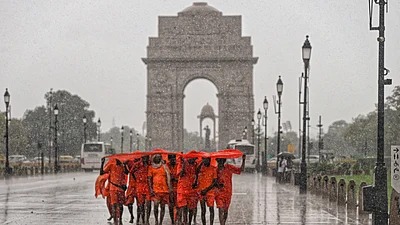
Delhi received fresh rainfall on Tuesday, prompting the IMD to issue a yellow alert for ongoing showers and potential transit disruptions. While the downpours lowered temperatures and improved air quality to a satisfactory level, municipal authorities remain alert to manage water accumulation and traffic delays across the capital.
The India Meteorological Department has issued a yellow alert for Delhi as fresh rainfall brings temperature relief alongside potential transit disruptions.
Overview
Parts of the national capital experienced a sharp spell of Delhi rainfall early Tuesday, prompting the India Meteorological Department (IMD) to issue an official yellow alert for ongoing downpours. The weather system, recorded on August 11, 2026, brought notable relief from underlying heat and high humidity levels, though local authorities have warned citizens of potential traffic slowdowns and water accumulation in low-lying areas.
The Safdarjung observatory—serving as Delhi's primary weather station—recorded minimum temperature baselines dropping comfortably below seasonal averages, while continuous cloud cover blanketed the entire National Capital Region (NCR). Meteorological monitors note that active monsoon conditions are likely to maintain intermittent spells of moderate rain throughout the day.
Meteorological Data and Temperature Readings
According to bulletin data released by the (IMD), the city's minimum temperature settled near 26 degrees Celsius, with maximum temperatures anticipated to hover around 33 degrees Celsius. Regional reporting stations across the capital captured varying precipitation amounts over the preceding 24-hour window ending Tuesday morning.
Safdarjung Station: Registered consistent baseline readings with 4 mm of recorded rainfall.
Lodhi Road and Ridge: Logged 4.8 mm and 6.9 mm of precipitation respectively.
Palam and Ayanagar: Noticed trace-to-moderate moisture patterns accompanying the active monsoon trough.
Environmental data from the Central Pollution Control Board (CPCB) indicated that sustained Delhi rainfall successfully kept air pollution markers in check, placing the city's Air Quality Index (AQI) at a healthy 75 within the "satisfactory" tier.
Impact on Commuters, Businesses, and City Infrastructure
While the incoming moisture provides crucial relief for agricultural cycles and curbs seasonal heat stress, urban infrastructure faced immediate logistical bottlenecks. Pockets of waterlogging along major arterial corridors created localized traffic congestion during the morning rush hour.
Municipal corporations, traffic police units, and disaster management cells have been placed on heightened surveillance to clear blocked drainage channels promptly. Commuters relying on public transport, road networks, and rail lines have been advised to account for minor transit delays.
Official Sources Section
Details regarding precipitation levels, warnings, and localized forecasts are drawn directly from weather bulletins and advisories issued by the India Meteorological Department (IMD) and air quality metrics published by the Central Pollution Control Board (CPCB).
"Organizers stated that active monsoon configurations across northern India will sustain generally cloudy skies and recurring spells of light to moderate rainfall over the capital region."
Why It Matters
The active phase of Delhi rainfall alters immediate thermal conditions and plays a vital role in water resource replenishment. However, the yellow alert underscores the necessity for urban preparedness against localized flooding, ensuring that citizens and civic agencies mitigate transit vulnerabilities effectively.
Key Facts at a Glance
Event: Fresh spell of Delhi rainfall accompanied by an IMD yellow alert.
Issuing Authority: India Meteorological Department (IMD).
Temperature Range: Minimum temperatures recorded near 26°C with maximums expected around 33°C.
Air Quality Index: Maintained at 75 ("satisfactory" category).
Frequently Asked Questions
1. What does an IMD yellow alert signify for Delhi?
A yellow alert serves as an advisory warning citizens to stay updated regarding potentially disruptive weather events, such as moderate rain and localized waterlogging.
2. How much rainfall was recorded at Safdarjung?
The Safdarjung weather station recorded 4 mm of rainfall over the 24-hour observation window.
3. How has the rain affected Delhi's air quality?
Precipitation has helped wash away particulate matter, keeping the city's Air Quality Index (AQI) stable within the satisfactory bracket.
4. Where can citizens track real-time weather updates?
Real-time updates, district-wise nowcasts, and warning maps are accessible via the official portal of the India Meteorological Department (IMD).
Source: India Meteorological Department (IMD), Central Pollution Control Board (CPCB), and Municipal Traffic Advisories.